Rare Earth Diplomacy: Why Uzbekistan Is Becoming Strategically Important For India
Total Views |


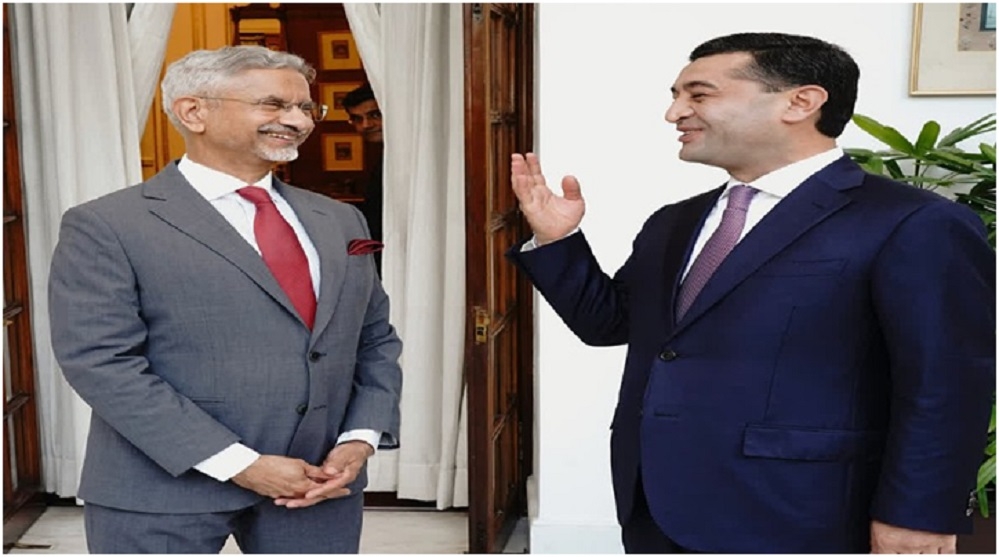
New Delhi : India’s decision to expand cooperation with Uzbekistan in critical minerals and rare earths marks an important step in New Delhi’s strategy to secure resilient supply chains for resources that are vital to the country’s clean energy transition, defence modernisation and high-technology ambitions.
As global competition for these strategic minerals intensifies and dependence on China remains a major concern, mineral-rich Uzbekistan is emerging as an increasingly important partner in India’s engagement with Central Asia.
According to a report on the Doordarshan news website on Tuesday, during a meeting between External Affairs Minister S Jaishankar and his visiting Uzbek counterpart Bakhtiyor Saidov here on Monday, India and Uzbekistan have agreed to expand their strategic partnership by strengthening cooperation in critical minerals, mining, trade, energy, infrastructure, defence and education.
“The External Affairs Minister said both countries are now looking to broaden cooperation into the mining sector, particularly critical minerals and rare earth resources,” the report stated.
While India has traditionally viewed Uzbekistan as a key partner in Central Asia due to its geopolitical location and energy resources, the emergence of critical minerals as a strategic priority has added a new dimension to the relationship.
Rare earth elements comprise a group of 17 metallic elements used in the manufacture of electric vehicle (EV) motors, wind turbines, smartphones and semiconductors, missile guidance systems, radar and electronic warfare equipment, satellites and space technologies, permanent magnets, and medical imaging equipment.
Although called “rare”, these elements are relatively abundant in the Earth’s crust. The challenge lies in economically viable extraction, processing and refining, which require sophisticated technology and large investments.
Today, China dominates the global rare earth industry, accounting for around 60–70 per cent of global mining and an even larger share – more than 85 per cent - of refining and processing capacity. This dominance has prompted countries such as India, the US, Japan, Australia and members of the European Union to diversify their sources of supply.
Uzbekistan possesses one of Central Asia’s most promising reserves of critical minerals. According to official estimates and geological surveys, the country has commercially significant deposits of rare earth elements, lithium, tungsten, copper, molybdenum, uranium, gold, silver, graphite, and fluorspar.
Many of these minerals are essential for batteries, renewable energy technologies and defence manufacturing.
recent years, Uzbekistan has launched an ambitious programme to attract foreign investment into its mining sector. The government has prioritised geological exploration, mineral processing and value-added manufacturing rather than merely exporting raw ores.
For India, this presents an opportunity to participate not only in mining but also in downstream processing and refining.
India imports a substantial portion of its rare earth requirements, directly or indirectly, from Chinese supply chains.
Although India has domestic rare earth reserves – primarily in coastal beach sands in Odisha, Andhra Pradesh, Tamil Nadu and Kerala – the country has relatively limited processing capacity compared to China. Recent Chinese export restrictions on several strategic minerals have reinforced concerns in New Delhi about supply-chain vulnerabilities.
Consequently, India has adopted a multi-pronged strategy expanding domestic exploration, investing in overseas mineral assets, entering long-term supply agreements, developing refining and processing capabilities, and partnering with trusted countries.
Uzbekistan fits neatly into this diversification strategy.
India has identified more than 30 minerals as “critical” for economic security and strategic industries.
Recent policy initiatives include the launch of the National Critical Mineral Mission, overseas acquisition of mining assets through public-sector companies such as Khanij Bidesh India Ltd. (KABIL), increased geological exploration, reforms to encourage private-sector participation, and international partnerships under the India-US, India-Australia, India-EU and Quad frameworks.
Cooperation with Uzbekistan complements these efforts by adding another reliable source of strategic minerals.
Uzbekistan occupies a central position in Central Asia. Although it is landlocked, it borders Kazakhstan, Kyrgyzstan, Tajikistan, Afghanistan and Turkmenistan, making it an important gateway to the wider region.
For India, stronger ties with Uzbekistan support broader objectives under the Connect Central Asia Policy, which seeks to deepen political, economic and security engagement with the five Central Asian republics.
Improved connectivity through the International North-South Transport Corridor (INSTC) and the Chabahar Port project could eventually facilitate the transport of minerals from Central Asia to India while reducing reliance on traditional maritime routes.
Rare earths are indispensable for modern military systems. They are used in fighter aircraft, precision-guided munitions, drones, electronic warfare systems, sonar equipment, military communications, radar, and missile guidance technologies.
India’s growing emphasis on defence indigenisation under the ‘Aatmanirbhar Bharat’ (Self-reliant India) initiative requires secure access to these materials. Partnerships with mineral-rich countries such as Uzbekistan can therefore strengthen India’s long-term defence industrial base.
The discussions between the two countries indicate that cooperation may extend beyond simple imports. Potential areas include joint geological surveys, exploration projects, mining investments, processing and refining facilities, technology transfer, research collaboration, and training of mining professionals.
If implemented, these initiatives would enable India to move higher up the critical mineral value chain.
Critical minerals are becoming an increasingly important pillar of India-Uzbekistan relations alongside traditional areas such as counter-terrorism, defence cooperation, connectivity, pharmaceuticals, education, information technology, and energy.
The inclusion of mining and rare earths in the bilateral agenda reflects a shift towards economic security and supply-chain resilience.
Robinder Sachdev, strategic affairs expert and president of the New Delhi-based Imagindia think tank, said that India and Central Asia have centuries-old civilisational and cultural links.
“What is holding back the optimum realisation of India-Central Asia relations is geography,” Sachdev told ETV Bharat. “To the northwest of India, where India connects with Central Asia, is Pakistan. So, geographically we may be very close. But, connectivity-wise, we are facing challenges.”
He added: “Even if India and Uzbekistan sign an agreement for harnessing rare earth elements and critical minerals in Uzbekistan in some sort of joint venture between, the question is how will that joint venture deliver to the world markets or to India,” he said. “At this point of time, the Uzbekistan to Iran by rail or road route and shipping from Iran to India looks handicapped. But, at the same time, I do not expect this handicap to last much longer.”