Doing Resistance Training For 90-120 Minutes A Week Leads To A Longer Life: Harvard Study
Total Views |


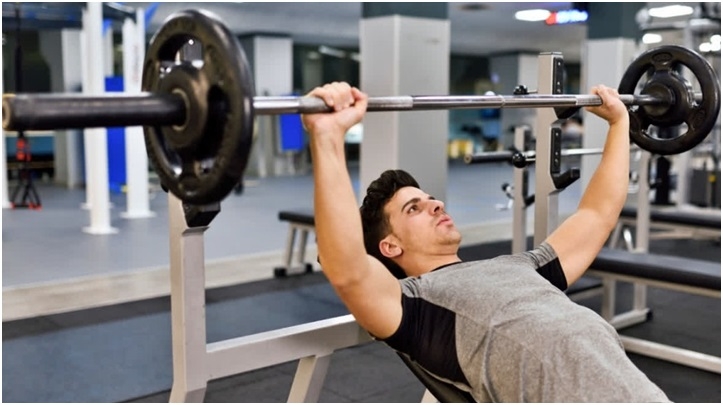
Roughly 90-120 minutes of strength training per week was linked with a 13% reduced risk of premature death, according to a new study from Harvard TH Chan School of Public Health. Adding aerobic exercise to the weekly mix increased the longevity benefit, researchers found. The study was recently published in the British Journal of Sports Medicine. Harvard Chan School co-authors included Yiwen Zhang, Dong Hoon Lee, Yuan Ma, and Edward Giovannucci.
The study looked at three decades’ worth of data from nearly 150,000 adults participating in three long-running studies: the Health Professionals Follow-Up Study, the Nurses’ Health Study, and the Nurses’ Health Study II. Researchers tracked participants’ weekly resistance training and aerobic exercise duration via periodic questionnaires.
Adults who averaged 90 and 120 minutes of weekly resistance training (activities such as pushups, squats, lunges, or weightlifting) had a 13% lower risk of early death from any cause, a 19% lower risk from heart disease, and a 27% lower risk from neurological diseases like Alzheimer’s, compared with those who did no strength training. Doing strength training more than 120 minutes a week did not appear to provide any additional benefit, the study found.
The study also found that participants who did both strength and cardio exercises, such as walking, running, swimming, cycling, or tennis, had among the lowest mortality risks in the study: up to 45% lower risk than those who didn’t do either kind of training.
Resistance training sounds intimidating, but it is simply the practice of making your muscles stronger by working against resistance. Think of it as teaching your body to handle everyday tasks: lifting groceries, climbing stairs, or carrying luggage with greater ease. It includes exercises using dumbbells, barbells, resistance bands, gym machines, kettlebells, or even your own body weight through movements like squats, push-ups, lunges, and planks. In an Everyday Health article about the study, experts noted that for those who find the gym intimidating, resistance training can be easily done at home with weights and resistance bands, with everyday items like food cans and filled water bottles, and can be done in shorter sessions over the course of a week.
“For people who are less active, the key message is that small amounts can still matter,” Giovannucci said in the article. “Building a routine gradually may be more important than trying to do a lot at once.”