Autistic Joy: The Side Of Autism We Rarely Talk About | Autistic Pride Day 2026
Total Views |


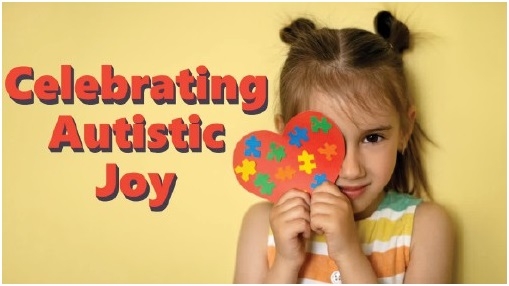
On Autistic Pride Day, much of the conversation around autism follows a familiar path. We discuss challenges, therapies, diagnoses, and support systems. But there is a question we rarely ask. What brings autistic people joy?
The omission is revealing. It suggests that we have become so focused on understanding struggle that we sometimes forget to understand the person who is struggling. We become preoccupied with deficits and lose sight of delight. Autistic Pride Day offers an opportunity to look beyond what autism can make difficult and toward what autism can make beautiful.
The Joy of Being Fully Yourself
One of the great tragedies of modern life is that many people spend years trying to become someone else. Children quickly learn which behaviours are rewarded and which are discouraged. They learn to fit in, to adapt, to camouflage. Over time, authenticity is often exchanged for acceptance. However, autistic individuals spend years trying to navigate a world designed around neurotypical expectations. This is why joy is not a trivial subject.
Dr. Shruti Ghatalia, Consultant Pediatrician and Neonatologist at Zynova Shalby Hospital in Mumbai, says, “When people talk about autism, they only discuss the challenges and problems linked to it, but fail to talk about autistic joy. Many people with autism tend to experience happiness in unique and meaningful ways through their special interests, routines, creativity, sensory experiences, and deep connections that they share with their loved ones.”
Joy is not merely the absence of difficulty. It is the presence of meaning.
The Joy of Deep Fascination
Most people move through life skimming the surface of things. They become mildly interested in a topic, dabble and then move on. However, many autistic individuals experience interests differently.
They dive in. A fascination with trains becomes an exploration of engineering, history, design, geography, and mathematics. An interest in animals becomes a deep understanding of behaviour and ecology. A love of numbers evolves into intricate pattern recognition.
From the outside, these interests are sometimes dismissed as obsessions. But that interpretation says more about our culture than about autism. We live in a world that often celebrates breadth while undervaluing depth. Yet some of humanity's greatest discoveries, inventions, artistic achievements, and scientific breakthroughs have emerged from people willing to devote extraordinary attention to a single subject.
Dr. Abhilash Bansal, Senior Consultant Neurosurgeon and Spine Surgeon at SPARSH Hospital, Bengaluru, argues that these passions should not be misunderstood. “These interests are not distractions or obsessions,” he says. “They can be a source of confidence, expression, learning and connection as well.” Indeed, what appears unusual to one observer may be a source of purpose to another.
Finding Beauty In Patterns
There is another aspect of autistic experience that deserves greater recognition: the ability to notice what others overlook. The human brain is designed to filter information, so we miss the fine details. Many autistic individuals possess a heightened sensitivity to details that others pass by without noticing: Patterns emerge, connections become visible.
This ability is valuable because it represents an alternative way of seeing the world. As Dr. Manish Mittal, Senior Consultant Paediatrician at Cocoon Hospital in Jaipur, observes, "Autistic strengths often include focus, pattern recognition, creativity, and emotional depth. These qualities deserve recognition as part of the broader autistic experience."
Dr. Mittal also notes that one of the most beautiful aspects of autistic joy is the sense of belonging that often emerges through shared passions. Whether the interest involves art, science, technology, storytelling, numbers, or the natural environment, these passions frequently become bridges to communication and community.
Autistic Pride Day is not about denying challenges; they are real. But pride asks us to hold a larger truth: A person is never defined solely by what is difficult for them. Autism is not only a collection of struggles but also a way of perceiving, creating, connecting, learning, and experiencing joy. As Dr. Bansal points out, celebrating autistic joy means acknowledging that neurodiversity brings unique ways of thinking, feeling, creating, and engaging with the world.