Voice of Rhythm with Sandip SoparrkarTradition Meets Innovation
Total Views |


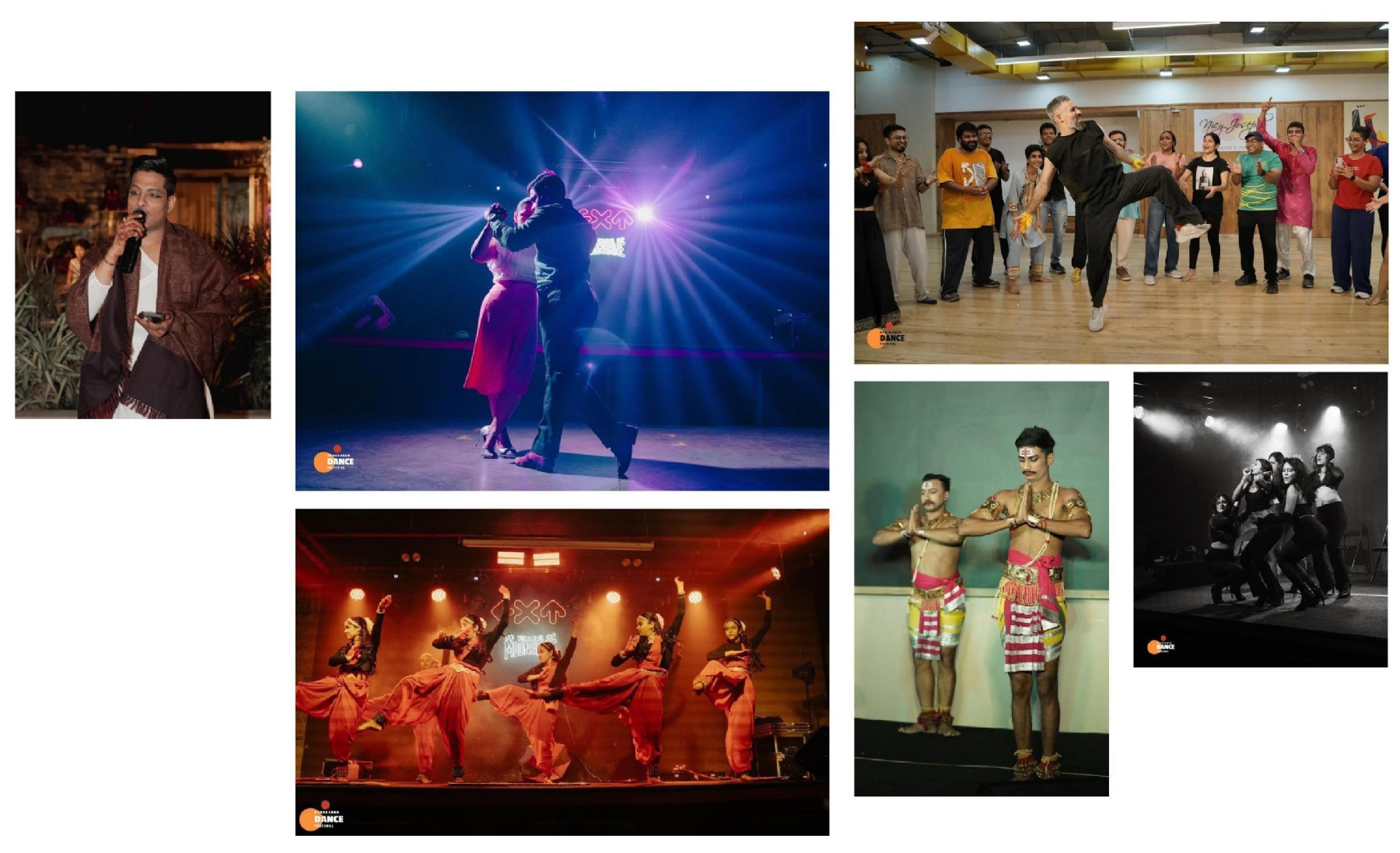
The Hyderabad Dance Festival has quickly become one of the most exciting cultural movements in the country, bringing together classical dance traditions, street styles, community spaces, music, conversations, and performance under one umbrella. Founded by dancers and cultural curators Mohit Shridhar, Harsha Maheshwari (KOMET), and Vaibhav Kumar Modi, the festival reflects the spirit of Hyderabad — a city where heritage and modernity coexist effortlessly. In this interview, Vaibhav Kumar Modi speaks about the journey of building the festival, the challenges behind it, and why festivals matter more than ever today.
How did the concept of the Hyderabad Dance Festival begin?
It honestly began from a place of love for Hyderabad and frustration at the same time. Hyderabad has Taramati Baradari, which is literally a monument built around dance and performance. It was created for a courtesan who performed for a king. That alone tells you how deeply dance exists in the cultural memory of this city. Yet, despite all of that, there was no major dance festival dedicated to Hyderabad. That absence felt symbolic to us.
At the same time, Hyderabad is such an interesting city culturally. You have Nizami heritage and modern tech culture existing side by side. You have Perini Natyam and hip-hop existing in the same generation. We felt if any city could hold tradition and innovation together naturally, it was Hyderabad.
The three of us — Mohit Shridhar, Harsha Maheshwari, and I — came together through our own artistic journeys. Mohit is deeply rooted in Kathak and the Jaipur Gharana tradition. Harsha, who is known as KOMET, has built strong community spaces through Earth Bound and Cypher Hours. I’ve been working through Dark Vibe Society while continuing my own journey as a Kathak dancer. At some point, we realised Hyderabad was long overdue for a dance festival.
What was the biggest difference between planning Year One and Year Two?
Year One in 2021 was built almost entirely on belief and determination. We had the vision, but honestly not much infrastructure at the beginning. We took the idea to the government, and thankfully they believed in it enough to support us. Once that happened, artists and venues started trusting the project too.
Edition Two in 2026 was very different. This time, the challenge wasn’t only creating the festival but deepening it. We wanted to move from simply hosting performances to building a cultural ecosystem.
That idea became very important to us. A real cultural ecosystem impacts everyone. When a festival comes into a neighbourhood, it’s not just dancers who benefit. The chai vendor outside benefits, local businesses benefit, autorickshaw drivers benefit. Culture creates both emotional and economic ripples.
The second edition became much larger — nine days across the city with workshops, performances, discussions, and community events. The theme, Innovation in Tradition, came naturally because the most powerful moments from the first edition happened when different dance worlds encountered each other. Tell us about the workshops and performances this year.
The entire festival was built around the idea of artistic collision — not conflict, but collision. We wanted people from completely different dance backgrounds to share space with each other.
During the workshop phase, we had six partner venues across the city hosting sessions in Kathak, Bharatanatyam, Odissi, Kuchipudi, Hip-Hop, Breaking, Popping, Afro Dance, Contemporary, Salsa, Folk forms, movement arts, and classical music. One room might have Bharatanatyam while another had popping or street dance. That visual itself represented what the festival stood for.
Accessibility was important to us, which is why every workshop was kept to minimum fee. We wanted young dancers and students to feel included.
Urban Pulse at EXT by Moonshine became one of the strongest reflections of our vision. A Kuchipudi dancer and a tango dancer shared the same stage, not as a fusion experiment, but simply as two artists existing in the same city and same artistic conversation. There was also an open stage where anyone could perform before the curated showcases began later in the day.
Earth Bound, curated by Harsha Maheshwari at Phoenix Arena, brought another layer to the festival. It was a zero-waste lifestyle festival with movement therapy, community dancing, live music, flea markets, wellness spaces, and handmade goods. It reminded people that dance culture and community culture are deeply connected.
Then came the grand finale, Rang-e-Hyderabad at District 150 by Quorum. We had workshops, literary conversations, Hindustani classical music, ghazals, and performances in Perini, Kuchipudi, Odissi, Bharatanatyam, and Kathak all under one roof. It genuinely felt like multiple artistic Indias existing together in one space.
How difficult is it to organise a festival of this scale?
It’s one of the hardest things I’ve done. Logistically, there are endless challenges — venues, permissions, artist travel, sound systems, volunteers, schedules. But honestly, the bigger challenge is emotional coherence.
How do you make nine days across multiple venues and communities feel like one unified experience? That question kept us awake more than logistics.
Financially, it was also difficult. I think it’s important to say honestly that many artists became our biggest supporters because they essentially self-sponsored their performances. They believed in the festival enough to participate despite limited resources. That level of trust humbled us deeply.
But then you witness moments that make everything worth it. You see a senior Kathak guru speaking to a young breaker about rhythm and movement, or someone watching a classical form for the first time and being genuinely moved. Those are the moments that stay with you.
In today’s time, workshop culture is extremely popular. How do festivals remain relevant?
Workshop culture is wonderful because it democratises learning and creates opportunities for artists. But workshops are transactional by nature. A student comes to learn from a teacher.
Festivals create encounters. A Kathak practitioner may suddenly encounter a hip-hop collective. A young urban dancer might watch a Perini master for the first time. Those encounters change people in ways classes cannot.
I often say workshops teach people what dance is, but festivals teach people what dance means. Both are necessary, but genuine festivals with strong curatorial vision are still rare, and that is the space we are trying to build.