US-Iran War Will Last '1 To 3 Weeks': Economist Decodes As Stock Markets And Oil Prices React To Middle East Conflict
Total Views |


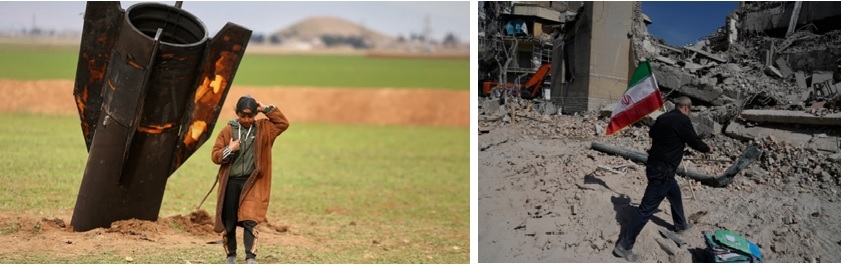
Economists and trade experts are closely watching the US-Israel and Iran war and its impact on the world economy. The conflict entered its sixth day on Thursday, embroiling the entire Middle East as Iran continued to target Gulf countries while the US and Israel kept striking Tehran.
Economists at Oxford Economics, a leading economic think tank based in London, remained optimistic that the war would last one-to-three weeks, with a view that even an extended war was unlikely to last beyond two months.
Cassidy Ainsworth-Grace, Global Macro Strategist of Oxford Economics, cautioned that the latest US-Israeli attack on Iran is much bigger than the attack by the two countries in June last year. "This conflict surpasses the June 2025 US strike on Iran in both scale and intensity. Targeting senior leadership presents an existential challenge to the regime.
Global Stock Markets have responded to the joint US-Israeli strikes on Iran with a familiar script — but without panic. Safe-haven assets such as gold, US dollar and US treasury bonds initially rallied, reinforcing the view that this is not a structural turning point for global markets.
Trading data showed that while Asian markets remained jittery on Thursday due to concerns over the adverse impact of the war in the Middle East, European and US markets were trading in green, according to an analysis of the data by ETV Bharat.
Most of the major European indices were up on Wednesday (March 04, 2026). It included FTSE, DAX, CAC 40, IBEX 35, and STOXX 50. On the other hand, of the five major US indices, except Vix, all four other indices – Dow Jones, S&P 500, Nasdaq and Russel were trading in the green at the time of writing.
However, contrary to the US and European stock markets, Asian stocks were traded in the negative. These included Nikkei 228, SSE Composite Index, Hang Seng Index, BSE, NSE Nifty and S&P’s Asia 50.
“Brent crude surged on the day of the strikes, but notably, the increase ranked only as the 56th largest daily gain since 1988. Markets are pricing in disruption — not shortage. In other words, investors expect friction in supply routes, but not a sustained collapse in global energy flows,” noted the economist.
Brent Crude Oil, which was hovering around $70 a barrel before the US-Israeli strike on Iran, touched a high of over $80 per barrel on March 3 but slightly moderated during the next day (March 4) to around 78 US dollars per barrel. The International Energy Agency (IEA), a group of 33 nations that account for nearly three-fourth of global energy demand, is closely monitoring the situation in the Middle East, including the potential implications of any prolonged disruptions to energy flows through the Strait of Hormuz.
According to the IEA’s assessment of the situation, while upstream oil production facilities have largely been unaffected by attacks, the disruption to oil flows through the Strait of Hormuz has forced some operators to start shutting down production.
“The region’s output of refined products and liquefied natural gas (LNG) has also been significantly impacted. The IEA will continue to assess the energy security implications of the situation in coordination with governments around the world,” said the International Energy Agency.