Total Lunar Eclipse 2026: Find Out The Exact Timings And Meaning Of Today's 'Blood Moon' Eclipse In Major Indian Cities
Total Views |


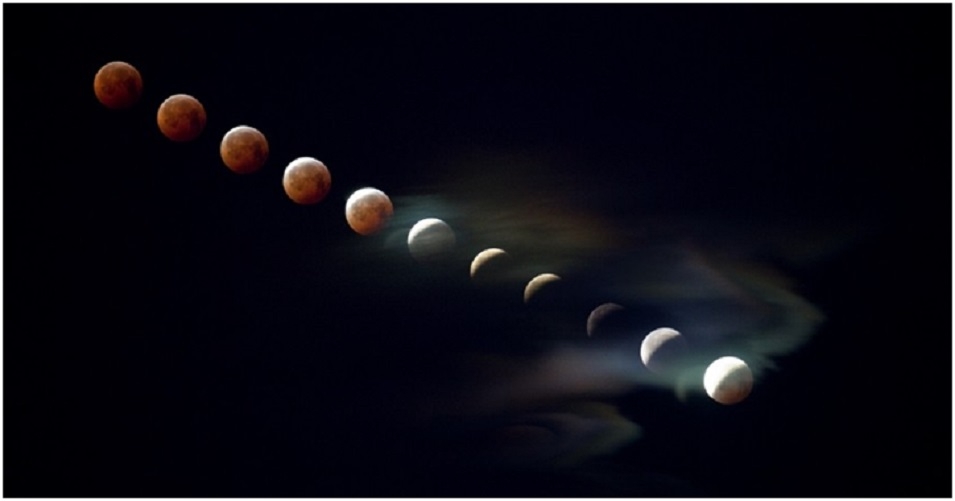
A total lunar eclipse will occur on 3rd March, 2026. The eclipse will be visible in the region covering eastern Asia, Australia, Pacific Ocean and Americas. It can be seen from most spots in India except from some places in the extreme western part of the country. Most places of India will observe the ending of the lunar eclipse at the time of moonrise except some places in North-East India and the Andaman and Nicobar Islands where the end of the totality phase of the eclipse will also be visible. In general, the eclipse will begin at 15:20 IST and the ending time is 18:48 IST. The total eclipse will begin at 16:34 IST and the ending time of the totality of this eclipse is 17:33 IST. The magnitude is 1.155. The last total lunar eclipse visible from India was on 7-8 September, 2025. The next lunar eclipse which will be visible from India falls on 6th July, 2028 but it will be a partial one.
What Is A Lunar Eclipse?
A lunar eclipse occurs on a full moon day when the Earth comes between the Sun and the Moon and when all the three objects are aligned. A total lunar eclipse occurs when the whole Moon comes under the umbral shadow of the Earth and a partial lunar eclipse occurs only when a part of the Moon comes under the Earth's shadow.
The eclipse we see today will be the first total lunar eclipse of the year. The celestial event will briefly make the Moon visible in a dramatic shade of copper-red, which skygazers call a “Blood Moon”.
What Is A Total Lunar Eclipse?
According to NASA, the Moon moves into the inner part of Earth’s shadow, or the umbra. Some of the sunlight passing through the atmosphere reaches the Moon’s surface, lighting it dimly. Colours with shorter wavelengths (blues and violets) scatter more easily than colours with longer wavelengths, like red and orange. Because these longer wavelengths make it through the atmosphere, and the shorter wavelengths have scattered away, the Moon appears orangish or reddish during a lunar eclipse. The more dust or clouds in our atmosphere during the eclipse, the redder the Moon appears.
What Causes The “Blood Moon” Effect?
The same phenomenon that makes our sky blue and our sunsets red causes the Moon to turn reddish-orange during a lunar eclipse. Sunlight appears white, but it actually contains a rainbow of components, and different colours of light have different physical properties. Blue light scatters relatively easily as it passes through the Earth’s atmosphere. Reddish light, on the other hand, travels more directly through the air.
When the Sun is high on a clear day, we see blue light scattered throughout the sky overhead. At sunrise and sunset, when the Sun is near the horizon, incoming sunlight travels a longer, low-angle path through the atmosphere to observers on the ground. The bluer part of sunlight scatters away in the distance (where it's still daytime), and only the yellow-to-red part of the spectrum reaches our eyes.
During a lunar eclipse, the Moon appears red or orange because any sunlight that's not blocked by our planet is filtered through a thick slice of Earth’s atmosphere on its way to the lunar surface. It’s as if all the world’s sunrises and sunsets are projected onto the Moon.
Lunar Eclipse & Holi 2026
In 2026, the sky and tradition align in a way that doesn’t happen often. Holi 2026 and the Lunar Eclipse fall on the same day today. Holi always falls on Phalguna Purnima, the full moon of the Hindu month of Phalguna. Lunar eclipses also occur only on a full moon. However, not every full moon becomes an eclipse. In 2026, Holika Dahan on 3rd March happens during the eclipse window. This alignment doesn’t occur frequently, making it astrologically and spiritually noteworthy.
If eclipse timing overlaps with Holika Dahan, priests and Vedic astrologers may recommend completing rituals before Sutak begins. Dahan rituals must be wrapped before Sutak to avoid inauspiciousness. Delay bonfires if needed.
Chandra Grahan Rituals
Unless Lunar Eclipse is visible to the naked eye, it is of no significance to Hindus and Hindus don't consider it for any religious activities. Penumbral Lunar Eclipses are not visible to the naked eye hence no rituals related to Chandra Grahan should be observed. If the eclipse is visible during the Umbral Phase, then only it should be considered for religious activities. Most Hindu calendars don't list Penumbral Eclipses.
Precautions which are advised during Sutak should be taken only if Chandra Grahan is visible in your city. If the Chandra Grahan is not visible in your city, then you should not observe it. Chandra Grahan is considered even if the Moon is not visible due to cloudy weather or some other weather conditions.