Indian Scientists Develop Nanofibre Membranes That Remove 99% Toxic Dye Contamiation From Textile Waste
Total Views |


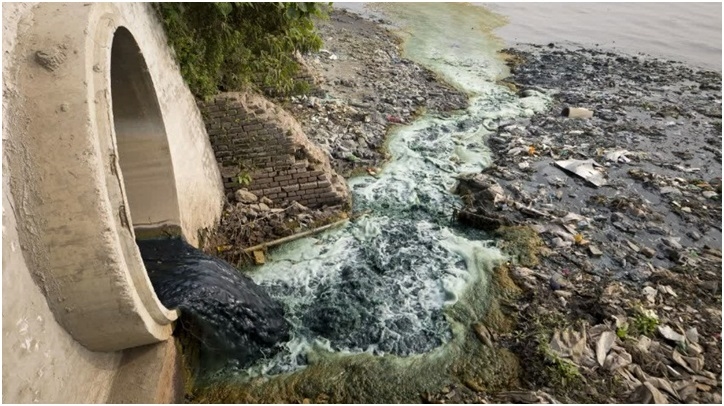
In a significant breakthrough for environmental protection, scientists at the Indian Institute of Chemical Technology (IICT) have developed advanced “nano fibre membranes” capable of effectively removing toxic dye waste from textile industry effluents. The innovation offers a promising, low-cost solution to one of the most persistent pollution challenges faced by India’s textile hubs.
Textile dyes such as crystal violet and related compounds are widely used for colouring fabrics. However, when discharged untreated into water bodies, they seep into groundwater and pose serious threats to aquatic life and human health. Many of these dyes are known carcinogens. Existing methods for removing them are not only expensive but also inefficient at eliminating the pollutants.
Addressing this concern, a research team led by IICT Chief Scientist Sundergopal Sridhar developed a specialised filtration membrane using electrospinning technology. The membrane is embedded with advanced nano-materials such as ZIF-67 and graphene oxide, which enhance its ability to trap and remove dye molecules from polluted water.
“Our goal was to design a material that is both highly efficient and economically viable for large-scale use,” Sridhar said. “The nano fibre membranes showed exceptional performance, removing up to 99.1 per cent of dye contaminants from textile wastewater.”
The study, recently published in the reputable Chemical Engineering Journal, details the development of a mixed matrix membrane platform through the incorporation of polyethersulfone (PES) and polyvinylidene fluoride (PVDF) polymer blend with nanomaterials, such as Zeolitic Imidazolate Framework-67 (ZIF-67) and metal-organic frameworks (MOFs). The study compared its performance with membranes containing graphene oxide (GO) and graphene nanoplatelets (GNP).
The researchers found that the membranes not only purify water effectively but also allow industries to reuse treated wastewater, significantly reducing freshwater consumption.
“Water reuse is critical for the sustainability of textile industries, especially in water-stressed regions,” Sridhar added. “This technology can help industries meet environmental norms without incurring heavy costs.”
The innovation could play a vital role in reducing industrial pollution if adopted widely. Environmental scientists note that such technologies are crucial as India balances industrial growth with ecological responsibility. With scalable production and industry adoption, IICT’s nano fibre membranes could mark a turning point in controlling textile pollution, safeguarding groundwater, and protecting public health.
“This is not just a laboratory success,” Sridhar emphasised. “It is a practical solution with real-world impact.”