

WASHINGTON - 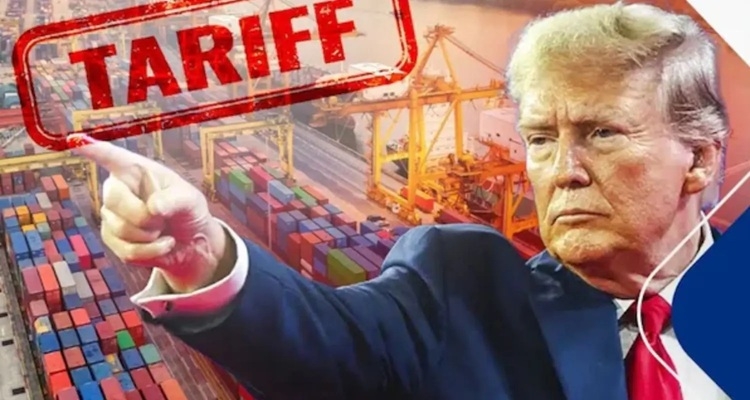 The Supreme Court of the United States on Friday struck down former President Donald Trump’s sweeping global tariffs, ruling 6–3 that the administration overstepped constitutional limits by imposing broad import taxes under emergency powers.
In a sharply worded majority opinion, Chief Justice John Roberts wrote that the Constitution clearly assigns taxation authority to Congress, not the executive branch. “The Framers did not vest any part of the taxing power in the Executive Branch,” Roberts stated, concluding that the tariffs were unconstitutional.
The decision invalidates the so-called “reciprocal” tariffs Trump had levied on nearly every other country, marking the first major component of his trade agenda to receive a final ruling from the nation’s highest court. Lower courts had previously ruled against the administration.
Sharp Response from Trump
Trump reacted angrily, saying he was “absolutely ashamed” of some justices and accusing them of being “disloyal to our Constitution” and “lapdogs.” Despite appointing three current justices during his first term, Trump saw several of his nominees join the majority against him.
He also praised the dissenting opinion authored by Justice Brett Kavanaugh, calling it “genius.” Kavanaugh, joined by Justices Samuel Alito and Clarence Thomas, argued that the tariffs were lawful under existing statutes.
“The tariffs at issue here may or may not be wise policy,” Kavanaugh wrote. “But as a matter of text, history, and precedent, they are clearly lawful.”
Billions at Stake
The ruling leaves unresolved whether businesses can recover the billions paid under the tariffs. According to federal data, the Treasury collected more than $133 billion in import taxes imposed under the emergency law as of December. The long-term economic impact has been estimated at roughly $3 trillion over the next decade.
Several companies, including warehouse retailer Costco, have already sought refunds in lower courts. Kavanaugh acknowledged that the repayment process, if ordered, could become complicated and potentially chaotic.
Broader Trade and Economic Impact
The Court’s decision could reverberate across global markets. Trump’s tariffs were designed to reshape post–World War II trade alliances and use economic pressure as leverage in negotiations. Their removal may ease uncertainty among trading partners but could also reopen debates in Congress over trade authority.
Trump, however, signaled he would pursue alternative legal pathways. He pledged to impose a new 10% global tariff under a separate statute limited to 150 days — a law that has never previously been used to apply tariffs.
“Their decision is incorrect,” Trump said. “But it doesn’t matter because we have very powerful alternatives.”
Vice President JD Vance criticized the ruling on social media, calling it “lawlessness.”
Constitutional Line Drawn
At its core, the case underscores a fundamental constitutional principle: while presidents can influence trade policy, the power to levy taxes rests squarely with Congress. The ruling draws a clear line on executive authority, even as it sets the stage for continued legal and political battles over the future of U.S. trade policy.