Voice of Rhythm with Sandip SoparrkarEk Bharat, Anek Rang
Total Views |


The World Voice
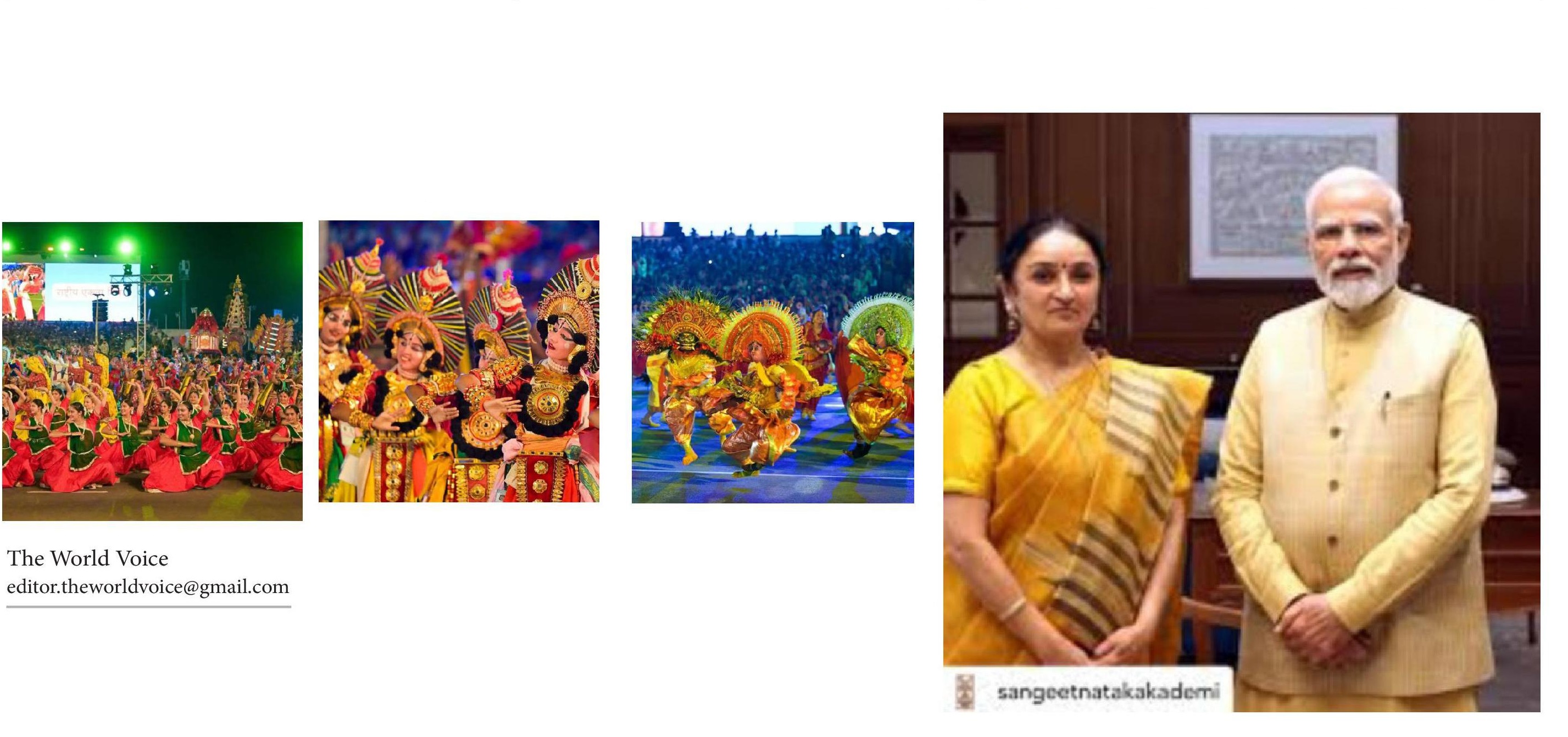
India’s cultural diversity is its greatest strength, and bringing its myriad artistic traditions together on one national platform is a powerful way of celebrating that unity. This vision came alive on 31 October 2026 at Ekta Nagar, Gujarat, near the iconic Statue of Unity, where approximately 5,000 artists from different regions came together for a spectacular cultural presentation titled Ek Bharat, Anek Rang’’, commemorating the 151st birth anniversary of Sardar Vallabhbhai Patel.
Curated by the Sangeet Natak Akademi, under the leadership of its Chairperson, Dr Sandhya Purecha, in collaboration with the Government of Gujarat, the presentation brought together nearly 50 cultural elements representing India's classical, folk and regional traditions. What made this celebration particularly meaningful was the participation of communities living in Gujarat who originally belonged to different states, yet continued to preserve the artistic traditions of their ancestral homes.
A renowned Bharatanatyam exponent, Sanskrit scholar and cultural administrator, Dr Sandhya Purecha has consistently worked towards preserving and promoting India's intangible cultural heritage. She shares the vision behind this extraordinary presentation and explains how dance became a powerful expression of national unity.
What was the vision behind conceptualising Ek Bharat, Anek Rang?
The fundamental idea was to celebrate India's diversity and demonstrate how our different cultural identities contribute to one larger national identity. National Unity Day commemorates Sardar Vallabhbhai Patel, whose extraordinary contribution to integrating the country remains an inspiration. We wanted to express the same spirit of integration through India's traditional music and dance.
India is a land of countless traditions, languages, communities and artistic expressions. Rather than presenting these as separate identities, we wanted to bring them together in a shared celebration. Ek Bharat, Anek Rang was conceived as a cultural representation of the idea that although our expressions may differ, our cultural roots connect us. Who were the participants, and what made this presentation different from previous celebrations?
Approximately 5,000 artists participated, including around 3,000 performers from Gujarat and the remaining artists from different parts of the country. The presentation brought together nearly 50 cultural elements.
One particularly interesting aspect was our decision to involve communities residing in Gujarat whose ancestral roots belonged to different states of India. Many of these communities have lived in Gujarat for generations while continuing to preserve their original languages, customs, music and dance traditions.
We approached these communities and encouraged them to curate presentations representing the traditional art forms of their respective regions. This made the event more meaningful because the artists were not merely performing an art form; they were representing their own cultural heritage and identity.
It was a conscious effort to give communities ownership of their traditions and bring their artistic voices to a national platform.
How challenging was it to bring together 5,000 artists representing so many different traditions?
Any presentation of this magnitude requires extensive planning, coordination and sensitivity towards the artistic identity of every participating group. Each tradition has its own musical structure, movement vocabulary, costumes and performance practices.
Our objective was to ensure that the diversity remained visible while creating a cohesive presentation. We did not want the individual identities of the participating art forms to disappear in the scale of the production.
The collaboration between the Sangeet Natak Akademi and the Government of Gujarat, along with the involvement of the participating communities, made it possible to bring together such a large number of artists.
Why did you choose dance and traditional music as the medium for communicating national unity?
Dance is a universal language. It communicates emotions, ideas and stories without necessarily requiring a common spoken language. India's classical, folk and tribal dance traditions are deeply connected to the lives of its people.
Lyrics by Irshad Kamil, Music by Shankar Mahadevan, Costume by Navneet Patil and voice over by Harish Bhimani added grace to the presentation, from Bharatanatyam and Kathak to Garba, Bhangra, Bihu, Ghoomar and numerous regional and tribal traditions, every dance form reflects a distinct cultural history.
Yet, when these traditions come together, we discover the common thread connecting them. Dance demonstrates that unity does not mean uniformity. We do not have to abandon our individual identities to become one nation. Instead, we must respect and celebrate one another's differences.
What message do you hope audiences take away from this historic presentation?
I hope audiences recognise that India's cultural heritage belongs to every Indian. A community may move from one state to another, but it carries its traditions, memories and artistic expressions wherever it goes.
The participation of communities settled in Gujarat was particularly significant in this context. It showed how cultural identities can flourish beyond geographical boundaries while remaining an integral part of the national fabric.
The larger message is that our diversity is not a division; it is our strength.
What role should cultural institutions play in preserving India's traditional performing arts?
Institutions such as the Sangeet Natak Akademi have an important responsibility to document, preserve, promote and provide platforms for India's performing arts. Traditional artists and community practitioners deserve recognition and opportunities beyond occasional cultural celebrations.
Every folk tradition carries the history of its people, while classical dance forms preserve centuries of artistic knowledge. We must ensure that these traditions reach younger generations and remain relevant in contemporary society.
What does Vande Mataram mean to you?
For me, Vande Mataram is not merely a song; it is the eternal expression of India’s soul, strength, pride and collective consciousness. It represents our civilisational continuity and the spirit of unity that binds our diverse traditions, cultures and communities into one nation.
As we commemorate 150 glorious years of Vande Mataram, I wanted its deeper meaning and emotional essence to be reflected right at the very beginning of the musical presentation. Therefore, I composed a Sanskrit verses, which were placed at the opening of the song.
These verses express my personal feelings and reverence for Vande Mataram, as a timeless source of national strength, an inspiration for unity and an enduring celebration of Mother India. Through this presentation, my humble endeavour was to bring alive the spirit of Vande Mataram through India’s magnificent performing arts traditions, celebrating our unity in diversity and the timeless glory of our motherland.
Vande Mataram is not just something we sing; it is something we feel, live and carry in our hearts. For me, it represents the true spirit of India. Five thousand artists, nearly 50 cultural elements and countless traditions came together to celebrate one national identity.