Voice of Rhythm with Sandip SoparrkarLove Meets Its Darkest Truth
Total Views |


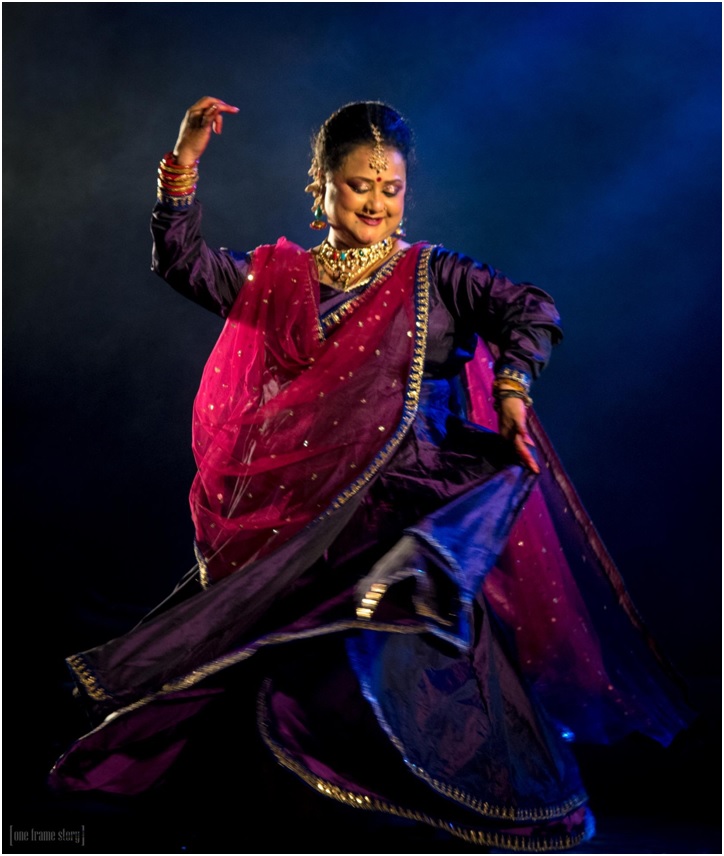
Love is universal, yet its expressions are as complicated as human relationships themselves. It can be beautiful and liberating, but it can also become possessive, painful and consuming. Exploring these contrasting dimensions of human emotion is Laal Ishq – The Betrayal, the latest production by Kathak exponent and choreographer Alaknanda. An extension of the original production first presented in 2025, the second season takes the story forward, delving deeper into the emotional complexities of love, faith, trust and betrayal.
Conceived as an exploration of the fragile foundations of relationships, the production examines how disrespect, ingratitude, emotional neglect and silence can gradually turn love into an experience of betrayal. However, Alaknanda's interpretation goes beyond the conventional understanding of heartbreak. For her, the greatest betrayal can sometimes be self-betrayal: forgetting to love oneself while giving everything to someone who takes that love for granted.
With compelling presence of Kathak and theatre artist Sudip Chakraborty and Dheerandra Tiwari Laal Ishq – The Betrayal brings together dance, theatre and emotional storytelling. Promotion video was shot by creative director Innee Singh and photographs by Sangeeta Banerjee shaping the show with their artistic vision. In this conversation, Alaknanda speaks about the inspiration behind the production, the philosophy of love and betrayal, and the power of Kathak to communicate the deepest human experiences. Excerpts from the interview:
What inspired you to create second season of Laal Ishq- The Betrayal?
Laal Ishq was born from my fascination with love as an emotion that influences every aspect of human existence. Love is universal. Every individual experiences it in some form, whether through relationships, devotion, nature or spirituality. But while we celebrate love, we rarely acknowledge the pain and contradictions that can exist within it.
The first presentation introduced this emotional journey. With Laal Ishq – The Betrayal, I wanted to continue the story rather than simply repeat it. The wound deepens, the characters evolve, and the truth becomes clearer. Season Two explores what happens when the foundation of a relationship begins to collapse because faith and trust are shaken. It is a continuation, but also a deeper introspection into the human heart.
Why did you choose the word betrayal to explore your artistic production?
We often consider betrayal entirely negative, but I feel it is also a part of life and, therefore, a part of love. Betrayal can teach us things that happiness sometimes cannot. It makes us question our choices, our expectations and the way we understand relationships.
When love is met with disrespect, ingratitude or silence, the person who loves deeply begins to experience an emotional separation. The fear of losing love is painful, but the fear of losing trust is even greater. Through this production, I am not celebrating betrayal; I am acknowledging its existence and exploring what it reveals about us.
As an artist and as a human being, I believe betrayal can also become a teacher. It can awaken us, make us stronger and help us rediscover ourselves.
You have described self-betrayal as the greatest betrayal. What does this mean?
This is perhaps the most personal aspect of the production. We often become so deeply involved in loving another person that we forget to love ourselves. We give our time, emotions, energy and everything we have to build a relationship, sometimes with someone who does not value or reciprocate that love.
In doing so, we abandon our own happiness, dignity and identity. That, to me, is self-betrayal. Why should we have to lose ourselves in order to love somebody else? Love should first exist within our own soul. When we recognise our own worth, we can love another person without becoming emotionally imprisoned.
I want audiences to reflect on this idea. Loving someone is beautiful, but forgetting oneself in the process is not.
The production explores the relationship between love and freedom aren’t they contrasting emotions?
Love can sometimes feel like a beautiful prison. We willingly surrender ourselves to it because the emotional attachment is so powerful. At other times, we desperately want to break those shackles and rediscover our freedom.
This contradiction is part of the human experience. We want to belong, but we also want to be free. We want intimacy, but we fear losing our individuality. Love can become a source of strength when it respects freedom, but it can become suffocating when it turns into possession.
I believe genuine love should never demand the destruction of another person's identity. It should allow both individuals to grow.
You have also connected love with Krishna and Radha. How does spirituality influence your understanding of the subject?
Love is not limited to human relationships. It exists in nature, in creation and in our spiritual consciousness. For me, love is like fire, thick as blood. It flows through everything and connects all living beings.
Krishna represents one of the most profound expressions of love in our cultural and spiritual imagination. His relationship with Radha, his connection with the Gopis and his divine presence remind us that love has many dimensions.
Radha's love for Krishna raises a profound question about love, commitment and betrayal. Radha was married, yet her heart belonged to Krishna. Was this not a betrayal of her husband? Through this relationship, I explore whether love can be confined by social boundaries or whether its deepest expression exists beyond worldly relationships.
I wanted to explore this larger understanding of love, where devotion, longing, attachment, separation and surrender all become part of the same emotional universe.
What do you hope audiences take away from Laal Ishq – The Betrayal?
I hope they understand that love is much larger than the happiness or pain of an individual relationship. Betrayal may leave wounds, but it can also lead to self-discovery. It can teach us to value ourselves, understand others and recognise what genuine love means.
Ultimately, I do not want audiences to leave with bitterness or sadness. I want them to leave with a deeper understanding of themselves and the people they love.
At the end of every story, and at the end of our lives, what remains is love. It survives beyond heartbreak, disappointment and separation. That is the message I wish to communicate through Laal Ishq. Love is universal. And even when trust is broken, love remains one of the most powerful forces that connects us all.