Can Himalayan Plant Piruli Be Helpful In Treating Colon Cancer?
Total Views |


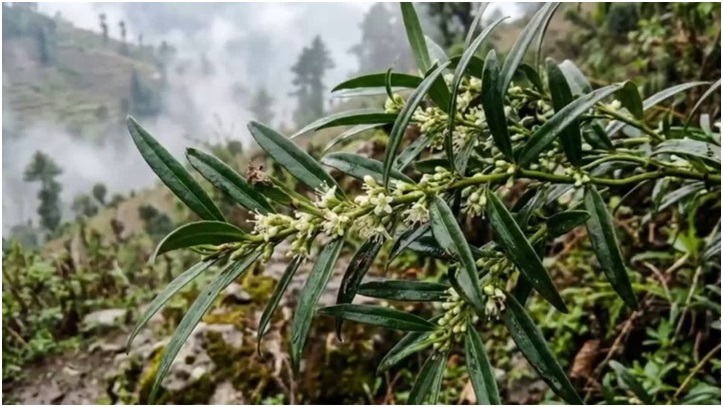
Can Piruli (Sarcococca saligna), a medicinal herb traditionally used for healing wounds in the hilly regions of Uttarakhand, be used to treat colon cancer? Scientists at the University of Lucknow claim to have identified two natural chemical compounds in this plant that have demonstrated an effective impact on colon cancer cells under in vitro conditions. Significantly, during testing, these compounds were found to be more effective than the commonly used cancer drug Cisplatin.
The research at the University is said to be an important step towards unleashing the potential of traditional medicinal plants of the Himalayan region through modern science. The collaborative study was carried out under the leadership of Dr Neha Sahu, Assistant Professor at the Department of Botany. Scientists from Central Drug Research Institute (CDRI) at Lucknow, Sevitha Medical College and Hospital at Chennai and Shree Guru Gobind Singh Tricentenary University (SGT) University at Gurugram also contributed to the study that was recently published in ‘ACS Omega’, a prestigious international research journal of the American Chemical Society (ACS).
Traditional use by hill communities
Piruli, or Sweet Box, has been traditionally used in the mountain areas to heal wounds by local communities. It is only now that its medicinal properties are being scientifically tested. Researchers have analysed extracts from this plant and identified chemical compounds with anti-cancer activity.
Impact on colon cancer cells
Dr. Neha explained, “Two steroidal alkaloids, Sarcorin C and Salonin C, were isolated from plant extracts using bioactivity-guided fractionation that involves separating plant extracts into different fractions and testing their biological activity to identify the most effective compounds. Both compounds were then tested on HT-29 colon cancer cells. The results showed effective and selective destruction of these cells with relatively minimal adverse effects on other normal cells.”
She explained that the efficacy of both the compounds was even greater than that of the Food and Drug Administration (FDA) approved anticancer drug Cisplatin. This result strengthens the potential for developing new anti-cancer drugs from natural sources in the future.
Dr Neha further added that the research involved laboratory experiments as well as computer-based in silico analysis. It was found that Sarcorine C and Salonin C have the ability to target proteins involved in cancer-related activities. These proteins influence the growth and behaviour of cancer cells. This analysis helped understand the potential anti-cancer mechanisms of both natural compounds.
She related that her team had collected the plant from Almora in Uttarakhand and then processed it for experiments. She now wants to proceed towards experimenting with its compounds on mice and further on.