NASA Launches Athena, Its Most Powerful And Efficient Supercomputer
31 Jan 2026 17:49:02
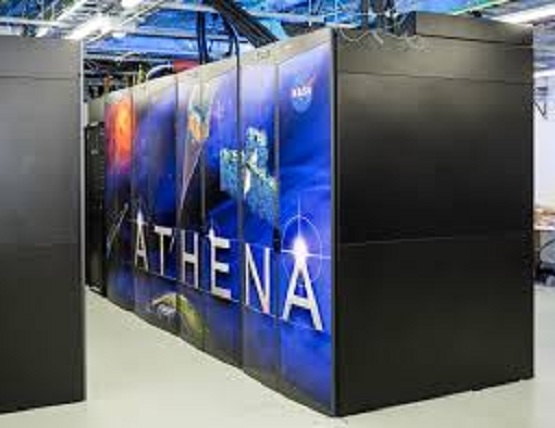
The National Aeronautics and Space Administration (NASA) has introduced a new supercomputer, Athena. It is an advanced system designed to support a new generation of missions and research projects. The Athena is a petascale supercomputer, which is NASA’s most powerful computer designed yet. It is part of the space agency’s High-End Computing Capability project, helping scientists and engineers tackle some of the most complex challenges in space, aeronautics, and science.
The new supercomputer is housed in the Modular Supercomputing Facility (MSF) at NASA’s Ames Research Centre. The space agency claims that Athena produces more computing power than any of NASA’s other systems. It is said to be faster and power-efficient than the previous supercomputers, Atiken and Pleiades. Kevin Murphy, Chief Science Data Officer and High-End Computing Capability project lead, on this occasion said, “Exploration has always driven NASA to the edge of what’s computationally possible. Now with Athena, NASA will expand its efforts to provide tailored computing resources that meet the evolving needs of its missions.”
NASA’s Athena: Why does it matter?
NASA says it rolled out Athena in January to the scientists, engineers, and researchers who were already using the Atiken and Pleiades systems, after a beta testing period.
The new supercomputer can perform over 20 petaflops of peak performance. To understand this, think of NASA’s old supercomputers, Atiken and Pleiades, as mid-range smartphones: reliable, capable, and able to handle everyday tasks really well. Meanwhile, Athena is a flagship handset which is faster, performance-oriented, and power-efficient, which can run the most demanding apps without slowing down. So, NASA’s Athena is a major upgrade to a premium device that unlocks new possibilities.
Athena is crucial for NASA’s space missions and research. The capability to perform trillions of calculations per second enables the space agency to have enough computational power to stimulate rocket launches, design next-generation aircraft, and train large-scale artificial intelligence (AI) foundation models capable of analysing massive datasets to reveal new scientific insights.
Why the name Athena?
The name Athena was selected in the March 2025 contest held among NASA’s High-End Computing Capability staff. Athena is the name of the Greek goddess of wisdom and warfare, and she is considered the half-sister of Artemis — the goddess after whom NASA’s lunar programme is named.
Athena: Specifications
Athena was built by Hewlett Packard Enterprise (HPE), using its HPE Cray EX4000 platform, which consists of high-density, liquid-cooled cabinets. The system is capable of a peak performance of 20.123 petaflops per second. In total, the supercomputer features 786 TB of system memory and 264,144 processing cores.