Third Launch Pad At ISRO's Sriharikota Spaceport Will Become Operational In 4 Years
03 Jan 2026 16:51:19
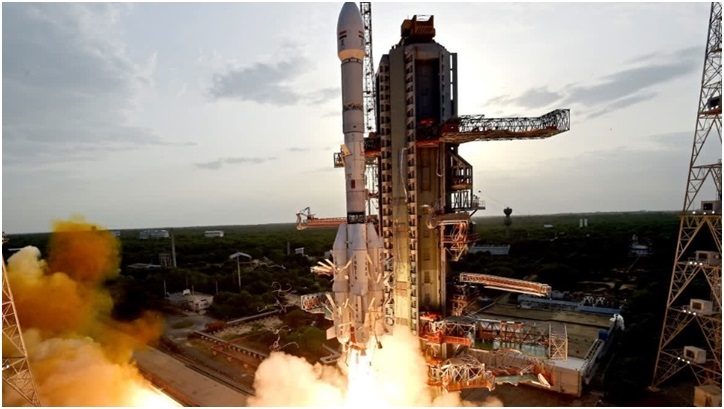
The Indian Space Research Organisation (ISRO) is preparing a third launch pad at the Sriharikota spaceport. To make this, the space agency is looking for the right vendors, said Padmakumar ES, Director and Distinguished Scientist, Satish Dhawan Space Centre (SDSC), Sriharikota.
Talking to PTI, the scientist mentioned that the new launch pad will be operational in four years, launching satellites weighing over 12,000 to 14,000 kg in various orbits in space. These satellites will be carried by Next Generation Launch Vehicles (NGLV).
"We plan to develop, install and commission a third launch pad in four years. Activities are going on for that. We are starting the procurement phase and identifying the right vendors to deliver us the support that is needed for the mega project," Padmakumar said.
ISRO currently uses three launch vehicles—the Polar Satellite Launch Vehicle (PSLV), Geosynchronous Satellite Launch Vehicle (GSLV) and Launch Vehicle Mark 3 (LVM3) or as previously called the Geosynchronous Satellite Launch Vehicle Mk-III.
Padmakumar emphasised that the upcoming third launch pad will be used for both crewed and uncrewed space missions. Meanwhile, the first and second launch pads are being used for PSLVs and GSLV space missions.
The Sriharikota spaceport already has two operational launch pads, which are known as First Launch Pad (FLP) and Second Launch Pad (SLP). The first port became operational in the early 1990s at SDSC SHAR, whereas the second one started operations in 2005. The third launch pad will join the SDSC SHAR for NGLV operations.
New Launch Complex outside Sriharikota
ISRO is also adding a new Launch Complex (not to be confused with a launch pad) for Small Satellite Launch Vehicles (SSLVs) to its roster. The spaceport is currently under construction at Kulasekarapattinam, Tuticorin District, Tamil Nadu. Talking about the complex, Padmakumar said the SLC (SSLV Launch Complex) would be used to launch Small Satellite Launch Vehicles (SSLVs), which can place satellites into the Low Earth Orbit.
"These satellites may weigh about 500 kg and can be placed in LEO. For such missions, we will be using that (Kulasekarapattinam) facility," he said.
Kulasekarapattinam was chosen as the location for the launch complex due to its strategic geographical location near the equator. It is located on the east coast and has no land to the south, allowing for direct southward launches over the Indian Ocean. This factor helps it minimise fuel consumption and maximise payload capacity for SSLVs, which is beneficial for cost-effective commercial satellite launches.
On February 28, 2024, Prime Minister Narendra Modi laid the foundation stone for the SSLV Launch Complex. Dr V Narayanan, ISRO's Chairman, laid the foundation for the Launch Pad at the SSLV Launch Complex (SLC) on August 27, 2025. The SLC consists of:
Stage preparation and vehicle integration buildings
Launch pad and rail track systems
Range systems
Checkout systems
Telemetry and tele-command systems
Safety and firefighting facilities
General Civic amenities
Major systems of SLC have been designed by SDSC, Sriharikota, which include the Mobile Launch Structure (MLS), bogies, platforms, doors, Jet Detection Duct, and vibration isolation systems. While major range systems such as radars, telecommand, and telemetry are being developed in-house and obtained through industry partnerships, with support from other ISRO centres, including VSSC, SAC, ISTRAC and IISU.