If Suits Are No Longer Just for Boardrooms, What Do They Become? Bespoke Label P N Rao Thinks Dalí Has the Answer
03 Jan 2026 15:51:37
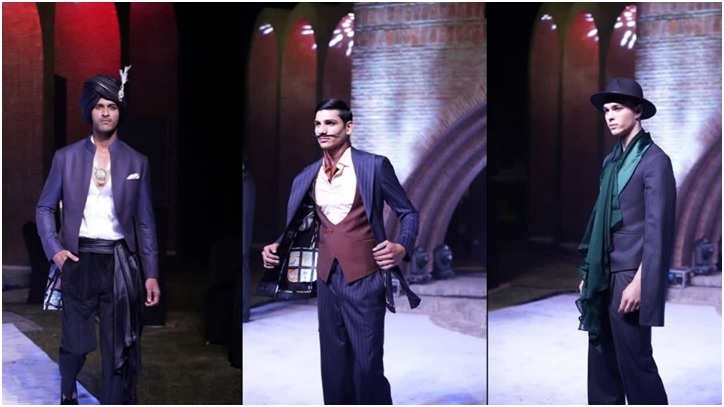
Watching a serious tailoring house flirt with whimsy is a bit like seeing your school’s maths teacher suddenly reveal they play in a jazz band. You don’t quite know where to look, but you’re glad it’s happening. That was the mood on the lawns of the Belgian Ambassador’s residence in New Delhi last month, where P N Rao Fine Suits, one of India’s most venerable bespoke names, stepped into the strange, dreamlike universe of late artist Salvador Dalí.
The occasion was The Surrealism Soiree, an elegant collision of art history and menswear, curated by Brussels-based luxury textile house Scabal and fashion impresario Prasad Bidapa. At its heart were twelve surrealist paintings commissioned from Dalí in 1971 by Scabal’s founder Otto Hertz, asking the artist to imagine what men would wear in the year 2000. Dalí, being Dalí, responded with dandyism, absurdity, theatrical appendages, and the kind of confidence only a man with a wire-thin moustache and no fear of ridicule can possess.
Fifty-five years later, those paintings have been translated into cloth (the Vision Collection) and for their India debut, four Indian ateliers were invited to interpret them. P N Rao’s response was precise and thoughtful.
From Surrealist Dreams To Drawstring Trousers
P N Rao is not a brand known for drama. Founded over a 100 years ago in 1923, the Bengaluru-based tailoring house built its reputation on clean lines, impeccable fit, and a reassuring sense of order. This is the kind of place you go when you want your suit to behave itself. Which is exactly why Dalí was such an interesting provocation.
“What I liked about Dalí was the way he could take viewers into another realm,” says Ketan Pishe, Partner at P N Rao. “We are a clean, classic brand. Dalí is whimsical. This was a chance for us to push the boundaries.”
Three Looks
And push them they did; carefully, deliberately, with a tailor’s measuring tape firmly in hand. Their three-look capsule (Business, Red Carpet, and Wedding) was built on a philosophy that has defined modern menswear: fabric first, comfort non-negotiable, and formality no longer compulsory.
The Business look was perhaps the most revealing, because it spoke directly to the post-pandemic male psyche: a man who still wants to look sharp but refuses to suffer for it. Suits, Pishe notes, are no longer locked into stiff rituals. “In the post-pandemic era, suits have become more casual,” he says. And so P N Rao responded with a deconstructed shacket (a hybrid of shirt and jacket) cut asymmetrically in Scabal suiting fabric.
It was architectural without being rigid, paired with relaxed drawstring trousers that suggested you could, in theory, go from a meeting to a coffee without changing. This, apparently, is what the modern business meeting looks like: less boardroom intimidation, more self-awareness. Dalí would have approved.
Modern Indian Dandy Meets A Melting Clock
If the Business look was about loosening rules, the Red Carpet look was about controlled extravagance. A lustrous grey striped suit featured green Deco pick-stitch detailing, anchored by deep-green velvet shawl lapels. It felt confident without being showy, luxurious without shouting. This was Dalí filtered through P N Rao’s discipline. But it was the Wedding look that truly revealed the collection’s soul. For the Wedding ensemble, P N Rao leaned into history (both Indian and Western) and came up with something radical. The look featured a Bandhgala-neck tailcoat, paired with velvet trousers and a Darbari-inspired cummerbund. The silhouette blended Indian royal elegance with Savile Row structure, evoking what Pishe describes as the Indian dandy.
“We took inspiration from Maharaja Duleep Singh,” he explains (a man who famously navigated colonial Britain in impeccable tailoring, merging cultures before it became fashionable to call it fusion). It shows, Indian menswear has always been global, always hybrid, always capable of elegance on its own terms.
What made the evening resonate wasn’t just the clothes, but also the sense of continuity. Scabal, after all, was the first to introduce the idea of the fabric ‘bunch’, now standard across tailoring houses worldwide. Its decision to commission Dalí in 1971 was an act of faith in imagination. For P N Rao (fresh off celebrating its centenary in 2023), the collaboration was less about reinvention and more about evolution. A classic brand, momentarily stepping into a dreamscape, then returning with sharper instincts. As Pishe says, “We always go to the source of the brief.” This time, the source happened to be a surrealist genius who believed fashion should be strange, expressive, and a little theatrical.