Miranda House Lab Develops Biological Sensors To Identify Blood Clots, Detect Heart Attacks On Time
Total Views |


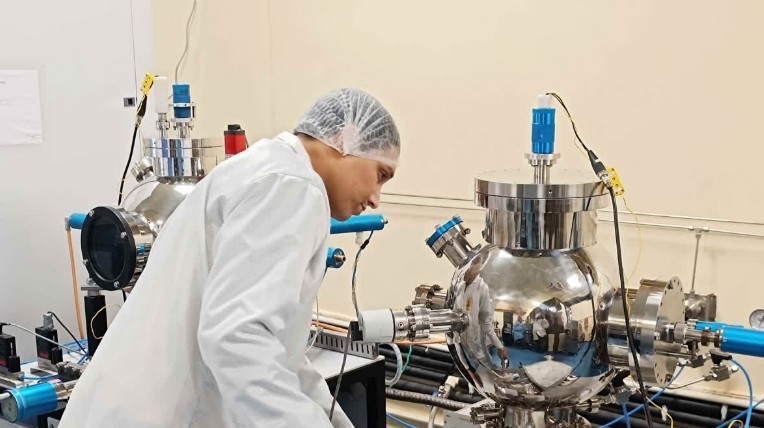
New Delhi : News of sudden deaths due to heart attacks has become commonplace these days. Whether it's soldiers deployed to protect the country, or ordinary people going about their daily lives, heart attacks have become a major challenge.
One of the main reasons for this is blood clotting in the body. Now, the Smart Materials and Devices Lab (SMDL) at Miranda House College, Delhi University, is developing biological sensors that can identify this danger in time and help save lives.
How These Biological Sensors Can Help Our Soldiers
Indian soldiers are deployed on the country's borders, often in high-altitude and extremely cold regions, where the temperature drops below freezing point, affecting the body. Dr Anjali Sharma, Associate Professor, Department of Physics and Astrophysics at Miranda House, explained, "In extreme cold, the blood in soldiers' bodies thickens, increasing the likelihood of clotting. This significantly increases the risk of heart attacks."
She added that the biological sensors being developed at SMDL, will be able to identify whether the level of blood thickening in a soldier's body is becoming dangerously high. This will allow for timely treatment.
How These Sensors Work
These biological sensors will measure changes occurring inside the body. Through specific biomarkers, it can be determined whether the blood clotting process is normal or not. If the sensor indicates that blood clotting is increasing, an immediate warning will be issued, allowing doctors to provide necessary medication and treatment in time.
Also Beneficial For Laymen
This technology is not limited to military applications. Dr Sharma said, "Blood clotting is a major cause of heart attacks in the general population too. If our biological sensors reach the general public in future, it will be a major achievement. These sensors could prove to be life-saving, especially for the elderly and people with high blood pressure, diabetes, or heart disease."
New Hope In Point-of-Care Diagnostics
A major advantage of the biosensors developed at SMDL is that they can be used for point-of-care diagnostics. This means that health checks will be possible on-site, without relying on large hospital machines.
PhD candidate Jatinder Pal Singh explained that these sensors enable on-field testing, providing patients with immediate results.
From Chip To Handheld Device
At the Smart Materials and Devices Lab, the sensors are not limited to theoretical concepts. Research scholar Tanya said the entire fabrication of the sensors is done here. Prototypes have been developed, from micro-level chips to handheld devices. This means that in future, these sensors will be miniaturised, portable, and easy to use.
The Journey From Research To Market Takes Time
Dr Sharma explained, "No research goes directly to the market. First, the technology is strengthened at the R&D level, and then it is mass-produced in collaboration with industry. This process usually takes about 5 years. Currently, the patenting and industry collaboration process is underway."
Also Part Of Research: Gas And Pollution Sensors
The SMDL lab is not only developing biological sensors, but also sensors to detect and measure gas, temperature, and magnetic fields. In cities like Delhi, toxic gases like nitrogen dioxide, sulfur dioxide, and carbon monoxide, which are emitted by vehicles, pose a serious health threat. The sensors being developed to detect these gases can play a crucial role in pollution control.
Safety Shield For Homes, CNG Lines, Industries
Dr Sharma added these sensors can be installed in homes with CNG and PNG gas lines, CNG pump stations, and industrial sites. If there is a gas leak, the sensor will immediately sound an alarm, preventing major accidents.
The Future Direction
The research being conducted at Miranda House has potential to bring about significant changes in the fields of health and safety in the future. From saving soldiers' lives to protecting ordinary people from serious illnesses like heart attacks, this biological sensor is emerging as a new ray of hope. If this technology successfully reaches the general public, it could revolutionise healthcare and save many lives by enabling timely intervention.