Why Iran's Turmoil Has Forced India To Sound The Evacuation Alarm
16 Jan 2026 15:30:17
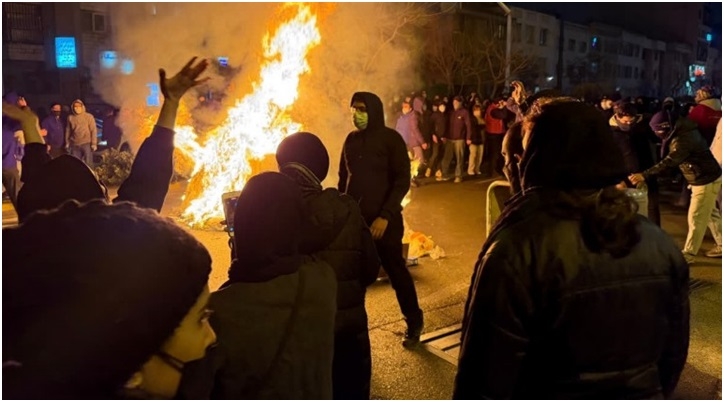
New Delhi : The Indian Embassy in Iran’s advisory on Wednesday urging all Indians to leave Iran by all available means of transport, including commercial flights, marks one of New Delhi’s strongest security warnings in West Asia in recent years.
Such language is usually reserved for situations where governments believe a host country may be approaching a point of serious internal breakdown or prolonged instability, underlining the gravity of the crisis now unfolding inside Iran.
"In continuation of the advisory issued by the Government of India on January 5, 2026, and in view of the evolving situation in Iran, Indian nationals who are currently in Iran (students, pilgrims, business persons and tourists) are advised to leave Iran by available means of transport, including commercial flights," the advisory reads. "It is reiterated that all Indian citizens and PIOs should exercise due caution, avoid areas of protests or demonstrations, stay in contact with the Indian Embassy in Iran and monitor local media for any developments."
The advisory issued by the Embassy of India in Tehran further urged all Indian nationals in Iran to have their travel and immigration documents, including passports and IDs, readily available. It urged Indians to contact the mission for any assistance in this regard.
In diplomatic practice, advisories to "leave immediately" are issued only when a government believes it can no longer ensure the safety of its citizens through routine consular support. The Indian Embassy’s warning to nationals in Iran therefore carries particular weight, suggesting that New Delhi sees the country’s internal turmoil as entering a phase where violence, arbitrary detentions or disruptions to transport and services could escalate rapidly.
The current wave of unrest in Iran began in late December 2025, sparked by widespread discontent over deteriorating economic conditions – including soaring inflation, high food prices and a collapsing currency – and broader frustration with political repression and governance failures. Initially rooted in economic grievances, the demonstrations rapidly expanded into mass anti-government protests with political demands that challenge the Islamic Republic’s leadership and call for systemic change.
According to human rights monitoring groups, the protests quickly spread nationwide, encompassing hundreds of cities and towns across all 31 provinces, making this arguably the most extensive unrest Iran has faced in decades. Large numbers of Iranians have taken to the streets under powerful slogans that go beyond economic issues to critique the political system itself.
A severe internet and communications blackout imposed by Tehran has made independent verification difficult, but rights groups report a rapidly escalating human toll. As of mid-January, one monitoring group estimated over 2,500 deaths, tens of thousands of arrests, and thousands of severe injuries – figures that the Iranian government either downplays or does not officially confirm.
According to reports, Iranian authorities have responded with a brutal security crackdown, deploying the Islamic Revolutionary Guard Corps (IRGC), Basij militia units and regular police forces to suppress protests. Human rights organisations, including Human Rights Watch and Amnesty International, have documented unlawful use of force, live ammunition, beatings, mass arbitrary arrests and intimidation tactics against largely peaceful demonstrators.
State media and government officials have labelled protest activities as "riots" or acts of foreign-inspired instability, and some have accused external powers of fomenting unrest. Tehran has also taken disciplinary actions against protest leaders and activists, including charging some with capital offences.
Despite official claims that the situation is "under control", the persistence of demonstrations and symbolic acts against state authority indicate enduring challenges to the regime’s grip.
Meanwhile, from the earliest stages of the unrest, the US government expressed clear support for the Iranian people and condemnation of violent repression by Iranian security forces. US officials, including President Donald Trump and the country’s representatives at the UN, have consistently framed their stance as support for the rights of Iranians to free expression, peaceful assembly and political change.
Early statements from US officials criticised Tehran’s use of lethal force, with Trump explicitly stating that the Iranian leadership has "tremendous inflation" and that the regime responds to dissent with deadly force. The US State Department also used its Persian-language social media channels to "stand with Iranians in the streets", describing the protesters’ demands as conforming to freedom and opportunity.
As the crisis deepened, President Trump’s rhetoric became markedly more forceful. On Tuesday, Trump took to social media to encourage Iranian protesters to persist in their efforts, saying "help is on its way" and urging them to "take over your institutions". Though he did not spell out specific assistance, his language signalled an escalated US posture of active support for Iranian resistance to the regime.
Trump also announced economic measures such as a 25 percent tariff on imports from countries trading with Iran – intended to increase economic pressure on the Iranian state.