India Calls For Pragmatic Engagement With The Taliban: Amb Harish Tells UNSC
16 Dec 2025 14:22:33
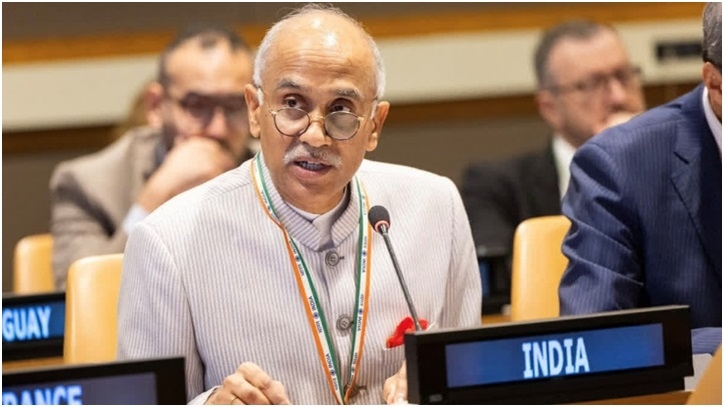
India told the UN Security Council
that it calls for a “pragmatic engagement” with the Taliban as New Delhi
underlined that a focus on only punitive measures will ensure a 'business as
usual' approach.
Addressing the UN Security Council
meeting on the Situation in Afghanistan on Wednesday, Harish said India calls
on the United Nations and the international community to adopt nuanced policy
instruments that help bring sustainable benefits for the people of Afghanistan.
"India calls for a pragmatic
engagement with the Taliban.
A coherent policy of engagement should incentivise
positive actions. A focus on only punitive measures will only ensure that a
'business as usual' approach continues as we have been seeing now for the last
four and a half years," India's Permanent Representative to the UN Ambassador
Parvathaneni Harish said. He reiterated India’s commitment to meeting the
development needs of the people of Afghanistan. Harish said the recent decision
by the Indian Government to restore the status of Delhi’s Technical Mission in
Kabul to that of an Embassy “underscores this resolve."
"We will
continue our engagements with all stakeholders to augment our contribution to
Afghanistan’s comprehensive development, humanitarian assistance, and
capacity-building initiatives, in keeping with the priorities and aspirations
of Afghan society,” he said.
Afghan Foreign Minister Amir Khan
Muttaqi was in New Delhi on a six-day trip in October, the first senior Taliban
minister to visit India after the group seized power in Kabul in 2021.
External Affairs Minister S Jaishankar
held wide-ranging talks with Muttaqi, announcing the upgrading of Delhi’s
technical mission in Kabul to the status of an embassy and pledging to renew
its development works in Afghanistan.
India had withdrawn its officials from
its embassy in Kabul after the Taliban seized power in August 2021.
In June 2022, India re-established its
diplomatic presence in the Afghan capital by deploying a "technical team”.
India continues to closely monitor the
security situation in Afghanistan, Harish said.
He emphasised that the
international community must coordinate efforts towards ensuring that entities
and individuals designated by the UN Security Council - the ISIL and Al Qaida
and their affiliates, including the Lashkar e Tayyiba and Jaish-e- Mohammed and
proxies of LeT such as the Resistance Front, along with those who facilitate
their operations - no longer indulge in cross border terrorism, a thinly-veiled
reference to Pakistan.
India echoed the United Nations
Assistance Mission in Afghanistan’s (UNAMA) concern over airstrikes and
condemned the killing of innocent women, children and cricketers in
Afghanistan.
“We also note with grave concern the
practice of ‘trade and transit terrorism' that the people of Afghanistan are
being subjected to by the cynical closure of access for a land-locked country
whose people have been suffering numerous debilitating conditions for many
years,” Harish said. “These acts are in violation of WTO (World Trade
Organisation) norms.
Such open threats and acts of war against a fragile and
vulnerable LLDC (Land-Locked Developing countries) nation, trying to rebuild in
difficult circumstances, constitute a blatant violation of the UN Charter and
international law." "While we condemn such acts, we also strongly support
the territorial integrity, sovereignty and independence of Afghanistan,” he
said.
Harish said that over the years, India
has been a strong advocate for peace and stability in Afghanistan.
"Coordinated regional and
international cooperation on key issues concerning Afghanistan is paramount, as
is strongly engaging relevant parties for promoting peace, stability and
development in the country,” he said.
Harish added that provision of
humanitarian assistance and building the capacities of the Afghan people have always
remained India’s priorities.
India already has more than 500 development
partnership projects across all provinces, Harish said.
As was decided during Muttaqi’s recent
visit to India, Delhi would further deepen its engagement in development
cooperation projects, particularly in the sectors of healthcare, public
infrastructure and capacity-building.
“We will continue working with UN
agencies in critical areas such as health, food security, education and
sports,” Harish said.
The Indian envoy said that the visit
of Afghan Minister of Industry and Commerce Alhaj Nooruddin Azizi to India also
helped further cooperation on connectivity, trade facilitation and market
access.
Azizi visited India along with a trade
delegation from November 19 to 25.