'He Died With His Boots On': Sharmila Tagore, Javed Akhtar And Anil Sharma Remember Dharmendra
01 Dec 2025 16:12:20
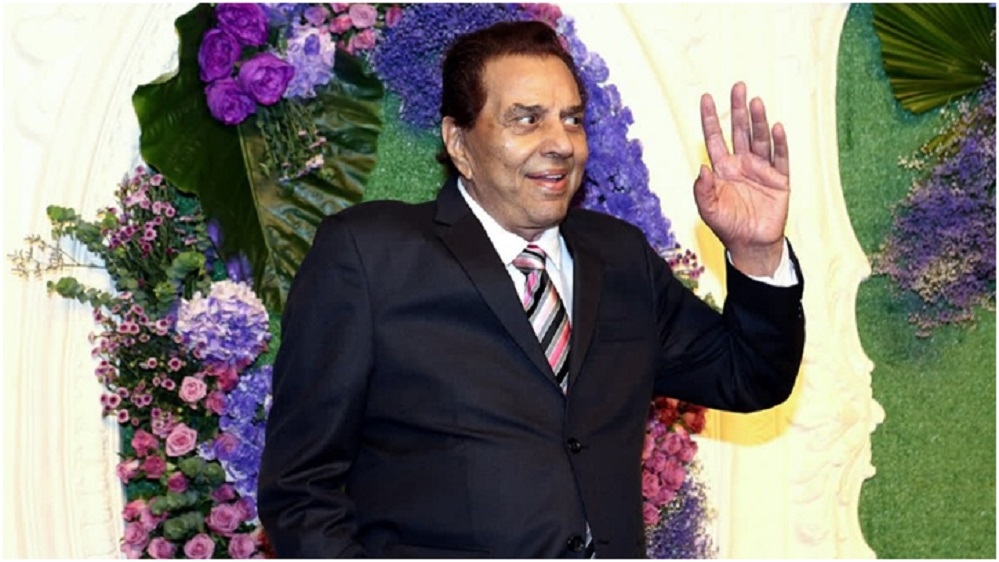
The passing away of Hindi cinema legend Dharmendra leaves a huge void in the industry. Javed Akhtar, writer of Dharmendra-starrer blockbusters like Sholay, Seeta Aur Geeta and Yaadon Ki Baaraat says, “The space that he has vacated will never be filled, there won’t be another Dharmendra”.
It was the unique blend of his “rugged masculinity” and “tender vulnerability” and his unmatched versatility across genres besides an enduring connection with a mass audience made Dharmendra a "context-neutral superstar" who remained relevant across changing eras of Hindi cinema. People who knew Dharmendra very closely say that the actor never cared for tags or labels like “Superstar” nor did he bother about his position in various polls conducted by newspapers and magazines. In fact, the actor wondered about his comparisons with Hollywood heartthrobs of the time, like James Dean and Paul Newman and he would say that he had not seen their films.
As filmmaker Anil Sharma says, “Dharam-ji would tell me that he didn’t know where he stood in various publication polls, but he knew that he occupied the number one position in people’s hearts. He was beyond a superstar.” And that suggests that he transcended the typical celebrity status through his enduring connection with the masses, his versatility across genres, and his down-to-earth persona. He was not confined to a single genre, moving seamlessly from action to romance to comedy, and from "macho to malleable" and "pulpy to philosophical" roles.
His ability to embody both rugged action heroes and sensitive, romantic characters, combined with his genuine humility and charisma, made him an emotional icon for generations rather than just a commercial success. In essence, Dharmendra carved a unique path by maximizing his strengths, avoiding the number games of his peers, and remaining a relevant and beloved figure for over six decades, a feat few in the industry have matched. Dharmendra's strength lay not in a "superstar" aura of exclusivity, but in his consistent ability to deliver commercially successful and critically appreciated performances across diverse roles, a feat unmatched in scale by his competitors.
“Yes, that is so true, and that is because he was constant; he had a steady presence in the industry... even now he has been busy with films like Rocky Aur Rani... and now Ikkis is coming up. He died with his boots on, so to speak,” says Sharmila Tagore. The two shared some of Hindi cinema’s most memorable films, like Satyakam, Anupama, and Chupke Chupke.
“Our first film together was Devar sometime in the mid-sixties. He has been there working throughout; he has done so many different kinds of films in different genres and he has always been like a star. His Phool Aur Patthar with Meena Kumari-ji was his first major hit, and from then on he was unstoppable," recalls Tagore.
"I was watching Anupama recently; he was so restrained and had such beautiful words... He accepted those soft roles; he didn’t think it was against his image. All these heroes want to be heroes all the time, they feel if they are beaten by the villain or portrayed in a docile manner then they would lose their hero-hood. But Dharmendra never thought that way. Look at his dialogues in Anupama for my character – ‘...that I have told her my doors are always open for her but she has to walk from her house to my house and that should be her conscious decision… I don’t want to grab her and bring her to me; she has to walk… she has to have that emancipation...’ Then, in Satyakam where he could be a loser. Lot of heroes would refuse saying my character is a loser. He has to beat the system, but he doesn’t want to do that and he wants to live according to his own morals and therefore he is beaten by the system. He chose such roles constantly and worked very hard. People think that these roles were beneath him. But Dharmendra never felt he would give less time to such roles and prioritise his other films,” says Tagore.
Tagore, who remained in touch with him over the phone in recent years further adds, “Dharmendra always behaved well, and behaviour is very important. He was a wonderful co-star. During the Satyakam shoot we had a very difficult crowd, we were mobbed but he was very cool and he looked after all of us – Hrishi-da was of a certain age, I was there, and his presence was very assuring. I remember only good things about him. Then his co-operation in adjusting and allotting time for our shoot when I had to go and see a cricket match in Kolkata… he worked from 2pm to 7am to finish the shoot to accommodate my plan. He didn’t have to. It was beyond the call of duty; he did it for me. And he never changed. I’m happy we had that time together.”
Dharmendra remained a dominant figure in Hindi cinema for over six decades. He maintained a phenomenal work ethic, often having multiple releases in a single year, which ensured a constant presence in theatres. He was in a different league because of his unique ability to deliver an exceptionally high number of commercial hits and display significant versatility, which allowed him to maintain a top position in Hindi cinema across decades despite intense competition from contemporaries like Rajesh Khanna and Amitabh Bachchan. He holds the record for starring in the highest number of hit films in Hindi cinema, delivering 75 hits as a lead actor, more than any other Hindi film actor. He delivered successful films throughout the 1960s and 70s, solidifying his status as a major star.
Critic and trade analyst Taran Adarsh says, “Dharmendra gave one hit after another; he used to deliver six to seven hits in a year. In today’s times it is difficult for any actor to give even one hit. I have seen that era. He was one actor who was loved across the board by the class, mass... he was the darling of the masses; he was like this Pied Piper who attracted a large number of followers... his films were often found housefull.”
Adds Manoj Desai, producer-theatre-owner and exhibitor, “He was comfortable doing both heavy and light films. On one hand he was seen in intense action-drama Mera Gaon Mera Desh, on the other hand he did this ever-green rib-tickling comedy Chupke Chupke. The first time I saw his craze was during the release of Seeta Aur Geeta in 1972. There was such a massive crowd in Gaiety Galaxy.”
Javed Akhtar says the “strange” spectrum in his personality is also reflected in his career as an actor which is rare. “He was both dignified and humble. Nobody could take any liberty with him and at the same time he was extremely polite. This strange combination can be seen in his acting and the roles he chose. At one end of the spectrum he was this He-man, a popular actor of action films and on the other hand he did films like Satyakam and Anupama where he was calm, gentle and poetic and the same reticent actor could be Veeru in Sholay. This strange spectrum in his personality or as an actor is very rare,” says Akhtar.
While other stars held the "superstar" tag at different points, Dharmendra's distinct approach enabled his sustained success. It was his versatility and mass appeal, prolific output and collaborative spirit, his off-screen humility and genuine personality earned him immense affection from fans and the film fraternity, further contributing to his enduring appeal. Industry people say that he never manufactured controversies or played "games" to protect an image, an authenticity that audiences appreciated across generations.
“It is the media and film industry that give these fancy tags but in reality, it is the people and fans who make them their idols and keep them in their heart. Dharam-ji is a star of people, a very grounded man who will remain in people’s hearts forever. He has not gone anywhere. He is the Greek God in the true sense. The kind of roles he did were unbelievable. He was dilon ke raja, har dil ki dastan,” says Anil Sharma, who met Dharmendra the first time on the sets of The Burning Train, where he worked as an assistant director.
“I was 18-19 years old… I remember I ran towards him and gave him the call sheet. He smiled, kept his hand on my head, blessed me saying, ‘Jeete Raho’. He told me that only hard work would lead to success. I can’t forget that moment. Later, in 1987 I made Hukumat with him and that became the biggest hit of my career. I spent my entire life with Dharam-ji and his family,” says Sharma.
Ask Sharma why the recipient of Padma Bhushan, who was a member of the 15th Lok Sabha of India (representing the Bikaner constituency in Rajasthan from the Bharatiya Janata Party) was cremated without State honours and the filmmaker says, “That was Dharam-ji's family matter. The entire country is mourning for him, for his loss which is far bigger than the State funeral.”