Gambhir & His Escapade Put India In Serious Trouble During Transition Phase
01 Dec 2025 16:14:32
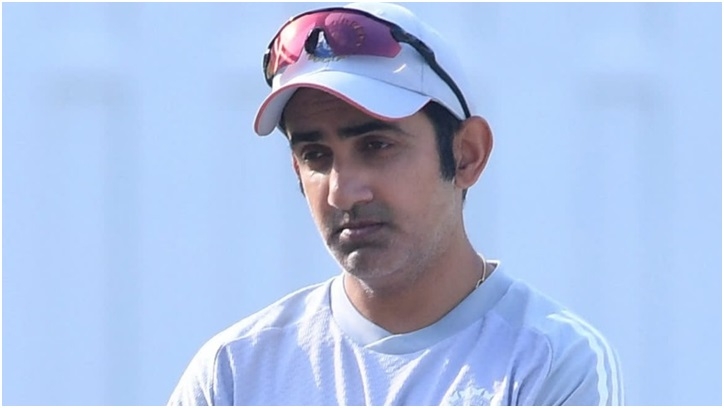
Touching the nadir has become a regular syndrome in Indian cricket for the last few seasons. Only after gulping the third whitewash at home at the Assam Cricket Association Stadium in Guwahati, Gautam Gambhir's boys now stare down the barrel and hope for a turn of fortunes.
Pointing fingers at mistakes won't help, as a massive surge of faulty decisions has pushed India to a precarious edge. It's not clear who took the call of suddenly preparing rank-turners at home, sans any kind of homework. If it was Gambhir and the team think tank's call to go for turning tracks, then he must own the responsibility of the drubbing against New Zealand last year and South Africa most recently.
After having been inflicted a 408-run rout in Guwahati, the policy makers of Indian cricket must go into a huddle and introspect on what went wrong. Once India were tagged tigers at home. But no more. In past, the Indians were a force to reckon with in the international circuit when it came to spin, both in batting skills and tweaking finesse.
However, the last two series exposed India's chinks in armour, both in terms of their batters' skills against spinners and Indian spinners' quality or the lack of it. The fact that only two Indian batters reached 50 in four innings in the last two Tests is a worrying piece of statistics. And not on unplayable wickets, but on wickets where foreign batters have got the better of the Indians.
Proteas spinner Simon Harmer's (17 wickets averaging 8.94) havoc and Indian batters' average of a shade over 15 in the series are testimony of batters' plight against spinners. South African skipper Temba Bavuma exhibited the skill of batting required on the turning wickets, both at the Eden Gardens in Kolkata and the Assam Cricket Association Stadium.
Here, India's strategy, without proper thinking, went for a toss. First, before opting to play on spin-friendly wickets, the Indian batters must have prepared themselves to be adept in batting in such conditions. To buttress the point, a simple piece of statistics is enough. Indian batters failed to surpass 250 across four innings against South Africa, with their highest being 201.
Secondly, the transition from Virat Kohli-Rohit Sharma-Ravichandran Ashwin era to a younger lot was done in a proverbial haste. The Indian batting found wanting against quality spin even on good batting tracks, let alone turners. Sai Sudharsans, Shubman Gills, Yashasvi Jaiswals were no answer 36-year-old offie Harmer of late.
Thirdly, the chopping and changing the side paved way for a nervous and unsettled lot. The hara-kiri in the dressing room following each humiliating defeat failed to boost the confidence and eventually led to catastrophe in the end.
Besides the selectors' mysterious call to keep one of the world's best fast bowlers Mohammad Shami away from the limelight despite performance, made little benefit to the team. Also, proven success like Akash Deeps, Sarfaraz Khans were made to warm benches at the drop of hat. The reasons for these indecisive moves is best known to Gambhir and the think tank.
Fourthly, a penchant for blooding in T20 performers in the Test format also boomeranged badly. The think tank's tendency to bank on below-averaged players like Harshit Rana and Nitish Kumar Reddy put India under pressure in every other game.
The last nail in the coffin was the unreal adventurism of the head coach. Tinkering with the batting order in every other match has had a strong bearing in the abject failure of the batting to fire when it needed. For instance, trying a certain Washington Sundar at number 3, the most crucial position, was akin to suicide. Also, Washington now has the distinction of batting in five positions in a short span of time. He has batted in numbers 3, 5, 7, 8 and 9 under Gambhir's coaching, which baffled from sports buffs to television pundits.
Soon after Washington failed at first down in Kolkata, the second Test match at Guwahati saw Sai Sudharsan coming in to replace Washington at that position. Sudharsan also failed to impress as a number 3 batter. The stubbornness and arrogance of the head coach, despite being on the wrong side on most of occasions plummeted India to a new low in Test cricket. Since 2000, India have lost only four home series under different coaches. However, Gambhir already has 2 series losses to his credit. The call for Gambhir's head is getting louder with each passing day, and it remains to be seen what the Board of Control for Cricket in India (BCCI) does to resurrect the India Test side. Knives are out in the open for the former India southpaw as far as Test coaching is concerned. The call to lift the Indian team from the gorge may eventually end up in looking beyond Gambhir, at least for the Tests.