Green Crackers: Are We Really Heading Toward A Pollution-Free Diwali?
17 Oct 2025 15:07:05
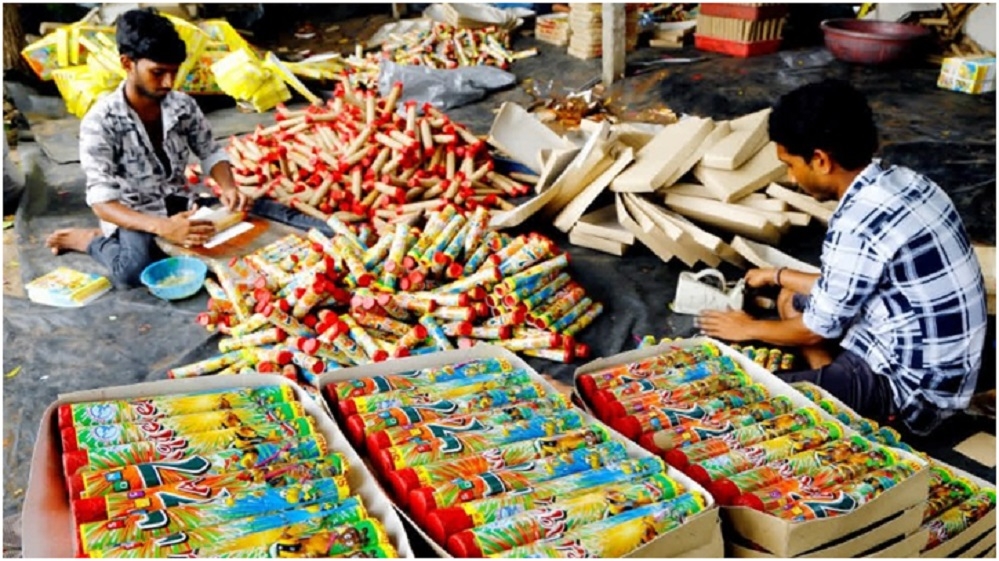
'Tis the time of lightning and festive cheers. Every year, Diwali lights up India, but the festive cheer is often filled with a haze of smoke and smog. It can cause respiratory issues in both people and animals. In response, the government and research institutions have pushed for 'green crackers', which are supposedly cleaner, safer, and less polluting alternatives to traditional firecrackers. These are designed to emit 30% less particulate matter, sulfur, and harmful gases. But with rising air pollution levels already choking cities and limited awareness about what truly qualifies as a 'green' firecracker, the question is: do these eco-friendly crackers genuinely make Diwali greener, or are they just a spark in the dark?
In 2018, the Supreme Court had banned the usage of traditional firecrackers, which resulted in the closure of the entire firework industry. In order to reduce the number of job losses, the Indian government has come up with a solution of eco-friendly crackers called Green Crackers.
What are Green Crackers
Green crackers are a low-emission alternative to conventional firecrackers, designed to reduce air pollution while still allowing festive celebrations. According to Council of Scientific and Industrial Research – National Environmental Engineering Research Institute (CSIR-NEERI), Green crackers are firecrackers made with reduction in size of shell, elimination of ash usage etc., reduced usage of raw materials in the compositions, of uniform acceptable quality, and/or use of additives as dust suppressants to reduce emissions with specific reference to particulate matter (PM*) [ SO2 and NO2] leading to, a minimum of PM reduction of 30%, a minimum of PM reduction of 20% and rest 10% of gaseous emission (mass of gases emitted based on composition) or more reduction of gaseous emission (mass of gases emitted based on composition).
All of the above reduction shall be based on when compared with conventional composition for a given category of crackers/fireworks.
How to identify Green Crackers?
The identification may be done by seeing the CSIR NEERI Logo. The scanner may be downloaded using ‘CSIR NEERI Green QR Code app” from Google Play Store. CSIR- NEERI issues the emissions testing certificate after thorough testing of the submitted green cracker sample by FW manufacturers, after which final approval is issued by PESO.
Difference between conventional firecracker and green cracker
Green crackers do not contain harmful chemicals and reduce air pollution. They are eco-friendly. Green crackers are less harmful as Fireworks is a device which contains gunpowder and other combustible chemicals which causes striking effects and when ignited they explode. Where as Conventional Firecracker is a device which contains gunpowder and other combustible chemicals which causes striking effects and when ignited they explode.
Green crackers include flower pots, pencils, sparklers, maroons, bombs, and chakkar, low thermite amount, minimum usage of Aluminium. Green crackers don't contain barium substance which is used in the firecrackers to add green colour. Green crackers will reduce at least 30 percent emissions using particulate matter Potassium Nitrate as an oxidant. Conventional Firecracker made of Black powder, Chlorates, perchlorates as Oxidising agent: 3. Nitrates, Reducing agent: Sulphur and Charcoal 4. Regulators: Metals 5.Coloring agents: Strontium, Copper, Barium. Sodium, Calcium, Iron 6. Binders: Dextrin.
Why they bettwe alternative to traditional fireworks
Green crackerhas pyrotechnic compositions similar to conventional firecracker. However, it is different from conventional crackers by virtue of having additional component of proprietary additives with following functionalities which are presently not there in conventional crackers:
Unique property of releasing water and / or air as dust suppressant and diluent for gaseous emissions
Overcomes issues of particulate and gaseous emissions
Reduced gaseous emission (CO, CO2, SO2 and NO2) due to effective absorbent materials.
Reduced uses of conventional chemicals Al, S, KNO3, with respect to their counterpart conventional crackers available in market.
Minimal usage of potassium nitrate and sulpur
Matching performance in sound (100-120 BA) and same incidental visual effect as with conventional crackers Absorption potential of additives for metal and gases.
Green crackers basically a light and sound show that produces lower emissions
Moreover, green crackers are ‘environmentally benign’ by virtue of reduced chemical and environmental footprint hence termed as ‘Green cracker’.
Health concerns due to fire crackers
According to Dr Amit Gawande, Pulmonologist and intensivist, burning crackers releases a significant amount of pollutants into the air. "These pollutants include particulate matter, sulfur dioxide, carbon monoxide, and various heavy metals. Inhaling these pollutants can lead to respiratory problems, cardiovascular diseases, and exacerbate existing health conditions such as asthma and bronchitis. Children, the elderly, and individuals with pre-existing health conditions are particularly vulnerable to these harmful effects," says Dr Gawande.
The pollution caused by crackers is multifaceted. It includes air pollution, noise pollution, and even soil and water contamination. Air pollution from crackers is particularly concerning due to the release of fine particulate matter (PM2.5 and PM10), which can penetrate deep into the lungs and bloodstream, causing severe health issues.
Noise pollution from crackers can lead to hearing loss, increased stress levels, and disturb wildlife. Additionally, the remnants of crackers can contaminate soil and water bodies, affecting plant and animal life. The environmental impact of crackers is no less. The release of greenhouse gases, such as carbon dioxide, contributes to global warming and climate change. The heavy metals and toxic chemicals released can settle on plants, affecting their growth and contaminating the food chain.
Moreover, the noise from crackers can disturb animals, leading to changes in behaviour, stress, and even death in some cases.