Trump's Iran Dilemma: No Easy Way Forward And No Easy Way Out
Total Views |


New Delhi : Six months into the most consequential American intervention in West Asia since the Iraq War, US President Donald Trump finds himself trapped in a quagmire of his own making.
The February 2026 war against Iran, which killed Supreme Leader Ali Khamenei and installed his son Mojtaba in his place, was meant to break Tehran's capacity and reshape the regional order in Washington's favour.
Instead, it has produced a version of Iran that is materially weaker but politically more coherent than before the war began.
The elite unity slogans emanating from Tehran mask real factional battles between hardliners demanding total victory and the moderates trying to hold the ceasefire together, but among ordinary Iranians there is a war-time sentiment that echoes the defiant nationalism of the Iran-Iraq war years.
Iranian sentiments are united by a rally-around-the-flag effect that has galvanised, and perhaps deepened, the sense of loss and revenge sewn into one.
Beyond the political goal, the strategic gambit in the Strait of Hormuz appears as a new challenge for Trump.
Despite the continued blockade by the US preventing Iran from exporting oil, the positioning is increasingly turning out to be a test of fortitude.
Across the Strait of Hormuz, Trump's unmet objectives sit alongside a simmering sentiment of revenge in Iran.
The counter-blockade by Iran since the war began in February has effectively closed the strait to normal traffic.
Trump’s method has been to hand Iran a genuinely new instrument of coercion: a counter-blockade that requires ships to seek Iranian permission to pass, forcing Muscat and Tehran into negotiations over a jointly managed corridor as a temporary alternative shipping route.
Washington's own “Project Freedom” – taking a southern route is, at best, a workaround, not a solution.
For ships and insurance companies, it is a losing bet.
The deeper cost is strategic rather than tactical, particularly by normalising blockade as a tool of statecraft in one of the world's most important chokepoints.
The US has demonstrated to China and other rivals that denial-of-passage is a viable option in a future crisis, whether over Taiwan or elsewhere.
Iran has, however inadvertently, been handed a template that other powers can study for ways to generate leverage using asymmetric warfare against a much larger power.
The greater cost to Trump, though, is at home in the unravelling of a regional architecture he spent his first term building.
The Abraham Accords were the signature achievement of Trump 1.0, and they now appear to be fraying.
For Saudi Arabia, whose accession to the Abraham Accords seemed to be a possible proposition when Trump recently tied Riyadh to a new civil nuclear agreement, a red line remains without a credible pathway to Palestinian statehood as a regional solution.
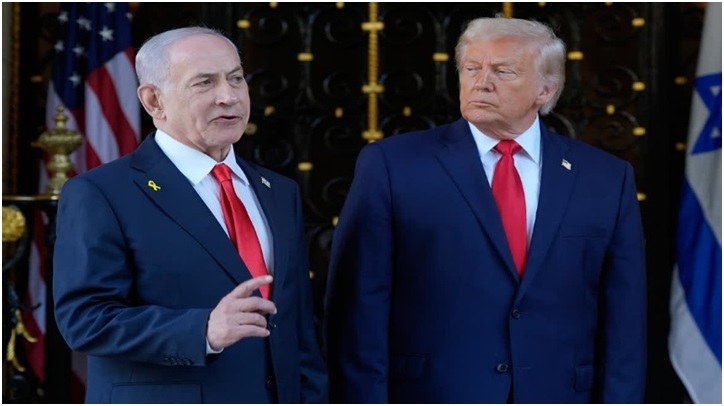
Meanwhile, upcoming elections in Israel in October this year have effected a seeming rupture in Trump's relationship with Israeli Prime Minister Benjamin Netanyahu.
Most recently, Netanyahu rejected Trump’s 15-point Gaza plan, insisting Israeli forces will not withdraw until Hamas is fully disarmed.
That rejection followed months of friction over actions against Iran, Israeli strikes in Lebanon, and Jerusalem's reluctant acceptance of the April ceasefire.
Trump, for his part, is trying to balance a diminishing yet sustained support for Israel against a domestic American coalition in which progressive anti-Israel sentiment has become one of the few threads uniting an otherwise fractured left.
Progressive Democrat Abdul El-Sayed won Michigan’s US Senate primary in August 2026, campaigning against unconditional military aid to Israel.