Tech Executives Sing Praises Of Artificial Intelligence And Ask For More Data Centres, This Time At G20 IM
Total Views |


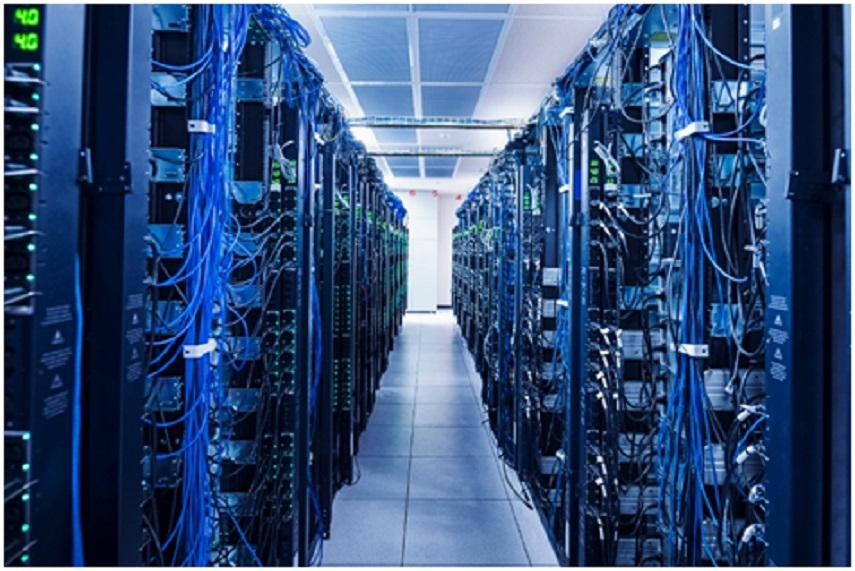
Singing praises of one's product is as normal as it can get, and executives at the AI companies in the US are no different. Personalities like Jensen Huang (Nvidia CEO), Sam Altman (OpenAI CEO), Mark Zuckerberg (Meta CEO), Dario Amodei (Anthropic CEO), Elon Musk (SpaceXAI CEO), Jeff Bezos (Amazon CEO), and others have repeatedly used their public appearances to advertise not only their AI tools but also to highlight why we need the technology in the first place.
The executives, while occasionally talking about regulations and safety, rarely forget to repeat how AI will transform industries just as electricity did, how countries that don't invest in AI will fall behind, why we should not worry about jobs, and why we need more data centres. At the G20 Innovation Ministerial in Chapel Hill, North Carolina, AI executives repeated the same script.
Through fireside chats with US Commerce Secretary Howard Lutnick and virtual addresses, the industry’s biggest names delivered a coordinated message: AI is as fundamental as electricity, massive infrastructure investments are non-negotiable, and overregulation poses a greater threat than the technology itself. Let’s take a detailed look at the delivered message.
Nvidia's Jensen Huang, during a fireside chat with Lutwik, offered a buoyant vision of an AI-powered future in which work that once took a decade could be completed in a year, while year-long projects could be finished within a month. "What do I expect in the next five, ten years? Things that take ten years are going to take one. Things that take one will take a month," he added.
Huang encouraged countries to approach the technology with optimism and raise their ambitions rather than allow uncertainty to dominate the public conversation. He compared the development of AI with earlier technological advances that initially appeared almost magical, including electricity, modern cars, and aircraft that became safer as their technology improved. AI, Huang said, would similarly advance through engineering, mathematics, software and responsible development.
Echoing Huang, OpenAI’s Sam Altman warned governments against shutting AI out of their countries, comparing such a move to rejecting electricity. He called AI adoption essential for economic growth and improved public services.
"I think it would be approximately as bad of an idea to say we're not gonna have AI in our country as it was to say we're not gonna have electricity in our country, you know, back 100 plus years ago," Altman said during a fireside chat with Lutwik.
Altman predicted that AI would eventually become so deeply embedded in everyday products that people would stop discussing it as a separate technology. "My prediction is we won't be talking about AI as much as we do in a decade from now, because we'll just expect it everywhere," he said.
Tesla and SpaceX chief Elon Musk projected that AI would increase the size of the global economy by 20-30 per cent, or roughly $20 trillion to $30 trillion, per year. Google DeepMind’s Demis Hassabis went further, suggesting achieving human-level AI would unleash ten times the impact of the Industrial Revolution.
Anthropic co-founder Tom Brown highlighted the economic value created by frontier AI laboratories, which he claims grows double every six months. Palantir CEO Alex Karp summarised the sentiment bluntly, calling AI "the most important technological development... in the last hundred years."
The Urgent Need for AI Infrastructure, Data Centres, and Power
The aggressive push for data centres is already sparking friction. In the US, data centre power demands are becoming a key political issue ahead of the 2026 midterms. Just recently, US President Donald Trump attacked opponents of AI data centres, claiming China could not be happier and communities pushing back risk becoming "backwards and poor".
Protesters outside the G20 venue criticised the environmental impact, arguing that the massive electricity and water requirements of these facilities are accelerating climate change. Meanwhile, AI executives at G20 could not be more vocal about the need for such structures.
Representing Nvidia, which makes hardware for AI data centres, Huang called AI data centres essential to national economies, comparing it with water, roads, electricity and the internet.
“Every single country needs to build infrastructure so that you could support your own local economy,” Huang said. “It becomes the capacity, the intellectual capacity, the digital intellectual capacity for you to support your researchers and students and society and industries and startups,” he added.
Huang presented AI as a “five-layer cake”, with energy at the absolute foundation, followed by chips, data centres, AI models, and finally, applications. Huang said building local infrastructure can quickly activate researchers and start-ups by giving them access to the computing capacity they need to develop products and conduct advanced research.
Altman said making AI widely available would require major investment in computing infrastructure, even as chips and algorithms became more efficient. Without sufficient capacity, he warned, AI could remain an expensive commodity available mainly to wealthy users. Altman said governments could adopt different regulations and decide whether to build or rent data centres, but using the technology is no longer optional.