India's Central Asia Push Faces the Familiar Challenge of Connectivity And Chinese Influence
Total Views |


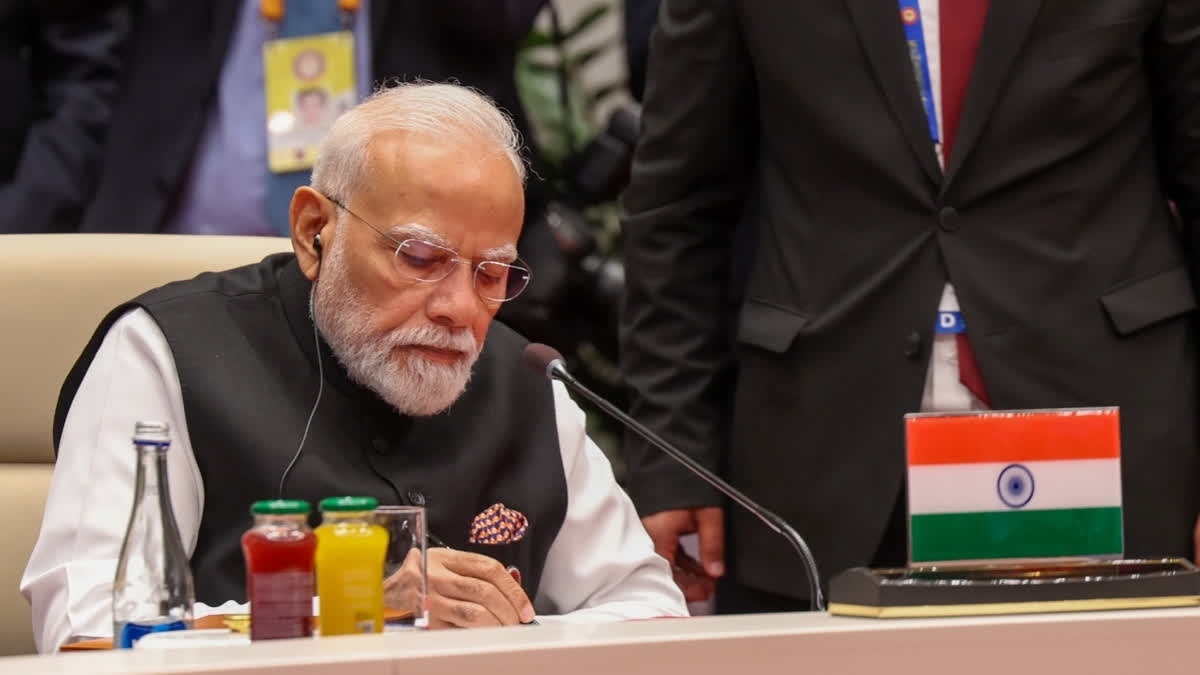
New Delhi : Prime Minister Narendra Modi's announcement that India would host the India-Central Asia Summit next year, after a five-year gap, signalled India's renewed interest in deepening strategic and economic links with the region.
The intent to host the summit, held only once in 2022, comes as discussions on a Free Trade Agreement between India and the Eurasian Economic Union, which includes Armenia, Belarus, Kazakhstan, Kyrgyzstan, and Russia, have reached an "advanced stage" just a year after talks were formally launched.
But will this diplomatic momentum translate into deeper economic ties, given connectivity projects to Central Asia are stuck in the crosshairs of both the Ukraine and Iran conflict, apart from the challenge of countering China's deep presence in the region?
The problem is familiar: India considers Central Asia as a part of its extended neighbourhood, but it has no direct access.
Lack of connectivity
The outreach to Central Asia comes as India seeks to diversify economic and strategic ties with a range of countries.
For India, the allure of Central Asian countries, which include Kazakhstan, Kyrgyzstan, Tajikistan, Turkmenistan, and Uzbekistan, lies in hydrocarbon reserves, critical minerals and as a destination for Indian goods.
Similarly, for Central Asian countries, India is not just a growing market but a third alternative to China and Russia, the main powers with substantial presence in the region.
Still, the biggest hindrance to deeper linkages is the lack of connectivity.
Unlike China and Russia, India doesn't share a land border with any Central Asian country, and the sole land route is inaccessible as it passes through Pakistan.
The effort to develop Iran's Chabahar Port, which would have given India access to Central Asia through Iran, has come to a grinding halt amid the Iran conflict and US sanctions.
Still, India is holding on for a post-conflict scenario, with Foreign Secretary Vikram Misri saying on Monday that India is in talks with "key stakeholders to find a sustainable way forward" for the Chabahar Port project
Similarly, the International North-South Transport Corridor, a network of railroads, highways and maritime routes connecting Russia. Central Asia and Iran has continued to move slowly amid the Iran and Ukraine conflicts.
Trade links growing
Still, despite problems of geography and lack of connectivity, trade ties have been going up, underlining the latent potential in ties
Trade between India and the five Central Asian nations reached under $2 billion in 2025, growing 3.5 times over the last 15 years.
India imports oil, fertilisers, raw silk and copper tubes while it exports manufactured goods, pharmaceuticals, and agricultural products to Central Asian countries.
And the intent to deepen economic linkages is evident on both sides.
During Modi's visit, Uzbekistan announced a 30-day visa-free regime for Indian citizens with an eye on boosting tourism and business linkages.
The two countries agreed to elevate India-Uzbekistan relations to a Comprehensive Strategic Partnership and discussed a framework for the long-term supply of uranium to India, apart from rare earth mineral cooperation.
At the 26th Shanghai Cooperation Organisation Summit in Bishkek, Kyrgyzstan. Modi advocated economic connectivity while emphasising sovereignty, addressing global impacts of conflicts on energy and trade
"India supports all efforts that connect markets, facilitate trade, and open new avenues of development,” said Modi.
Can India offer something different to China?
But a key question is whether India can overcome geography and geopolitical disruptions to turn interest into real influence in a region where China already has growing interest and influence.
China's trade with Central Asia is over $100 billion, and the region is an important transit and energy corridor in the Belt and Road Initiative.
According to the China-Global South Project. an independent, nonpartisan multimedia initiative, Chinese foreign direct investment has diversified from oil and gas into manufacturing, green energy like solar and wind, and agricultural technology.
Chinese investments are $35 billion in Central Asia, exceeding even Russian investments.
On the other hand, India's total cumulative investment in Central Asia is estimated at approximately $1.5 billion, while India's trade is under $2 billion
While India can't compete with China, analysts noted that it could nevertheless provide Central Asian countries with an alternative to balance China's growing dominance.
"Central Asian countries want India to do more and sustain their momentum of engagement. Future areas of cooperation are - digital infrastructure, AI, banking sector, sports, tourism, food security, textile, education and health sector," said Meena Singh Roy, a Eurasia and West Asia expert who is Head, Eurasia and West Asia Centre, Tillotama Foundation.
"Economic ties are a weak link in otherwise strong political and strategic relations between India and Central Asia."
She suggested India could appoint a Special Envoy for Central Asia.
While political and strategic interest to deepen ties is evident on the Indian and Central Asian side, connectivity will ultimately determine just how much influence India can wield in the region.
But in the absence of the connectivity projects, India could remain engaged and continue to look for ways to boost trade.
Said Roy, "We need to sustain the momentum of cooperation. If we hold the Central Asian Summit in 2027, we have to do it in 2028 also"