Ganesh Chaturthi Style Guide: Fashion Dos and Don’ts For Men This Festive Season
Total Views |


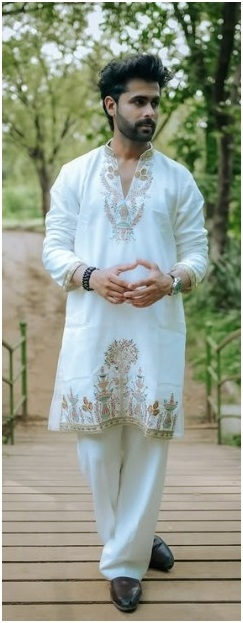
There are festivals in which a man can disappear into the background, and then there is Ganesh Chaturthi, when the house acquires flowers, lamps, music, sweets, relatives and neighbours. It is also the season when the Indian man's wardrobe is summoned from its comfortable exile. The T-shirt is temporarily forgiven. The shorts are sent away. The old jeans are told to wait. The question arises: What do men actually wear to welcome Lord Ganesha?
According to Ravi Gupta, Creative Designer and Director of Gargee Designer’s, the best festive dressing lies somewhere between tradition and ease: clothes that acknowledge the occasion without making you look as though you have been wrapped in the curtains of a wedding hall. He says the simplest way to begin is with colour and Ganesh Chaturthi offers plenty of it. The designer shared menswear dos and don'ts for the festival.
Let the Colours Of The Festival Into Your Wardrobe
Yellow, saffron, marigold orange, ivory, cream and green are among the colours that can immediately give a festive outfit its character. They have the advantage of looking celebratory without becoming excessively theatrical. Think of colour as the first note of a song. It should announce the occasion, but it does not have to sing the entire song by itself.
For a morning puja, Gupta suggests keeping things softer with ivory and cream kurtas. These shades have an elegance that works well with the peaceful atmosphere of morning prayers. As evening arrives and the aarti begins, the wardrobe can become brighter. Saffron, yellow, marigold orange and green can bring a little more energy to the outfit, particularly if the evening involves family gatherings and celebrations.
Don't Assume Festive Means Flashy
There is a peculiar misunderstanding about Indian festive dressing: that the more embroidery a garment contains, the more festive it must be. However, a well-cut kurta in a beautiful colour can look considerably more sophisticated than one carrying enough ornamentation to qualify as an independent source of light. The aim is elegance, not visual exhaustion.
If the kurta already has a bold print, intricate embroidery or a striking texture, allow it to be the centre of attention. The rest of the outfit should remain relatively quiet.
Do Give The Traditional Kurta A Modern Shape
The kurta has survived centuries, empires and changing governments. It is therefore unlikely to be frightened by a little modern tailoring. Gupta recommends smartly cut kurtas paired with straight pants, dhoti pants or even chinos.
This combination gives you the familiarity of traditional clothing without making the outfit feel overly formal. Straight pants create a clean silhouette. Dhoti pants add a more relaxed, contemporary character. Chinos, meanwhile, can make the look less ceremonious and more suitable for a casual family gathering.
Do Consider A Nehru Jacket Or Bundi
If the kurta is the foundation, the Nehru jacket or Bundi is the architectural flourish. It can add structure to an otherwise simple outfit and give the entire ensemble a sharper appearance. A plain kurta with a well-fitted jacket can often achieve more than a heavily embellished kurta attempting to do everything at once.
Do Finish The Outfit With The Right Shoes
Festive dressing does not end at the ankle. Mojaris, juttis and Kolhapuris can complete the traditional look without requiring you to spend the day wondering why your feet have suddenly become your enemies. Choose footwear that complements rather than competes with the outfit. If the kurta and jacket are already elaborate, understated footwear can provide balance. If the clothing is simple, a well-chosen pair of juttis or mojaris can add just enough personality.
Don't Sacrifice Comfort For Style
Festivals are not fashion photographs. You may have to sit through a puja, stand during an aarti, walk around greeting relatives, travel to another house, help with arrangements and spend considerable amounts of time on your feet. The outfit therefore needs to survive actual human activity. Gupta advises avoiding rigid artificial materials, excessive ornamentation and tight silhouettes. Instead, opt for lightweight fabrics such as cotton and linen, particularly in India's warm and humid weather.
Don't Turn The Puja Into a Black-Tie Event
Dark colours have their place. A deep navy kurta can look wonderful. So can charcoal, burgundy or black. But when dressing specifically for a puja, Gupta recommends avoiding too many dark shades together and instead choosing festive colours and light neutrals. The reason is partly visual. Ganesh Chaturthi is a festival of brightness: flowers, lamps, decorations, turmeric, vermilion and colour everywhere. Your clothes can participate in that atmosphere.
Do Learn the Art of Balance
One of the easiest ways to make festive dressing look sophisticated is to understand balance. A kurta with a bold print or intricate embroidery should ideally be paired with plain bottoms and understated accessories. If the kurta is plain, you can allow the footwear, jacket or accessories to introduce another element of interest. Think of it as a conversation. If everyone speaks loudly at the same time, nobody is actually heard.
Don't Over-Accessorise
You do not need a necklace, bracelet, watch, ring, brooch, pocket square and sunglasses all competing for attention. Choose one or two elements: A good watch, a subtle bracelet, a tasteful pocket square, maybe a simple brooch if the occasion calls for it. The idea is to look festive, not as though you have been awarded every available accessory at the same time.
So, this Ganesh Chaturthi, leave room for comfort and for the modaks. No festive wardrobe, however impeccable, should prevent a man from reaching the sweets table.