Delhi Set to Become a Theatre Capital as IHC Festival Brings 12 Diverse Productions to the Stage
Total Views |


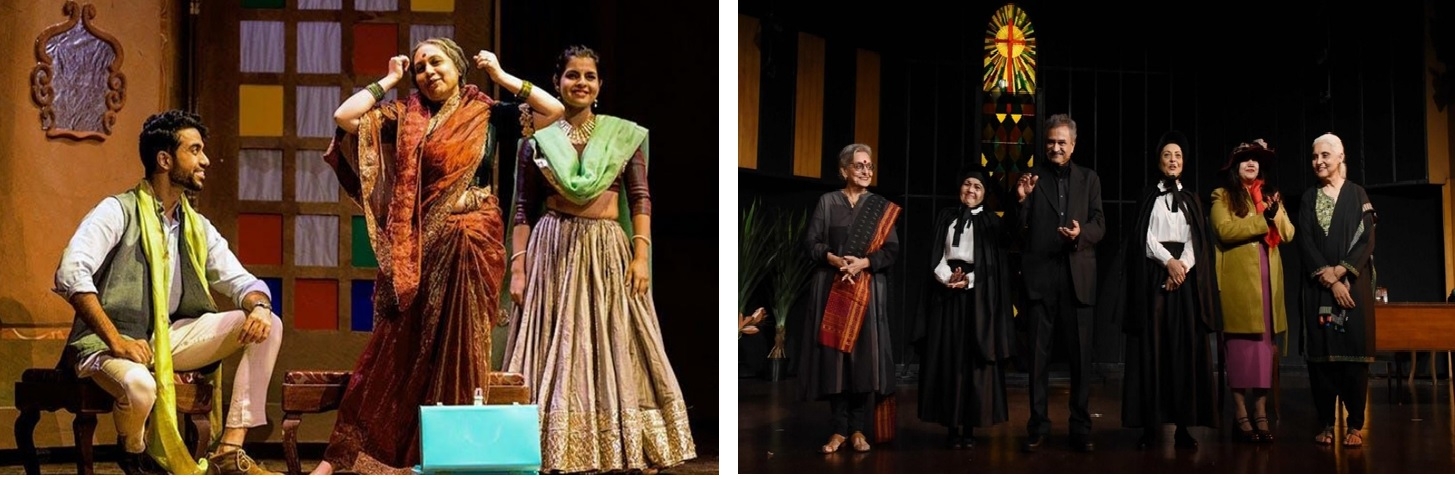
New Delhi : The capital is preparing for a vibrant celebration of contemporary Indian theatre as the India Habitat Centre (IHC) Theatre Festival 2026 returns from September 18 to 27 at the Stein Auditorium and The Theatre, India Habitat Centre, New Delhi. The 10-day festival is set to bring together a wide range of theatrical voices, languages, artistic styles and contemporary themes, reaffirming Delhi’s position as one of India’s important centres for performing arts.
Supported by the National School of Drama (NSD) and the Sikkim Repertory Company, this year’s festival will present 12 critically acclaimed and contemporary productions across four languages — Hindi, English, Tamil and Punjabi. The programme comprises nine mainstage productions and three performances at The Theatre, offering audiences an opportunity to experience contrasting approaches to storytelling within a single cultural platform.
The festival comes at a time when Indian theatre is undergoing an interesting transformation. While traditional theatrical forms continue to have a strong following, contemporary practitioners are experimenting with new narratives, adaptations, performance techniques and social themes. The IHC festival seeks to capture this changing landscape by bringing together productions that represent different generations and theatrical sensibilities.
A platform for diverse theatrical voices
The India Habitat Centre has hosted theatre productions throughout the year, but its annual theatre festival provides a much larger platform for artists and audiences. Instead of focusing on one particular theatrical style, the festival aims to showcase the breadth of Indian theatre.
According to the organisers, the programme has been curated to provide audiences with varied experiences, ranging from contemporary narratives and adaptations to regional and classical traditions. The selection also seeks to highlight productions with distinctive artistic voices and meaningful themes.
Prof. KG Suresh, Director of the India Habitat Centre, has emphasised the festival’s reputation for bringing together theatre that differs in language, form, sensibility and subject. The event, he noted, offers audiences the chance to encounter both established practitioners and newer theatrical voices.
The festival therefore functions not merely as a series of performances but as a meeting place for artists, theatre lovers, students, critics and cultural enthusiasts.
Storytelling at the heart of the festival
One of the defining characteristics of contemporary theatre is its ability to examine everyday experiences through a dramatic lens. The productions selected for IHC Theatre Festival 2026 reflect this approach.
Themes such as family, relationships, memory, identity, ageing, loss and social change are expected to find space alongside adaptations and performances rooted in regional traditions.
Productions such as “Dancing with Dad” and “Breast of Luck” are among the works scheduled to be presented during the festival. Their inclusion reflects the organisers’ effort to provide audiences with theatrical experiences that move beyond conventional storytelling.
For many theatre practitioners, the stage remains an important space for exploring questions that may not always receive adequate attention in mainstream entertainment. Live theatre allows performers and audiences to share an immediate cultural experience, making each performance unique.
Four languages, one cultural platform
The presence of Hindi, English, Tamil and Punjabi productions is another important feature of this year’s festival. India’s linguistic diversity has always played a significant role in its theatrical traditions, and the IHC festival brings several of these traditions together under one programme.
Multilingual programming also enables audiences to discover theatrical cultures beyond their familiar linguistic boundaries. A Hindi-speaking audience, for example, may encounter a Tamil production, while audiences accustomed to English-language theatre can experience Punjabi or Hindi storytelling.
Such programming strengthens cultural exchange and demonstrates that Indian theatre cannot be defined by a single language or theatrical tradition.
Encouraging emerging theatre practitioners
The festival also aims to provide space for emerging theatre practitioners. While established names have played an important role in the history of the event, the organisers have consistently sought to create opportunities for newer voices.
Over the years, IHC has hosted the work of several prominent theatre personalities, including Rajat Kapoor, Kalki Koechlin, Neelam Mansingh, Manav Kaul, Faezeh Jalali, Saurabh Shukla, Satish Kaushik, Atul Kumar and Ashwin Gidwani.
The participation of experienced theatre professionals alongside emerging practitioners can create valuable opportunities for artistic exchange. Younger theatre-makers gain exposure to established practices, while established artists encounter new approaches to performance and storytelling.
A festival without competition
Unlike many theatre festivals that are organised around awards and competitions, the IHC Theatre Festival describes itself as self-funded, non-competitive and non-commercial.
This approach places the emphasis firmly on the theatrical experience rather than on winning prizes. According to the India Habitat Centre, the festival attracts an average annual footfall of more than 5,000 theatre-goers.
The numbers underline the continuing demand for live theatre in the capital. Despite the rapid growth of streaming platforms and digital entertainment, theatre continues to attract audiences who value the immediacy of a live performance.
Affordable tickets aimed at wider audiences
Ticket prices for the 2026 festival have been fixed at Rs 200, Rs 350 and Rs 500, depending on the production and seating category.
The relatively accessible pricing is part of the festival’s broader objective of making quality theatre available to a wide and diverse audience. Affordable tickets can be particularly significant for students, young theatre enthusiasts and people who may be attending festival productions for the first time.
By keeping ticket prices within reach of a wider audience, the festival can contribute to developing a new generation of theatre-goers.
Building on a strong legacy
The IHC Theatre Festival has developed a substantial reputation through its earlier editions. The event has presented productions by established theatre groups and collaborated with leading institutions and organisations, including Ranga Shankara in Bengaluru, Adishakti Laboratory for Theatre, Art & Research, Akvarious Productions and the National Centre for the Performing Arts (NCPA).
Among the notable productions previously hosted by the festival are Akvarious Productions’ 80th show, “This Time,” as well as META Award-winning productions such as “Raghunath” and “Hunkaro.”
This history has helped establish the festival as an important platform within India’s theatre ecosystem.
Ten days of cultural engagement
The 2026 edition will run for ten days, giving theatre lovers multiple opportunities to attend performances and discover different styles of theatre.
The organisers say this year’s curation has been guided by the objective of creating a programme that is varied, engaging and representative of the many ways in which theatre is being imagined today.
That approach is especially relevant to contemporary Indian theatre, where traditional performance practices increasingly coexist with modern dramaturgy, experimental staging and new forms of audience engagement.
The festival’s combination of established productions, contemporary narratives, adaptations and regional traditions promises to make it an important event on Delhi’s cultural calendar.
Why the festival matters
The significance of the IHC Theatre Festival extends beyond the ten days of performances. Theatre provides an important space for cultural dialogue at a time when audiences are increasingly consuming entertainment through digital platforms.
A live performance creates a direct relationship between actors and spectators. The reactions of the audience, the atmosphere inside the auditorium and the energy of a live performance all become part of the experience.