India, China Agree To Advance Border Talks And Strengthen Commuication Between Their Militaries
Total Views |


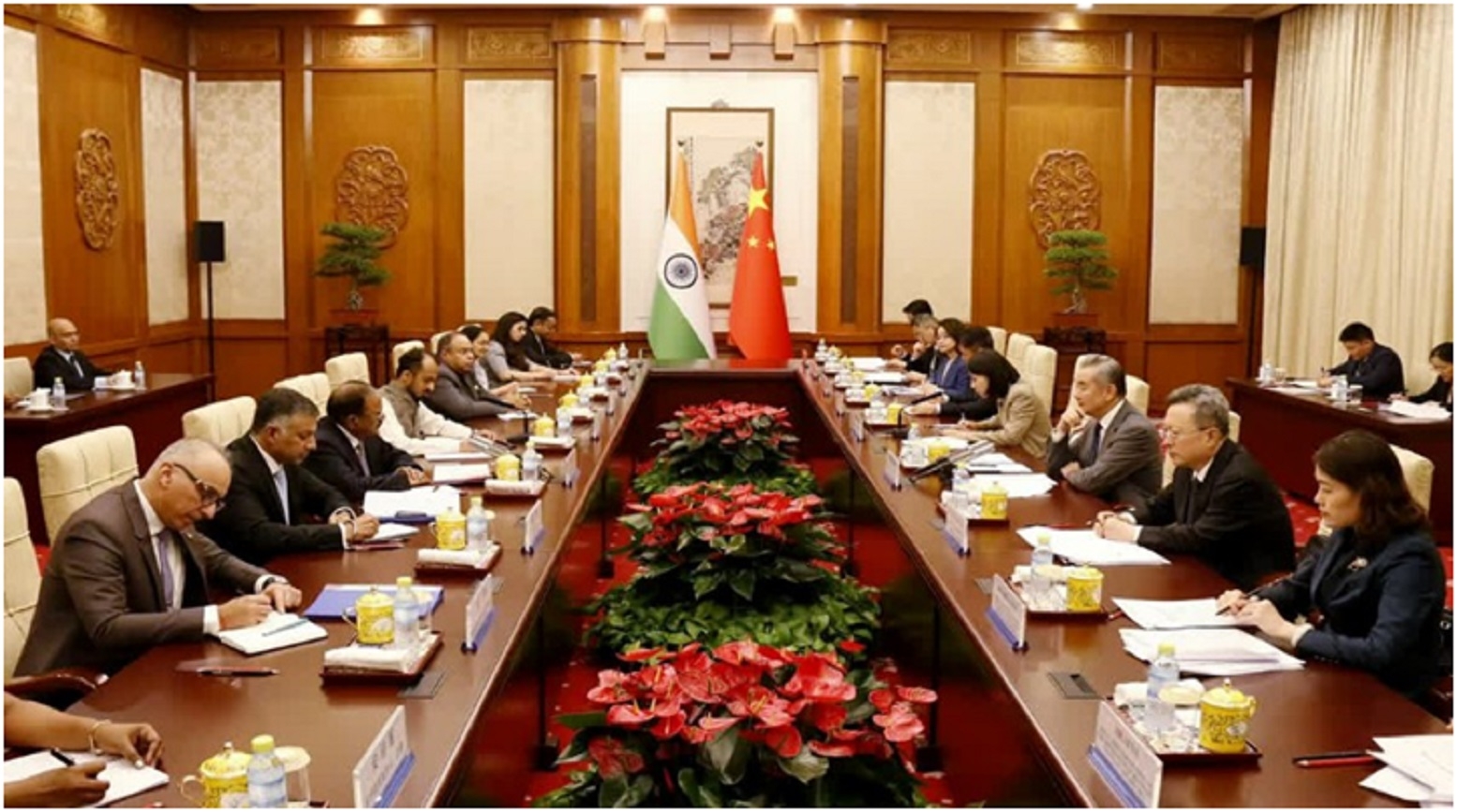
New Delhi : India and China agreed to strengthen communication between their militaries and advance talks on boundary delimitation as part of a series of steps to prevent border disputes from destabilising ties.
This is part of an eight-point "outcome and consensus" agreed at the 25th round of talks between National Security Advisor Ajit Doval and Chinese Foreign Minister Wang Yi held on Tuesday in Beijing under the Special Representative mechanism.
The mechanism was established in 2003 to address the boundary question between the two sides.
The eight-point outcome, released on Wednesday, outlined steps the two sides will take to strengthen border management and further discussions to address the border dispute.
This includes setting up an Expert Group on Boundary Delimitation and a Working Group on Border Management, which will respectively advance discussions on an "Early and Substantial Harvest of boundary delimitation and Border Management".
These groups will operate under the Working Mechanism for Consultation and Coordination on India-China Border Affairs and would first agree on their respective Terms of Reference, according to the eight-point outcome.
The two countries agreed last year to set up a group to explore an “early harvest” in boundary delimitation.
Still, to improve border management, the two countries agreed to an additional two meeting points to hold senior military commander meetings and two additional channels of border military hotline, in addition to existing ones, in the Eastern and Middle Sectors.
The Middle Sector covers the border with China running along Himachal Pradesh and Uttarakhand, while the eastern sector covers the border running along Sikkim and Arunachal Pradesh.
The discussion between India and China on Tuesday underlines how both sides are seeking to prevent any trouble along the border from destabilising the overall relationship as it did in 2020 following Galwan.
At the 36th Working Mechanism for Consultation & Coordination on India-China Border Affairs meeting, held in New Delhi in early August, both sides discussed boundary issues and mechanisms to prevent misunderstandings on the border becoming a major issue in ties.
India and China have moved cautiously on a reset, but unresolved border disputes between the two countries have continued to flare up.
Even as border trade resumed through Nathu La and Shipki La after a near six-year suspension, border tensions simmered along the Arunachal Pradesh border, which China claims as a part of Tibet.
Under the eight-point consensus, the two sides agreed to strengthen exchanges and cooperation in border trade, pilgrimage and other areas, "with the view to work together to create an atmosphere featuring dialogue, peace, consultation and cooperation in the border areas."
The Indian side appreciated Chinese efforts to increase the number of batches of Indian official pilgrimage Kailash-Manasarovar Yatra in the Tibet Autonomous Region of China.
The two sides agreed to hold the next meeting of the India-China Expert-Level Mechanism on Trans-border Rivers in September and maintain communication on issues including hydrological data sharing and renewal of the relevant MoUs.
India and China are stabilising ties amid global uncertainty, with conflicts in Iran and Ukraine already disrupting global energy supply chains and reshaping economic ties.
The meeting between the special representatives takes place as Chinese President Xi Jinping is expected to travel to India for the BRICS summit in New Delhi from September 12 to 13.