Voice of Rhythm with Sandip SoparrkarFinding Gender Identity Through Dance
Total Views |


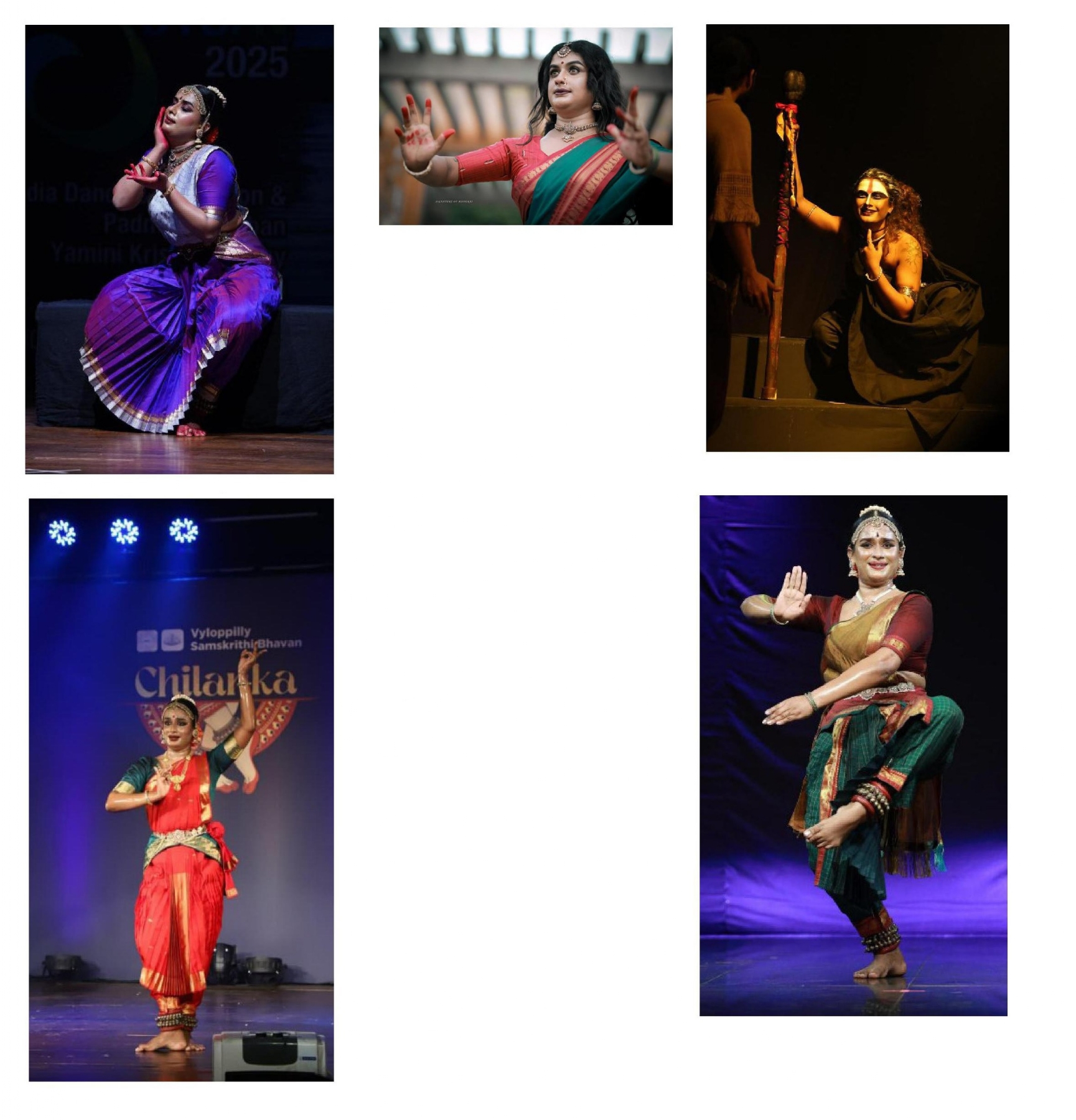
A Bharatanatyam dancer, educator, writer, activist, and a budding politician from Kerala, Adrija Das is a transgender artist, she has transformed her personal journey of self-realisation into a powerful artistic expression. She has trained under several renowned gurus and is particularly known for her nuanced abhinaya.
She became the first transgender jury member in the history of Kerala School Kalolsavam and has been empanelled with SPIC MACAY. Through dance and public life, Adrija continues to advocate for inclusivity, dignity, equality, and greater opportunities for the transgender community. Excerpts from the interview:
Tell us about your journey into Bharatanatyam and what inspired you to pursue it deeply?
My elder sisters were my first informal teachers, and what began as imitation gradually became a deep passion. My formal training in Bharatanatyam began under Sri Jeevan and Sri Thiruvallom Sundaresan, who gave me a strong foundation.
As I progressed, I had the privilege of learning from several distinguished gurus, including Sri RLV Raghu Narayanan, Sri Varanadu Saji, Guru Sri Pattom G Sanil Kumar, and Smt Kalakshetra Jisha Raghav. Acharyan Sri Dr G Ratheesh Babu introduced me to the professional world of art, while Acharya Dr Rajashree Warrier helped me explore the deeper nuances of abhinaya.
I have always been particularly drawn to female-oriented narratives, especially Nayika Varnams, Padams, and Ashtapathis. Their emotional complexity, exploring longing, devotion, strength and individuality, resonated deeply with my inner sense of womanhood. Gradually, Bharatanatyam became more than an art form; it became my voice and a way to connect tradition with my personal experiences.
How did dance help you understand your gender identity?
According to tradition, dance was created by Brahma as Natyaveda, a universal art intended for all humanity and later codified by Bharata Muni in the Natya Shastra. Dance has never belonged to one gender. Shiva, the Adi Narthaka, represents cosmic creation and transformation, while Vishnu as Mohini beautifully demonstrates grace beyond conventional gender boundaries.
As a male dancer, I initially struggled with social stereotypes and the expectations surrounding a largely female-dominated space. However, instead of allowing these challenges to become barriers, I used them to explore myself more deeply. Dance became a journey of self-discovery.
Over time, I grew into my true identity as a woman. I realized that the divisions we associate with gender are often imposed by society, not by the art itself. Dance has always existed beyond such boundaries.
What does your transition mean to you personally?
For me, this was never about transforming from a male dancer into a female dancer. Physically, people may describe it that way, but emotionally and mentally, I have always been a woman.
Even as a child, I felt different. I was naturally drawn to flowers, dolls and kitchen sets. Wearing my mother’s saree or my sisters’ bangles secretly gave me a sense of happiness and completeness that I could not explain then. I always celebrated the woman within me, although bullying and social stereotyping eventually made that expression difficult.
Therefore, my story is not about becoming someone else. It is about realizing who I have always been and finding the courage to live that truth.
How did the dance fraternity react to your journey?
The reactions were mixed initially. Some people supported me wholeheartedly and understood my journey as one of self-realisation. They felt that my authenticity actually deepened my abhinaya and artistic expression.
Others found it difficult to accept. There were questions, judgments and moments of distance influenced by social conditioning. However, I remained committed to my truth and my art.
Today, I can confidently say that I am accepted for who I am. That acceptance did not come overnight. It came through consistency, honesty and the courage to remain myself. Ultimately, my life and work spoke louder than people's doubts.
How does performing as a woman feel different?
Performing on stage now as a woman feels natural and complete. Earlier, I had the same dedication and love for Bharatanatyam, but there was always a small disconnect within me. I was expressing the art while still searching for my true self.
Today, that feeling has disappeared. The technique has not changed, but my expression has become more honest, confident and connected to who I am.
Do you feel there is competition or a sense of “territory” between male and female dancers?
I do not see Bharatanatyam as “their zone” or “my zone.” It belongs to all of us. Every dancer has a different journey, struggle and space within the art. I believe the true spirit of Natyaveda is inclusiveness. It was created for everyone, beyond caste, religion, race, creed, gender and even political boundaries. That universality should remain at the heart of Indian classical dance.
What would you tell dancers struggling with their identity or body?
I would tell them that they are not alone. Your body is not your limitation; it is your instrument. Like any instrument, it requires time, patience and understanding.
Do not rush to become someone else. Listen to yourself and understand what feels true to you. Use dance to explore, heal and express—not to hide, but to discover yourself. Trust your journey. When your body and soul finally move together, that is where true art begins.
Which performances and achievements have been most meaningful to you?
Every stage is special to me, but performing at the Koothambalam of Kerala Kalamandalam remains unforgettable. It is not merely a stage; it is a sacred space sanctified by generations of legendary performers.
Receiving the Natwar Gopi Krishna National Award from AIDA was another memorable milestone. In 2022, I was honoured to serve as a jury member for the same award. Receiving the notification of my ‘A Grade’ qualification in Bharatanatyam from Doordarshan was also deeply significant.
Being empanelled with SPIC MACAY gave me an opportunity to take classical art to wider audiences and younger generations. Another landmark achievement was becoming the first transgender jury member in the history of Kerala School Kalolsavam. For me, it represented not just personal recognition, but an important step towards greater representation and opportunity for the transgender community.