The End Of Matching Furniture? Mix-and-Match Design Is Changing Indian Homes
Total Views |


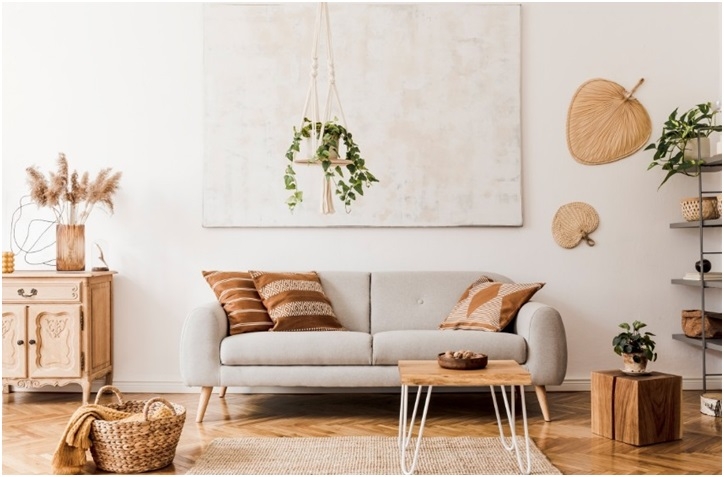
There was a time when buying furniture was a little like buying a school uniform. You picked a style, a colour, bought the sofa, the coffee table, the side tables and perhaps a couple of chairs from the same collection. Everything matched. It all looked as if it had been interviewed and approved by the same furniture committee. Then, you went home and wondered why your living room looked exactly like the showroom. That era may finally be ending.
Today's interiors are considerably less interested in matching and much more interested in belonging. A contemporary sofa can sit beside an antique cabinet. A modern lamp can share a room with a weathered wooden chest. A handmade ceramic bowl can sit happily on a designer coffee table. The result isn't supposed to look perfect but lived in.
Kirti Madan, Creative and Art Director at Mahima Group, says homeowners are increasingly designing their spaces to appear as though they have been assembled over time rather than purchased in one enormous shopping expedition. “The trend of mixing styles, materials, and objects is one of the biggest trends in the world of interiors today,” she says.
This makes sense because most interesting homes, like most interesting people, are made up of contradictions. You might love clean contemporary furniture but also have your grandmother's wooden chest. You might want a modern kitchen and an antique mirror. There is no reason all these things cannot coexist.
Of course, there is a catch. “Mix-and-match” does not mean throwing everything you own into one room and hoping for the best. That is moving house without unpacking properly. Madan says the secret to making contrasting styles work is finding harmony through a common colour palette, proportions and repetition of textures. So, yes, you can combine an antique cabinet with a contemporary chair. But give them something to talk about. Perhaps they share a colour or the wood tone of one is echoed somewhere else, or the same fabric appears on two different pieces. The furniture doesn't need to match. It just needs to understand that it is attending the same party.
The sofa has traditionally been the hero of the Indian living room. Now designers are increasingly breaking up that relationship. A modern sofa might be paired with a vintage armchair, a sculptural side table and an inherited wooden stool. The result is more relaxed and less predictable.
Purva Gokhale, Concept Designer and Founder of D20 Elements, describes this shift as a move away from rigid design rules and towards interiors that reflect individual personalities. “The last decade saw thematic interiors that left little or no space for a personal touch,” she says. In 2026, she sees greater freedom in the way people combine styles. Your home should tell people something about you before you have had to explain yourself.
One of the more interesting combinations emerging in contemporary interiors is Wabi-Sabi (a Japanese worldview centred on finding beauty in imperfection and impermanence) with modern Indian and antique elements. Wabi-Sabi brings soft tones, curved forms and an appreciation for imperfection. Indian heritage pieces add colour, craftsmanship and history. Old-money accents provide a little quiet luxury. Put together thoughtfully, the combination creates something that feels both grounded and sophisticated.
The important word here is “thoughtfully”. You don't need to turn your living room into a museum of every design movement since 1950. Give each element room to breathe.
Another interesting combination is contemporary furniture with industrial elements and Naga-inspired accents. Imagine clean-lined modern furniture alongside exposed brick, metallic pipes and leather. Then introduce weathered wood or an unusual sculptural piece inspired by Naga design. Suddenly, the room has tension that can be a very good thing in interior design. A completely uniform room can be comfortable but forgettable. Contrasting materials give the eye somewhere to travel.
Imran Khan, Concept Designer and GoldLeafing Artist at The Gold Leafing Studio, sees gold leafing fitting naturally into this more layered approach. “Rather than using it to create an entirely traditional room, designers can apply it selectively to furniture, frames, sculptures, architectural details and even unexpected materials such as wood and jute. The finish can be subtle, distressed or aged. This means a contemporary piece can sit alongside a gold-leafed vintage object without making the entire room look like a palace,” he says.
The gold becomes part of the story rather than the story itself. Nobody wants their coffee table screaming for attention while they're trying to watch television.
The Best Furniture May Already Be In Your Family
The rise of eclectic interiors has another wonderful consequence. Old furniture doesn't have to be thrown away. That chair from your parents' house can be reupholstered. That old cabinet, restored. That slightly battered table you've been threatening to discard for five years maybe has another decade in it.
Madan points out that mixing old and new can also lead to more sustainable interior choices. Instead of replacing an entire room every few years, homeowners can restore existing pieces and introduce new furniture around them. This is both environmentally sensible and aesthetically interesting. There is something deeply satisfying about owning an object that has survived longer than several of your relationships.
Let Your Furniture Tell Stories
The strongest argument against matching furniture is that memories rarely arrive in matching sets. The chair you found during a trip, the painting your friend made, the ceramic bowl you bought from a local artisan, your dad's old bookshelf, the rug someone brought home from a holiday, the books you've accumulated over 20 years... they have emotional value because they carry stories. As Madan points out, family heirlooms, travel finds, handmade ceramics and books gathered over the years cannot be recreated by buying an entire new furniture collection. A perfectly coordinated room might look impressive. A room full of stories feels alive.
The easiest way to make an eclectic room work is to find one or two elements that connect everything. It could be colour, wood, a repeated shape, or texture. It could even be the same warm metallic accent appearing in several places. Gokhale describes it rather beautifully: the different themes need a common thread, while still being given space to breathe. Mixing styles doesn't mean cluttering the room with mismatched objects. It means creating visual harmony from differences.
The new luxury is not necessarily a matching sofa set or an expensive designer collection. It is having the confidence to put a modern chair next to a hundred-year-old cabinet because you like both. It is displaying the slightly strange object you bought on holiday even though nobody else understands why you love it. It is allowing your home to evolve.