North Korea Shrugs Off Trump's Scaled-Back Drills With South Korea, Saying It Changes Nothing
Total Views |


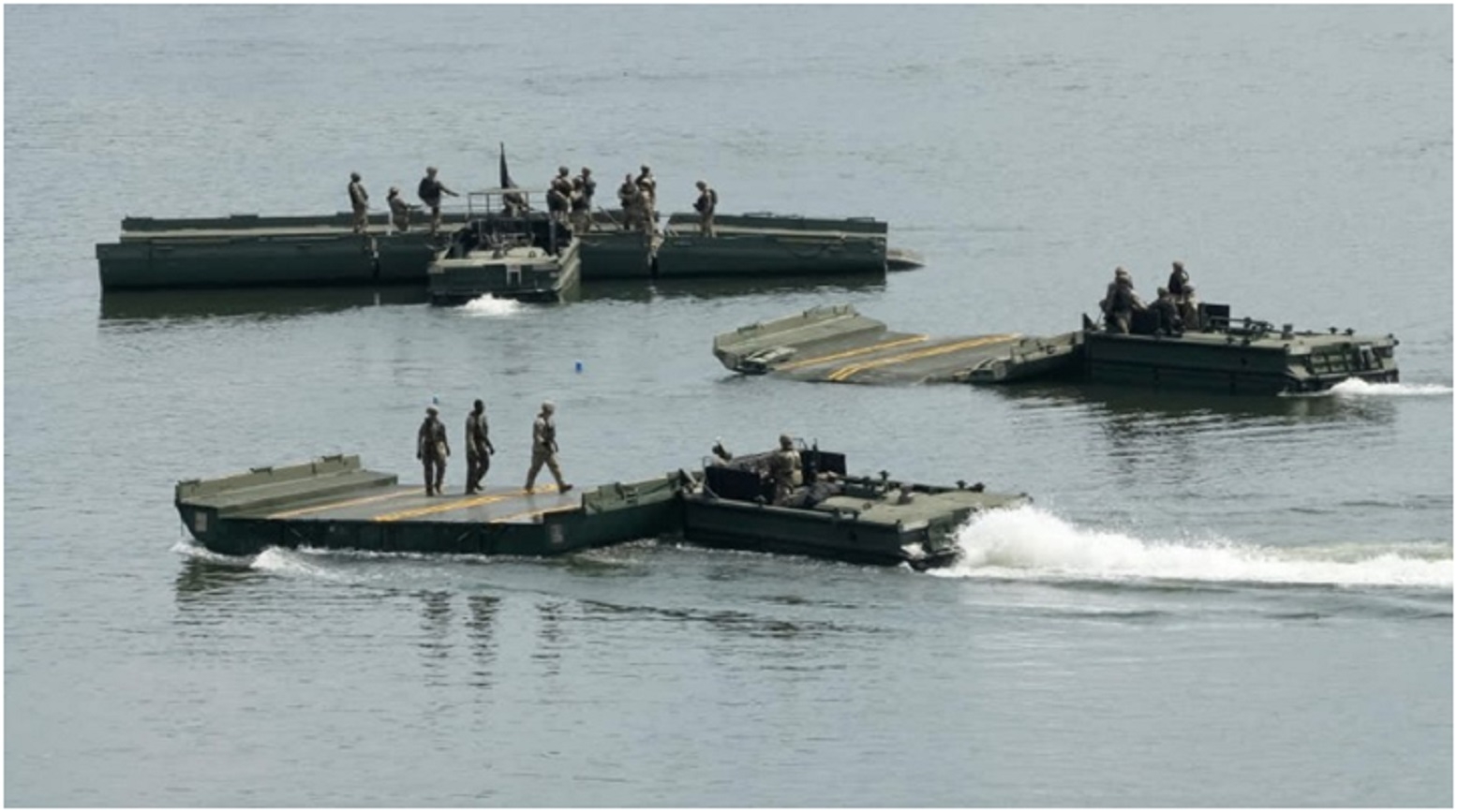
Seoul : North Korea said Wednesday that a U.S. decision to scale back military exercises with South Korea does not change what it see as their provocative nature, dampening hopes for a resumption of diplomacy between North Korean leader Kim Jong Un and U.S. President Donald Trump.
The powerful sister of North Korean leader Kim Jong Un made the comments Wednesday night in her country's first reaction to Trump's moves to drastically cut back the annual U.S.-South Korean military drills.
"We think it's not worth making comments on that and we have no any interest in it," Kim Yo Jong said in a statement carried by state media. "The provocative, aggressive nature of the drills won't change even though their duration and size were reduced."
Her statement came hours after the South Korean and U.S. militaries confirmed Wednesday they were significantly scaling back major joint drills, days after Trump ordered the reduction in an apparent bid to reengage with Kim Jong Un.
Trump ordered the Pentagon to "substantially reduce" the allies' summertime Ulchi Freedom Shield exercises, just before they began Monday for an 11-day run. Trump cited what he said was a good relationship with Kim and South Korea's refusal to support him over Iran.
South Korean officials said Trump's surprise announcement came without prior notice, baffling many people in the Asian country and raising concerns about joint defense readiness.
South Korea's military said Wednesday the allies agreed to adjust the duration and scale of the exercises at the request of the U.S. It said the ongoing drills would end Friday, not Aug. 27 as initially planned. It added the allies also agreed to downsize some joint field training exercises.
The Pentagon said that it was "continuing training that enhances tactical capability" but certain events have been canceled or converted to simulations. "These adjustments preserve essential readiness and training objectives. There will be no degradation to U.S. training objectives," a Pentagon statement said.
Shortening of drills raises worries about military readiness
Many experts say Trump's move threatens to hurt the combined U.S.-South Korean defense posture and eventually weaken their decades-long alliance.A reduction or suspension of military drills matters because military commanders change periodically. A one-year suspension of drills would mean commanders unfamiliar with the procedures of the drills would be taking part when they resume, according to Yang Uk, an analyst at Seoul's Asan Institute for Policy Studies. Ulchi Freedom Shield is largely a computer-simulated command post exercise meant to hone the allies' ability to deal with potential North Korean aggression. The two countries usually hold a set of field training exercises during the command post exercise period.
The drills and a similar springtime exercise are a central pillar of the U.S.-South Korea alliance, which dates to the 1950-53 Korean War. But it's also a long-running source of tensions with North Korea, which has denounced the exercises as a rehearsal for an invasion and responded with provocative missile tests. Days before this month's drills began, North Korea launched two ballistic missiles into the sea.
This month's drills were initially supposed to be held in two phases in simulation of North Korean attacks — the first part until this Friday on defensive operations and the second part until Aug. 27 on counteroffensive operations. North Korea is extremely sensitive to counteroffensive drills, according to South Korean media.
North Korea lambasts US-South Korea drills and vows responses
Earlier Wednesday, North Korea's state news agency, KCNA, published a commentary slamming the U.S.-South Korean military drills as "frantic" and "extremely dangerous" and vowing to completely frustrate its rivals' hostilities.