From War Machines To Wildlife Icons, Famous Elephants Through History
Total Views |


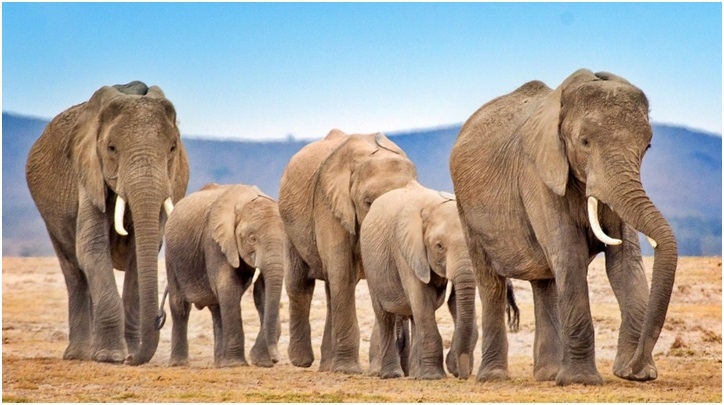
Elephants have been astonishing human beings for thousands of years. They have been worshipped, feared, painted, written about, trained for war, paraded before royalty, exhibited in zoos and, more recently, celebrated as intelligent and highly social animals whose survival depends rather inconveniently upon humans learning to leave them enough room to live.
On World Elephant Day 2026, celebrated every August 12 since its inaugural observance in 2012, the occasion is intended not merely to admire elephants but to draw attention to the threats facing them, including habitat loss, poaching, human-elephant conflict and mistreatment in captivity. But elephants have also left an extraordinary mark on human history and culture. Here are 10 of the most famous.
1. Jumbo
Jumbo was not merely a famous elephant. He became an adjective. Born in East Africa around 1860, Jumbo arrived at London Zoo in 1865 in poor condition. Under the care of keeper Matthew Scott, he recovered spectacularly and grew into an enormous and hugely popular attraction. Visitors rode on his back, children adored him and London developed the sort of emotional attachment usually reserved for football clubs and slightly eccentric uncles. Then, in 1882, London Zoo sold Jumbo to American showman PT Barnum. There was considerable public outrage. Jumbo was transported to America and became a star of Barnum's circus before dying in a railway accident in Ontario in 1885. Today, when something is unusually large, we call it “jumbo”.
2. Lin Wang
Lin Wang's life was extraordinarily long and extraordinarily complicated. The Asian elephant served with Chinese forces during the Second World War and was later transferred to Taiwan, where he became a beloved resident of Taipei Zoo. He lived to the age of 86 and became known affectionately as the “Grandpa Lin Wang.” When he died in 2003, enormous numbers of people mourned him, and Taiwan's president sent condolences. There are few animals that can achieve the status of national celebrity. Lin Wang managed it.
3. Motty
Motty was born at Chester Zoo in 1978 and became famous for an unusual reason. He was the first documented hybrid between an African and an Asian elephant. His father was an African elephant and his mother an Asian elephant, making Motty an extraordinary biological curiosity. Sadly, he lived for only a few days. His short life nevertheless attracted considerable scientific attention because the two elephant species are distinct enough that such a birth is extraordinarily rare. Motty was a reminder that nature occasionally ignores the categories humans spend so much time creating.
4. Kaavan
Kaavan's story belongs partly to the history of animal welfare. The Asian elephant spent years at the Islamabad Zoo in Pakistan and became internationally known because of concerns about his welfare and solitary existence. His plight attracted worldwide attention, including support from animal-welfare campaigners and celebrities. In 2020, Kaavan was relocated to Cambodia, where he began a new life at a sanctuary. After years of being the subject of headlines, he finally had something much better: space and other elephants.
5. Shirley & Jenny
Humans like to think that memory is one of our defining characteristics. Elephants appear to have been keeping records too. Shirley spent much of her early life travelling with circuses before eventually being moved to the Louisiana Purchase Gardens and Zoo and later to the Elephant Sanctuary in Tennessee. There she was reunited with Jenny, an elephant she had encountered decades earlier. The reunion attracted international attention and became one of the better-known stories about elephant memory and social bonds.
The most important elephants on this list don't have names, however. They are the wild elephants moving through India's forests, crossing roads at inconvenient hours, appearing beside railway tracks, wandering into agricultural fields and occasionally causing enormous excitement by simply deciding to take a shortcut through somebody's neighbourhood.
India is home to one of the world's largest populations of wild Asian elephants. They are intelligent, social and capable of travelling extraordinary distances. Their future, however, depends on something less romantic than legend: habitat protection, wildlife corridors, responsible development and learning how to share landscapes with animals that were here long before our highways, cities and property boundaries. That may be the real lesson of World Elephant Day.