Voice of Rhythm with Sandip SoparrkarDance Is My Resistance, My Revolution - Sheema Kermani
Total Views |


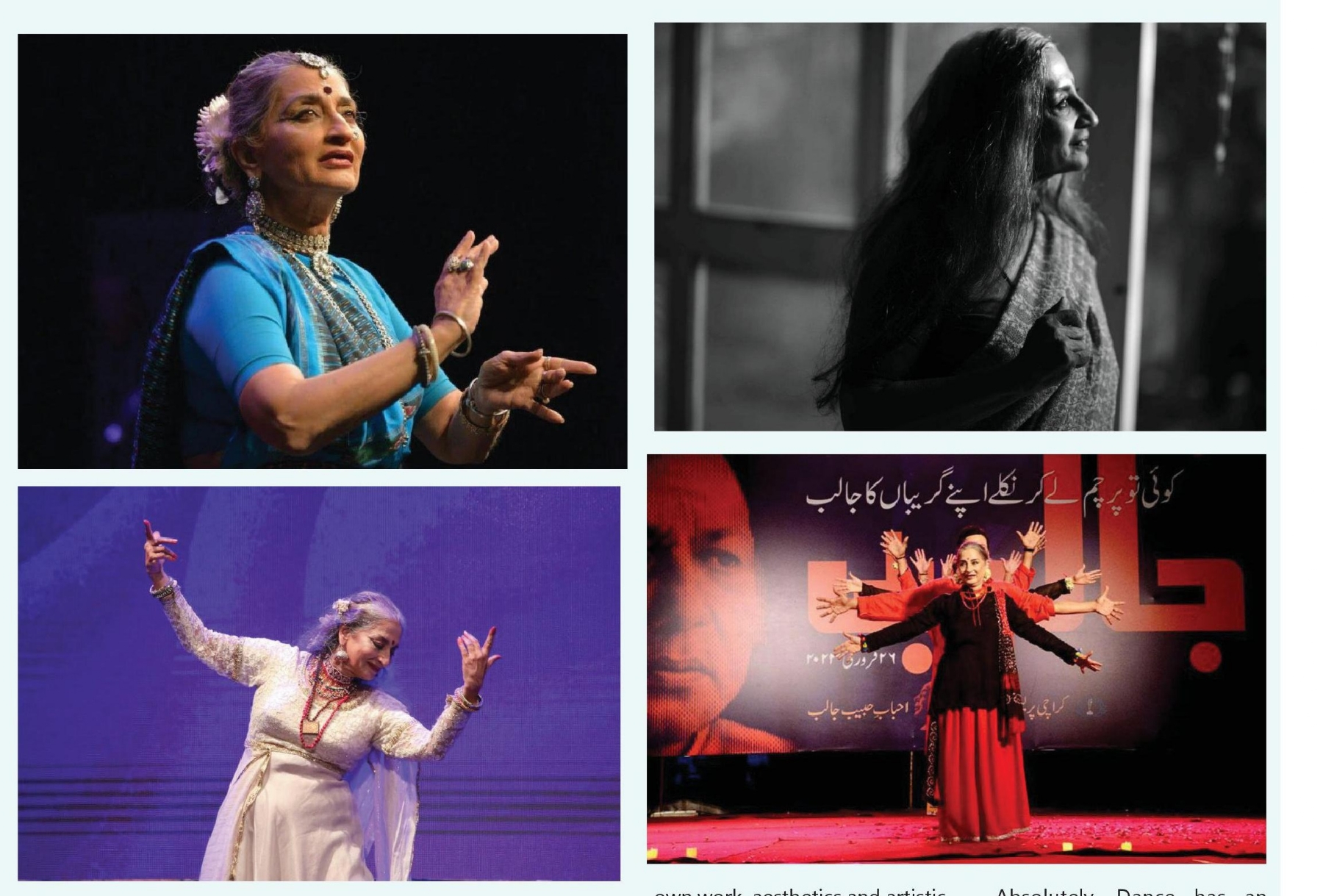
One of Pakistan's most fearless cultural voices, who uses dance as a powerful medium for artistic expression, social justice, and women's empowerment is Sheema Kermani. A renowned classical dancer, choreographer, actor, and human rights activist, she has spent decades challenging conservative norms while keeping the traditions of Bharatanatyam, Odissi, and theatre alive in Pakistan. As the founder of Tehrik-e-Niswan (Women's Movement), she has championed gender equality through the performing arts, proving that culture can be a force for resistance and transformation. Her unwavering commitment to artistic freedom has inspired generations of performers and activists across South Asia. Through every performance and public initiative, Sheema Kermani continues to demonstrate that dance is not merely an art form but a powerful language of courage, identity, and social change. Excerpts from the interview:
Dance has often been considered a powerful form of resistance in your life. When did you first realize that dance could become a voice for social change?
The turning point came in 1984 after I returned from a year of intensive training in India, studying Odissi, Bharatanatyam, and Kathak. I organized a small recital at a friend's house for about twenty people, but more than a hundred attended. Pakistan was then under General Zia-ul-Haq's regime, when dance had effectively been banned through strict Islamisation policies. That overwhelming response wasn't just appreciation for a performance—it was an act of collective defiance. It made me realize that dance itself had become a form of resistance. From then on, I consciously used my art for social change, building upon my work in theatre with Tehrik-e-Niswan.
What gave you the courage to pursue classical dance despite social and political opposition?
My courage came from my unwavering belief in the transformative power of art. I have always been deeply committed to artistic creation, and perhaps my rebellious—or rather revolutionary—spirit made it impossible for me to accept policies that sought to suppress artistic expression. Dance became my way of resisting repression.
How has your understanding of dance evolved over the years?
As a feminist, I increasingly understood the significance of dance for women living in deeply patriarchal societies. Women's bodies are often burdened with shame and control. For me, dance became a means of reclaiming that space and empowering women. I believe that when women embrace dance, they challenge structures of domination and help transform oppressive social values.
Recently, there were reports regarding your arrest. Would you like to comment?
As a human rights defender, I have consistently worked for women, marginalized communities, and vulnerable groups. Those who speak for the oppressed often face intimidation, and the possibility of arrest comes with that responsibility. What happened recently was a reflection of that reality. However, my commitment to justice, artistic freedom, and human rights remains unwavering.
What role does classical dance play in preserving the shared cultural heritage of the Indian subcontinent?
Our classical music and dance traditions are among the strongest cultural bonds connecting India and Pakistan. We share folk traditions, stories, musical instruments, aesthetics, and artistic philosophies that transcend political borders. Preserving this shared heritage is essential because culture has the power to foster understanding, peace, and dialogue between people.
Your performances often combine artistic beauty with powerful social messages. How do you maintain that balance?
For me, meaningful art must always be connected to life. I have never believed in art merely for art's sake. At the same time, I am careful not to create propaganda. There is a delicate balance between artistic excellence and political expression. Some of the world's greatest masterpieces, such as Picasso's Guernica or Pablo Neruda's poetry, are profoundly political while remaining artistically extraordinary. In my own work, aesthetics and artistic integrity always remain central.
How have international audiences responded to your performances?
Performing internationally has been a deeply rewarding experience. Because Pakistan is often viewed negatively abroad, audiences are frequently surprised to discover its rich classical dance traditions. Their curiosity soon turns into admiration and appreciation. I feel proud that my performances help present a different, more nuanced image of Pakistan and its cultural heritage.
What advice would you give young dancers growing up in the era of social media?
Classical dance cannot truly be learned through online platforms alone. I firmly believe in the Guru-Shishya Parampara, where learning is based on personal guidance, discipline, and sustained practice. Today's generation often seeks instant results, but these art forms demand patience, dedication, and lifelong commitment. The traditional learning process shapes not only the dancer's technique but also the student's character.
Can dance heal societies during difficult times?
Absolutely. Dance has an extraordinary ability to awaken vitality, bring people together, and build genuine human connections. It creates dialogue where words often fail and has immense potential to heal divided societies by reminding us of our shared humanity.
You are also an accomplished actress. How does acting differ from dance?
The two mediums require very different approaches. On stage, movements and expressions must be larger to reach audiences sitting at a distance, whereas the camera captures the slightest nuance. Classical dance communicates through stylized gestures, while screen acting relies on subtle emotional expression. Yet both ultimately seek the same goal—to evoke emotion and communicate truth.
Looking back, what legacy would you like to leave behind?
I would like to be remembered as someone who preserved the purity and dignity of classical dance while remaining steadfast in the pursuit of truth, equality, and justice. If future generations see art not merely as entertainment but as a force for courage and positive change, I will feel my journey has been worthwhile.