Stroke Awareness Month: Can AI-Powered Games Make Stroke Rehabilitation More Effective?
Total Views |


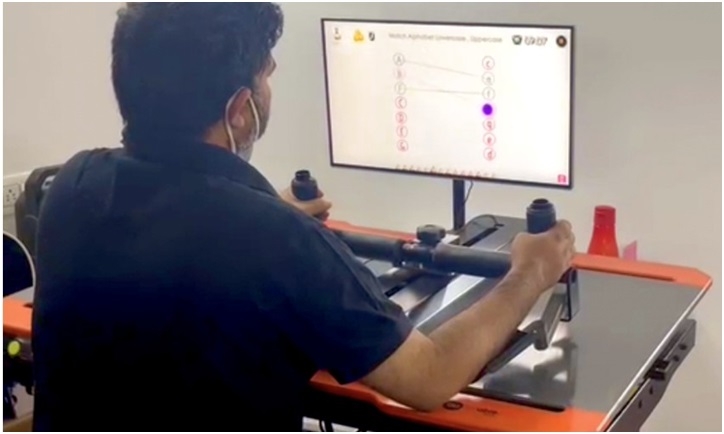
With July marking Stroke Awareness Month, attention is turning not only to preventing strokes but also to helping survivors regain their independence. In India, where stroke and other neurological disorders are on the rise, artificial intelligence (AI)-powered rehabilitation is emerging as a promising addition to conventional physiotherapy. By combining therapeutic exercises with interactive games, these systems aim to make rehabilitation more engaging, encourage patients to stick with lengthy therapy programmes, and provide therapists with objective data to monitor recovery.
Instead of asking patients to perform the same movements repeatedly, AI converts rehabilitation exercises into interactive games that mimic everyday activities. The goal is to keep patients motivated throughout the long recovery process while allowing therapists to personalise treatment based on real-time performance data. Since poor adherence remains one of the biggest challenges in stroke rehabilitation, gamification could help improve both participation and outcomes.
From Games to Real-Life Independence
Dr Savita Ravindra, Principal and Dean, Ramaiah College of Physiotherapy, Bengaluru, said the institution adopted AI-enabled gamified rehabilitation to address the limited availability of technology for upper-limb stroke rehabilitation, which is critical for activities of daily living and work-related functions. She said that game-based therapy is particularly useful during the early stages of recovery, when hand and upper-limb function is significantly limited. As patients improve, rehabilitation gradually shifts towards personalised functional goals such as writing, eating independently and eventually returning to work.
Progress continues to be assessed using established clinical outcome measures, while AI provides therapists with additional data on movement quality, task complexity and improvements over time. Dr Pooja Jain, Director, Navkar Advanced Neurorehab, Raipur, said gamified rehabilitation benefits patients at different stages of stroke recovery. Elderly patients often benefit from balance training, while younger patients, who are generally more comfortable with digital technology, tend to engage better with game-based therapy. She explained that task-oriented exercises promote neuroplasticity more effectively than practising isolated movements because they closely resemble real-life activities. Neuroplasticity is the brain's ability to form new neural connections with ageing or after injury.
Devices such as ArmAble, which provides visual and haptic feedback for upper-limb rehabilitation, and Rhino, which assists weak patients in completing movements during the early stages of recovery, help improve confidence, range of motion and functional ability.
While clinicians continue to assess recovery using established scales such as the Functional Independence Measure (FIM), AI adds another layer of precision by objectively analysing movement quality, speed and accuracy. Therapists can compare a patient's performance across sessions, making it easier to personalise treatment and monitor progress over time.
One example of this approach is BeAble Health, a Hyderabad-based startup developing AI-powered rehabilitation technology for stroke recovery. Its platform, ArmAble, is being used in rehabilitation centres across several states to support stroke rehabilitation as well as therapy for other neurological conditions. The platform transforms everyday activities such as flipping dosas, rolling chapatis, sorting vegetables and even swatting mosquitoes into digital rehabilitation exercises. It is being used in institutions including KIMS Hospital, Amrita Hospital, HAMSA Rehab–Kaveri Hospitals, Nizam's Institute of Medical Sciences and Ramaiah Hospital.
AI continuously analyses movement quality, monitors performance in real time and automatically adjusts the level of difficulty according to each patient's recovery stage. It also includes therapeutic games such as Table Tennis, Balloon Pop and English Word Tracing, designed to improve upper-limb mobility, coordination, balance, fine motor skills and cognitive function.
Habib Ali, Co-Founder of BeAble Health, said, “The goal behind using everyday activities is to make rehabilitation relatable while improving movement, coordination and muscle control. These activities closely resemble movements practised during conventional therapy and daily life, helping patients work towards functional independence. We have added a gamification layer to make rehabilitation more engaging.”
Improving Motivation During Recovery
Stroke rehabilitation often requires hundreds of repetitions of the same movements over weeks or even months. Interactive, game-based rehabilitation encourages patients to complete the repetitions needed for recovery without the monotony of conventional exercises. Sreehari KG, Co-Founder of BeAble Health, emphasised that AI complements rather than replaces conventional physiotherapy. “Clinical judgement, hands-on guidance and patient encouragement remain central to rehabilitation. Technology provides therapists with objective movement data to personalise treatment while enabling patients to perform safe, repetitive exercises more effectively,” he said.
Beyond Stroke Rehabilitation
Although stroke rehabilitation is currently one of its most common applications, Dr Jain said AI-assisted rehabilitation is also being used for Parkinson's disease, traumatic brain injury, spinal cord injury and cerebral palsy. For patients with Parkinson's disease, AI provides real-time movement cues and feedback. Those recovering from traumatic brain or spinal cord injuries benefit from engaging rehabilitation programmes that encourage sustained participation, while children with cerebral palsy often respond better to game-based therapy than conventional exercises.
Dr G. Balamurali, Senior Spine and Neurosurgeon, Founder and Managing Director of Hamsa Rehab, Chennai, believes AI-powered rehabilitation could become a routine part of stroke care in India within the next five years as the country's stroke burden continues to grow. “AI can help deliver personalised rehabilitation, objectively measure movement quality, monitor progress in real time and motivate patients to continue therapy. It could also extend rehabilitation beyond hospitals through home-based care and telerehabilitation,” he said.
However, he cautioned that widespread adoption will depend on affordability, clinical validation, indigenous technology development, therapist training and greater awareness among both clinicians and patients.