Scientists Discover Five New Lichen Fungi Species In Western Ghats
Total Views |


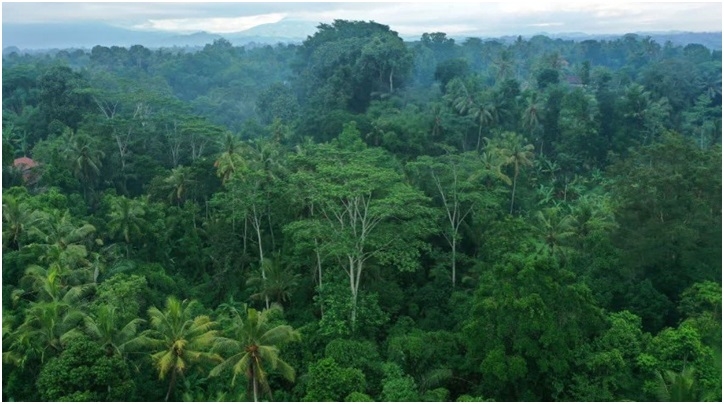
A team of Indian scientists has discovered five new species of lichen-forming fungi from the Allographa genus in the Western Ghats, which is one of the world's most biodiversity-rich regions. The findings from the study could help identify ecologically sensitive areas and support long-term environmental monitoring.
What are these species?
Allographa lichens, known for their elongated fruiting bodies, are highly sensitive to pollution and habitat disturbance, making them valuable indicators of forest health. The genus has over 200 known species worldwide, but until now, molecular data on Indian specimens— particularly from the Western Ghats— remained scarce, with most species identified purely on visual characteristics.
The study was carried out by researchers at the MACS Agharkar Research Institute, Pune, an autonomous body under the Department of Science and Technology. The team was led by scientist Rajeshkumar K. C., alongside doctoral researcher Ansil P. A. and Technical Officer Dr Bharati Sharma. It marks the first comprehensive molecular study of Allographa species from the region.
How the study was conducted?
Researchers gathered specimens through extensive field surveys across tropical forest habitats in the Western Ghats. They combined morphological and chemical analysis with DNA sequencing across three genetic markers—mtSSU, nrLSU and RPB2—to map species boundaries and evolutionary relationships more accurately than visual identification alone allows.
Name of the species
The five newly described species are Allographa keralensis, named after Kerala; A. nayakae, honouring lichenologist Dr Sanjeeva Nayaka; A. paraconsanguinea; A. persistinspersa; and A. semicarbonisata. The team also produced fresh molecular data for five previously known species: A. calcea, A. macella, A. aquilonia, A. rimulosa and A. effusosoredica.
The genetic analysis revealed that several species which look alike are not always closely related, highlighting the limits of identifying lichens by appearance alone. This molecular approach offered a clearer picture of how both new and existing species are connected, though researchers say further sampling and data collection are needed to refine the picture.
Why it matters
Published in the journal Mycological Progress, the research significantly broadens understanding of Allographa diversity in India and provides a reference point for future taxonomic and evolutionary studies. It reinforces the Western Ghats' status as a major centre of lichen diversity, with many species still undocumented.
The team also compiled an updated checklist of Allographa species recorded in the Western Ghats, noting where molecular data is available. This is expected to serve as a baseline for future conservation planning and biodiversity assessments of tropical lichens in India and beyond.