Voice of Rhythm with Sandip Soparrkar"Ghoomar Is Not Just a Dance, It Is Our Heritage"
Total Views |


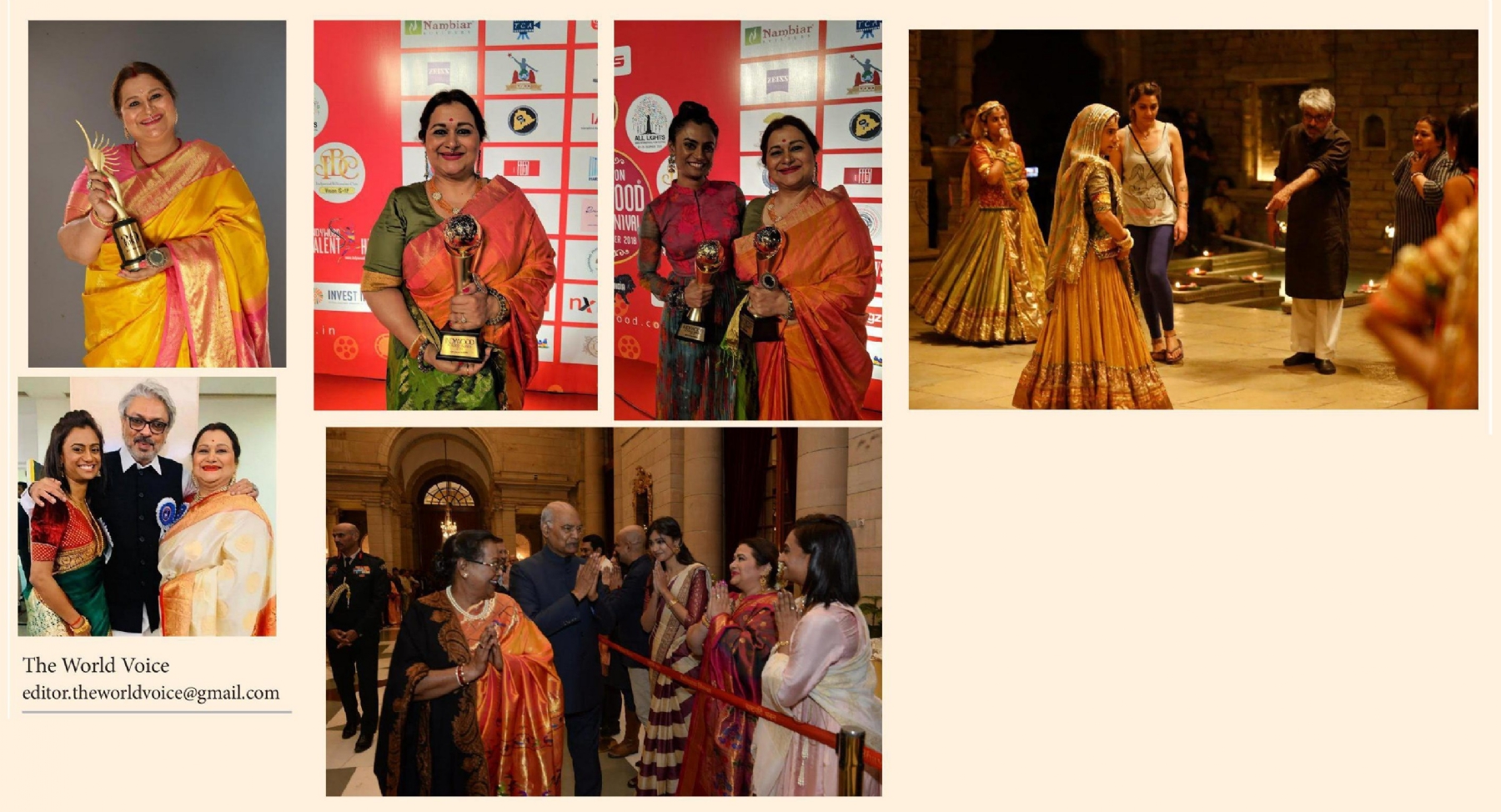
India's foremost exponent of the authentic royal Ghoomar and Naach traditions of Rajasthan and the Executive Director of the Gangaur Ghoomar Dance Academy is Jyothi D. Tommaar. A disciple of Padma Shri H.H. Rajmata Goverdan Kumari of Santrampur, she has dedicated nearly four decades to preserving and promoting these rare folk dance traditions. She brought authentic Ghoomar to global audiences as the choreographer of the celebrated title song from Padmaavat, for which she received the National Film Award for Best Choreography. Trained in Kathak before embracing Ghoomar, she seamlessly blends technical excellence with cultural authenticity. Through performances, workshops, and research, she continues to safeguard the legacy of Rajasthan's royal dance heritage for future generations. Excerpts from the interview
How did your journey in dance begin?
My journey began much before I even understood what dance meant. My elder sister Manjula was learning Kathak, and whenever her Guruji came home, I would quietly sit and watch. My father noticed my fascination and made a small string of ghungroos for me. I would wear them and imitate my sister, who lovingly corrected and taught me. I wasn't even four years old then, but those moments laid the foundation of my life in dance.
When did Ghoomar become a part of your life?
I first encountered Ghoomar when I was in the ninth standard while performing in a dance ballet called Senani. I was fascinated by the character and the beauty of the dance form. Around the same time, my sister Nandini was researching the Langa and Manganiyar singers at NCPA, where my Guru, H.H. Rajmata Goverdan Kumari of Santrampur, was conducting her research on Ghoomar.
In 1988, I watched her interview on Doordarshan, hosted by Asha Parekh, where her students demonstrated authentic Ghoomar and Naach. I instantly felt that this was what I wanted to pursue. Later, I had the privilege of meeting her, and as a trained Kathak dancer, adapting to the footwork came naturally. Nearly four decades later, I am still learning, performing and presenting Ghoomar and Naach with the same passion.
How did Padmaavat happen, and what was it like working with Sanjay Leela Bhansali?
I first met Sanjay Leela Bhansali in 1987 during a Doordarshan recording in Mumbai. Over the years we became friends, though we never worked together. In 2003, after watching one of our performances, he requested my Guru that if he ever made a film featuring Ghoomar, she should choreograph it. She admired his work and promised she would.
Sadly, my Guru passed away in 2013. When Sanjay approached us for Padmaavat in 2016, he still honoured that promise and entrusted me with choreographing the iconic "Ghoomar" song.
Working with him was an extraordinary learning experience. He knows exactly what he wants, yet remains open to ideas and suggestions. The final result is always a seamless blend of his vision and the team's contribution. Every day on set was an opportunity to learn from a true master filmmaker.
What was it like teaching Deepika Padukone?
Deepika came to learn Ghoomar with a completely open mind, and that was her greatest strength. She constantly asked thoughtful questions, why a movement was so gentle, why every gesture carried such grace. She wanted to understand the soul of the dance, not just the steps.
Even during long rehearsals, when we thought she should rest, she would simply take a sip of water and return saying, "Let's go." There were no tantrums, no ego, only dedication. After every take she would look at me and ask, "How was it? Am I doing justice to the dance? Am I making you and your Guru proud?" That sincerity made teaching her a truly memorable experience.
Your very first film choreography won the National Award. How did that feel?
It still feels unreal. Whenever someone mentions the National Award, I still get butterflies. One song brought so many honours, including the National Award, and I believe the biggest credit goes to my Guru.
Rajmata Goverdan Kumari courageously broke royal conventions to teach Ghoomar and Naach to anyone willing to learn. She faced criticism for doing so, but her only aim was to preserve and share the authentic dance traditions once performed by queens and princesses within the palace. I also owe immense gratitude to Sanjay Leela Bhansali, who presented Ghoomar with complete authenticity and introduced it to audiences across the world.
What are your future plans for taking Ghoomar to a wider audience?
My Guru established the Gangaur Ghoomar Dance Academy in 1986. Even today, we continue her vision through workshops rather than regular classes. Along with Dr. Pratibha Naitthani, our Associate Director and lead singer, and Maharani Mandakini Kumari, Associate Director, I strive to carry forward the torch she entrusted to us. Our aim is simple, to preserve the authentic tradition, conduct workshops, perform whenever possible and ensure that the legacy continues for future generations.
Folk dances often receive less recognition than classical forms. Why do you think that is?
Classical dance has a structured teaching system, institutions, examinations and career opportunities. It is taught systematically and enjoys social prestige. Folk dance, on the other hand, is often taken for granted because people assume they already know it simply by growing up within that culture.
Ironically, the art that belongs to our roots and our identity is often undervalued. Folk traditions reflect the geography, history, occupations and lifestyles of communities. Sadly, many of these traditions are now confined to rural interiors while younger generations increasingly look towards Western forms.
I believe every state should introduce its own folk traditions as part of the school curriculum. Our folk heritage deserves the same respect and preservation as our classical arts.
What advice would you like to give young people interested in folk arts?
Stay connected to your roots. The moment you begin exploring your own traditions with sincerity, folk culture becomes a part of you naturally. Learn from genuine practitioners who have dedicated their lives to preserving these art forms. Social media and commercial classes may create interest, but there are no shortcuts. Do your research, respect the tradition and immerse yourself in it. When you return to your roots, you discover not only your culture but also your true self.