India-UK Trade Pact Takes Effect, Boosts Exports
Total Views |


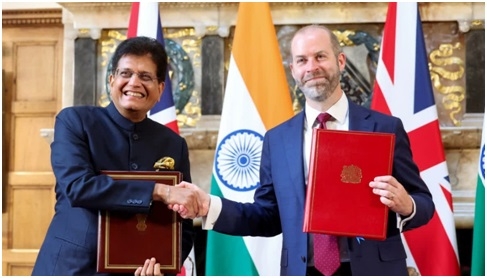
New Delhi : India and the United Kingdom have officially brought into force the Comprehensive Economic and Trade Agreement (CETA) and the Agreement on Social Security, marking a major milestone in bilateral relations. Prime Minister Narendra Modi described the development as a “significant moment” that will provide fresh momentum to India’s farmers, entrepreneurs, MSMEs and skilled professionals while strengthening economic ties between the two democracies.
The landmark trade agreement grants zero-duty market access for nearly 99% of India’s exports, covering almost the entire value of bilateral trade. Union Commerce and Industry Minister Piyush Goyal said the pact opens unprecedented opportunities for Indian industries by improving access to the UK market and enhancing trade competitiveness.
One of the key highlights is the Social Security Agreement, which exempts Indian professionals on temporary assignments in the UK, along with their employers, from paying the UK’s National Insurance Contribution for up to five years. The measure is expected to benefit more than 75,000 Indian professionals and around 900 companies in sectors such as information technology, financial services, healthcare, education, telecommunications and consultancy.
The agreement also introduces annual mobility quotas for 1,800 Indian chefs, yoga instructors and classical musicians, creating new employment opportunities across several professional sectors in the UK.
Prime Minister Modi said the agreements reflect the deep trust shared by India and the UK and reinforce their commitment to expanding cooperation in trade, technology, investment and innovation. He added that the pact will strengthen India’s MSMEs, improve access for agricultural and manufacturing products, and encourage greater mobility for skilled Indian talent.
According to the Commerce Ministry, the agreement removes tariffs on labour-intensive sectors including textiles, garments, leather, gems and jewellery, engineering goods, chemicals, electronics, marine products, furniture and sports goods. These industries are expected to gain a significant competitive advantage in the British market.
The agricultural sector is also set to benefit, with duty-free access for most products, while a few sensitive items such as chicken, pork, eggs, rice and sugar remain excluded. Around 97.1% of tariff lines for processed food products will now enjoy zero-duty access, providing Indian exporters with greater opportunities in the UK’s agricultural import market.
Commerce Minister Piyush Goyal said the agreement represents a defining chapter in India-UK economic relations and thanked both negotiating teams for successfully concluding the landmark deal. He expressed confidence that the partnership would boost trade, investment, innovation and employment while creating long-term prosperity for both nations.