Can India's Indo-Pacific Diplomacy Help Counter Growing Global Uncertainity?
Total Views |


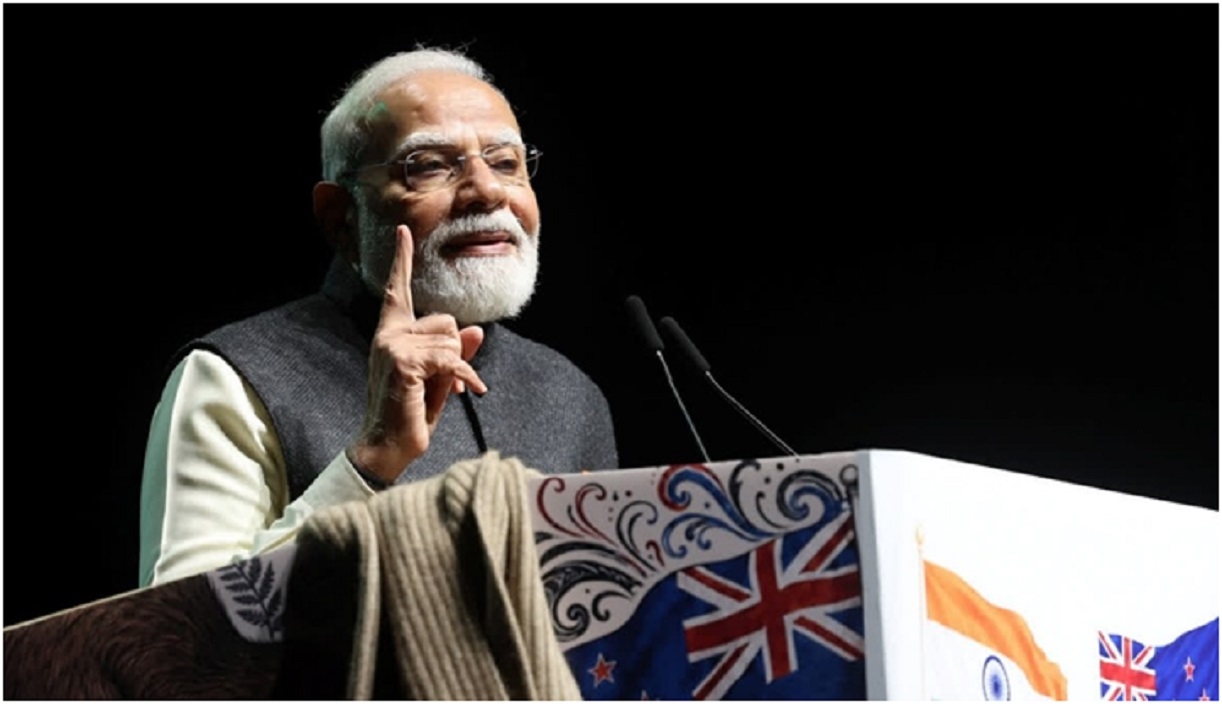
NEW DELHI : It's not that common for the leader of a country to comment on another leader's ongoing visit to a different country, and that too in a positive manner.
Still, South Korean President Lee Jae-Myung posted on X that he wished "for the friendship and progress of both India and New Zealand” during Prime Minister Narendra Modi's visit to New Zealand, part of a three-nation tour that included Indonesia and Australia.
In response, Mr Modi appreciated the tweet from a "friend."
It shows middle and rising power diplomacy is gaining momentum in the Indo-Pacific as leaders leverage their countries' convergences to deepen ties amid unpredictable US policies on one side and the growing assertiveness of China on the other.
Unease is mounting in the Indo-Pacific amid continuing speculation about China and the US forming a superpower "group of two"; the US decision to change the name of the US Indo-Pacific Command back to the US Pacific Command and its continuing unpredictable trade policies as Washington continues to press on with tariffs.
Chinese moves like conducting a long-range ballistic missile test in the southern Pacific on Monday have only added to the unease across the region.
Analysts noted that in this atmosphere, India is marking its presence in the region and seeking to develop trustworthy partners.
“The policies of the second Trump administration have created fears about American reliability, resulting in all American partners and security allies looking to each other on the economic, defense and strategic fronts," said Aparna Pande, Senior Fellow, India and South Asia, Hudson Institute.
"India too is strengthening its relations with middle powers in its region and beyond to ensure it has maximum maneuverability in this world that is in flux.”
PM Modi's three-nation visit spanning the Indian Ocean to the South Pacific led to deeper ties with key countries with an eye on smoother trade flows, increased defence cooperation and collaboration in newer areas from critical minerals to artificial intelligence.
Indonesia, during Mr Modi's visit, agreed to go ahead with the purchase of the BrahMos supersonic cruise missile and Astra air-to-air missiles, while Australia signed an agreement to supply Australian uranium to India
Maritime and defence pacts with New Zealand will give India the ability to boost its presence in the south western Pacific Ocean.
Former diplomat Anil Wadhwa noted that the visit was about "securing India's supply chains, bolstering maritime security and defence cooperation and strengthening supplies of critical materials for India's energy transition."
"It was a visit which was forward-looking and consolidated India's position as a partner of major countries in the Indo-Pacific," he added.
Even before the three-nation tour, Mr Modi has had a busy schedule. In June, he was in Seychelles, and hosted Japanese Prime Minister Sanae Takaichi in early July, during which both sides agreed on an economic partnership framework and a decision to co-develop military equipment.
"What India is doing is trying to mark its presence in the region. We are deepening partnerships and friendships," said Amit Ranjan, a Research Fellow with the Institute of South Asian Studies (ISAS) at the National University of Singapore.
"You need some trustworthy close friends."
Countries are also firming up trilateral cooperation and other bilateral initiatives.
Canada, Australia and India on Thursday signed a trilateral technology and innovation alliance, called Australia–Canada–India Technology and Innovation Partnership, to deepen cooperation in artificial intelligence, clean energy, critical mineral supply chains, and digital infrastructure.
Australia and South Korea are planning a Green Shipping Corridor set to operate by 2029.
Still, how far these ties help rising and middle power nations, which also have differences amongst themselves, brace against uncertainty stemming from conflicts and a fragmenting international order remains to be seen. There is also no clarity on whether the US, already a key part of the Indo-Pacific security architecture, will increase its involvement or draw back.
While the US decision to rename the US Indo-Pacific Command has been interpreted as a sign of the US focusing more on the Pacific, the US government said the command's area of responsibility and commitment to creating a "free and open theatre" from "the waters off the West Coast of the United States to the western border of India" remained unaltered.
Mr Ranjan noted: "The US is going to stay in the Indo-Pacific region to secure its interests and not of others."'
Ties between India and the US have been going through a rough patch, with tariffs becoming the biggest irritant at this point amid ups and downs in ties with China and growing engagement with Pakistan.
"For India, at a time when there is geo-economic and geo-political flux, due to the policies of the second Trump administration, and the Iran conflict, it is important to deepen relations with a diverse group of countries in different parts of the world," said Pande.
"This ties in well with India’s policy of multi-alignment.”