Voice of Rhythm with Sandip SoparrkarBeyond Dance: Reimagining Natya Shastra
Total Views |


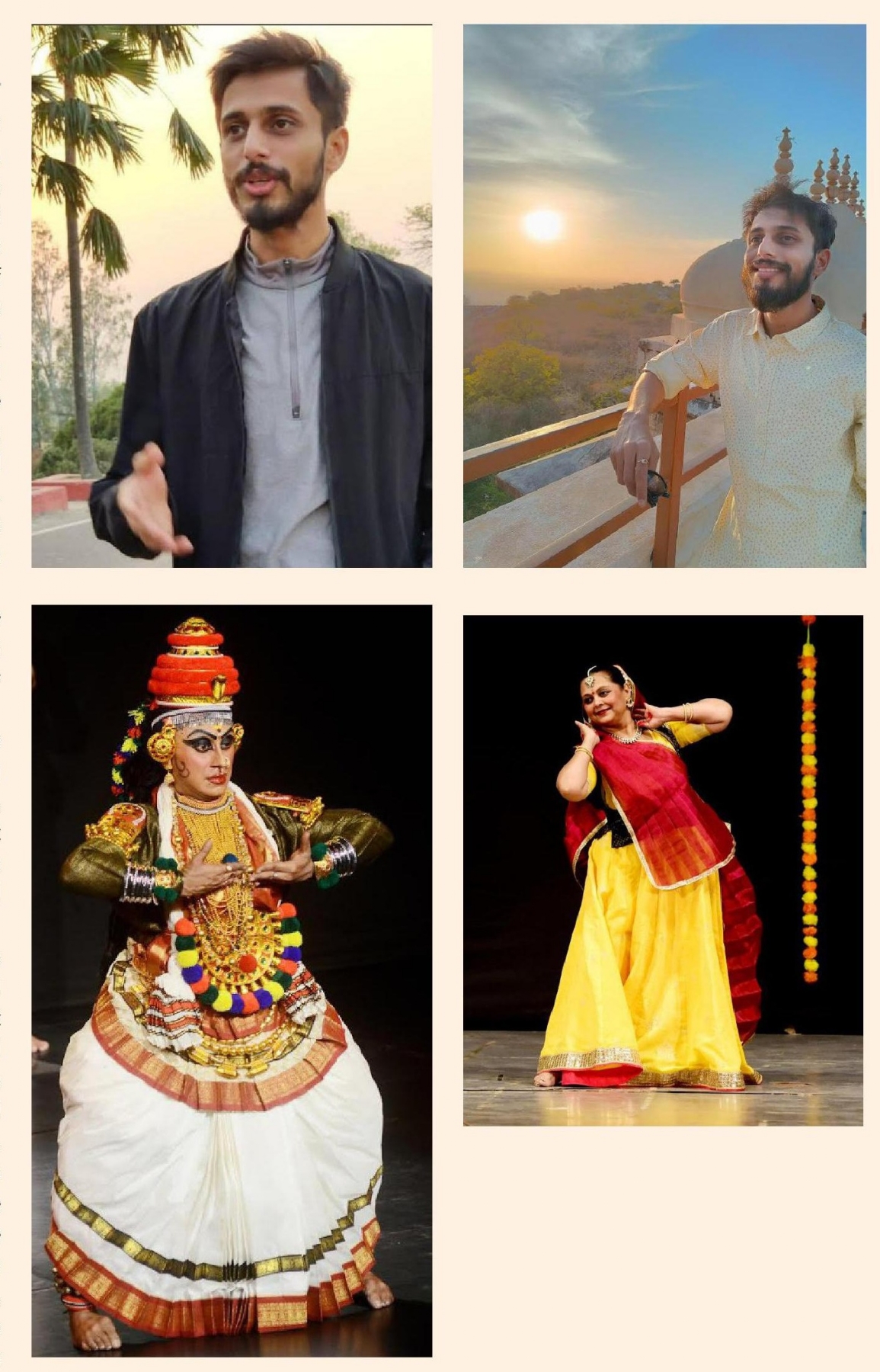
An entrepreneur, storyteller, and growth marketing strategist known for blending psychology with powerful narratives is Mr. Prathamesh Krisang, who’s recent videos on Natya Shastra on social media are getting viral. He is the founder of Magnetic Nation and has helped brands connect with audiences through innovative marketing. An award-winning filmmaker, he believes stories have the power to inspire action and create lasting impact. His work focuses on behavioural science, branding, and digital growth. Today, he is recognized as one of India’s emerging voices in narrative-driven marketing. Excerpts from the interview:
Your videos on the Natya Shastra are receiving tremendous appreciation on social media. How did this journey begin?
It began with a personal search. I have spent nearly 20 years in media, moving from design to filmmaking, marketing, and entrepreneurship. Throughout that journey, I was fascinated by how media influences human behaviour and psychology.
My understanding of storytelling was initially shaped by Hollywood and Western theories. But I noticed that many great Indian filmmakers and advertisers instinctively broke those rules while creating powerful work. I wanted to understand the roots of that intuition.
That search led me to the Natya Shastra. The translations initially made little sense, so I began studying the original Sanskrit with guidance from a few gurus. I decoded each word, compared it with my practical experience in media, and gradually realised that shastras don't merely teach new ideas—they give precise vocabulary to experiences you have already lived.
I started sharing these insights with a small community, never expecting them to become popular. Seeing so many people connect with the Natya Shastra has been a wonderful surprise.
Why did you choose to focus exclusively on the Natya Shastra?
We already understand many of its principles intuitively, yet we describe our creative work using borrowed Western vocabulary. I felt it was time to reclaim our own language for understanding storytelling, cinema, dance, advertising, and digital media.
The word Natya refers to anything that can be seen and heard. That means films, Instagram reels, theatre, dance, and even modern digital content all fall within its scope. Unfortunately, we have reduced the Natya Shastra to a technical manual for classical drama and dance. I see it instead as an algorithm for decoding every form of performance and communication. That broader perspective makes it remarkably relevant today.
How can dancers benefit from studying it?
I am not a professional dancer, so I approach it as a filmmaker and observer. What fascinates me is that the Natya Shastra treats dance as a language. Rather than prescribing rigid rules, it provides a framework that allows every style to be understood on its own terms.
Take the word Nritya. It simply means rhythmic movement, suggesting that every dance form belongs within its framework.
The concepts of Tandava and Lasya are especially interesting. Many people think Tandava means angry dancing, but I see it as energetic movement driven by rhythm and beats, while Lasya represents graceful, flowing movement shaped by melody.
Every dance style contains both energies, but in different proportions. Styles like b-boying, krumping, and popping are largely Tandava-dominant, whereas rumba and bachata lean towards Lasya. Salsa beautifully balances both.
Even music reflects this balance. Beat-heavy dance styles naturally require stronger rhythms, while fluid forms rely more on melodic flow. I also observe this physically: Tandava is often led through the legs, while Lasya is expressed through the hands and arms, with the torso connecting the two. This is only a small glimpse of the analytical framework available in the Natya Shastra, and I would love to see dancers interpret these ideas through their own practice.
What should someone study to truly understand this iconic text?
Begin with someone who has already decoded the text in an accessible way. Then return to the original Sanskrit instead of depending solely on translations.
My own approach was to understand every root word, reconstruct each verse, and then compare it with my own lived experience. The real learning happened when I mapped the text onto two decades of work in media.
I believe that shastras become meaningful only when they illuminate experiences you have already had. They provide language for wisdom gained through practice. So, I always encourage people to study the source, understand the root meanings, apply them in their work, and then revisit the text to deepen their understanding.
What is the purpose behind these videos?
Everything I have done—from filmmaking to helping brands grow—has revolved around understanding how emotions influence human behaviour. That is exactly what the Natya Shastra explores.
I don't see it merely as a manual for theatre but as a profound study of human psychology. Once you understand how emotions are created, you can apply those principles to dance, films, brands, therapy, education, or any field involving human connection.
The ultimate goal of the Natya Shastra is to evoke rasa—deep emotional experience. I believe these emotional states can be transformative and healing. The brilliance of the text lies in its systematic observation of human reality and its ability to create emotional connection on a large scale. My videos aim to decode that wisdom for contemporary audiences.
What comes next for this project?
The larger vision is "Ancient Psychology"—applying the insights of the Natya Shastra to modern branding. Knowledge becomes truly relevant only when it is practically useful. Today's brands often communicate information but fail to evoke feeling. I want to explore how the principles of rasa can help create brands that inspire genuine emotional connection.
We are already applying these ideas in our own ventures. Through Shaastra Club, we reinterpret traditional knowledge for contemporary audiences, while Kaathpadar seeks to present handloom silk sarees not simply as products but as works of art that evoke Shringara, the rasa of beauty and love.
To make this practical, I developed the ‘Rasa Mandala’, a framework that helps founders understand the nine rasas and apply them to their brand stories. The goal is simple: when you evoke the right emotion, you inspire action. That is the enduring relevance of the Natya Shastra, and the direction in which I hope to continue this journey.