Voice of Rhythm with Sandip SoparrkarDance as the Supreme Meditation: An Interview with Maitreya
Total Views |


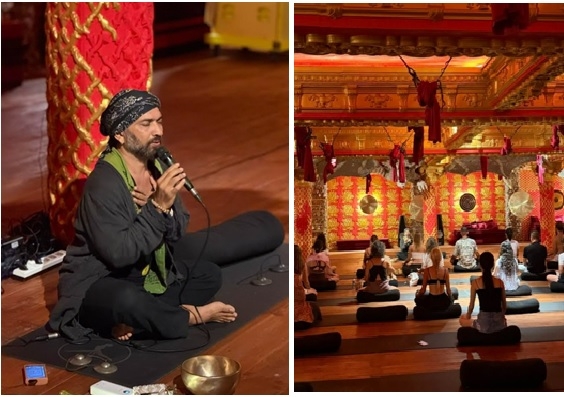
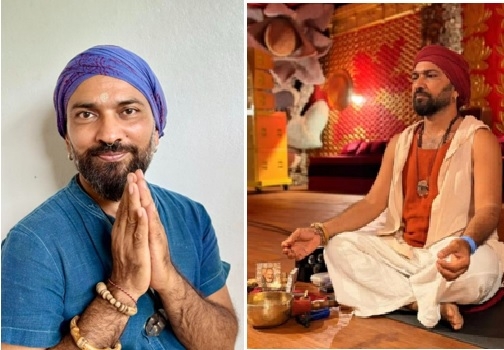
A meditation facilitator and conscious friend who guides people through dance, movement, and active meditation practices is renowned Maitreya Prema. He believes that dance is a powerful pathway to inner freedom, healing, and silence. Since beginning his journey in 1997, he has explored movement as a tool for releasing stress, emotions, and inner blockages. Rather than seeing himself as a guru or teacher, he prefers to relate to people as a friend and fellow traveller. His work encourages individuals to trust their intuition, express themselves authentically, and discover meditation through movement. A heartwarming chat with the master of dance meditation:
How did your journey into teaching dance as meditation start?
My journey into dance meditation began in 1997 when I was introduced to active meditation by my master. I lived for seven years in his commune, and during that time I discovered that movement is one of the most powerful ways to enter inner stillness. While many people think of meditation as sitting silently, I learned that movement, dancing, and expressive dance can become profound gateways to silence and awareness.
Through my own experience, I realized that dance is not only a form of expression but also a powerful tool for releasing stress, worries, and anxiety. As I continued to explore meditation and self-awareness, dance became an inseparable part of my life. It showed me that freedom and stillness are not opposites—they can exist together in the same moment.
What attracted you to dance?
I am not a professional dancer because I have never formally studied dance. For me, dancing is a natural way of expressing myself. It allows me to touch a timeless sense of freedom that exists within all of us. Whenever I feel joyful, spontaneous movements arise naturally. Only afterward do I realize that what emerged was actually a form of dance. My relationship with dancing is intuitive rather than technical. I see it as a celebration of freedom and joy.
Sometimes I also use dance as a tool for personal breakthrough. Whenever I feel stuck emotionally or mentally, I begin moving my body intuitively. As the movement deepens, I start feeling lighter and freer inside. In that sense, dance becomes a pathway back to my natural state of openness.
How does dance help people with their physical and mental well-being?
Many of the challenges people face arise from repressed emotions. When anger is suppressed for years, it can eventually affect physical health. Similarly, prolonged sadness can contribute to depression and emotional exhaustion.
Dance helps release this stuck energy. As the body begins to move freely, blocked emotions start dissolving naturally. The energy that was trapped inside begins to flow again. When this happens, people often experience a deep sense of relief, vitality, and well-being.
I have heard many participants share that after a few hours of dancing, they sleep better, feel more alive, and become more positive. They begin to reconnect with themselves and with life around them. The healing effects are often physical, emotional, and mental at the same time.
Why is dance called the supreme meditation?
Meditation is essentially a search for freedom. Traditional methods often guide us toward that freedom step by step. Dance, however, allows us to leap directly into it.
When we dance without calculation or control, we enter a space where intuition takes over. The body begins to move in harmony with existence, and for a few moments we experience pure freedom. There is no destination, no goal, and no effort to become something else.
Because dance allows us to touch this freedom so directly, it can become one of the deepest forms of meditation. In those moments of total surrender, dance and meditation become one.
What advice do you have for people who feel they cannot dance?
Many people believe they do not know how to dance, but what they are really experiencing is resistance. I encourage them to understand that we are simply moving the body to release stress and tension.
One of the most powerful methods I use is shaking the body for ten minutes. Shaking helps dissolve resistance and relaxes the body. Once the resistance begins to melt away, dancing becomes much easier.
I also suggest gentle stretching before moving into free-flowing dance. It is important not to impose rigid structures because beginners may feel pressured or inadequate. Instead, I invite them to reconnect with their inner child—the playful, expressive part that loves to move, jump, and celebrate life. With supportive music and a welcoming atmosphere, people naturally begin to dance.
What would you say to professional dancers who have not experienced the meditative value of dance?
When dance becomes primarily about performance, perfection, and external approval, it can move away from meditation. The focus shifts toward appearance and judgment rather than inner experience.
Meditative dance is very different. Here, people are relaxed, often with their eyes closed, and unconcerned about how they look. Their attention moves inward rather than outward.
The moment the fear of judgment disappears, dancing naturally becomes meditation. The dancer is no longer performing; they are simply being present in the movement.
Many dancers develop inflated egos. How can dance meditation help them find balance?
For dancers struggling with ego, the key is to dance with closed eyes and let go of the desire for appreciation or recognition. I encourage them to enter free and chaotic movement where technique and control are temporarily abandoned.
This reminds me of the image of Nataraja, where Shiva dances in total expression while the ego lies beneath his feet. Through uninhibited movement, the dancer can move beyond self-image and reconnect with innocence.
Such dancing helps people forget their learned identities and return to a childlike state where movement arises naturally, without self-consciousness or pride.
What advice do you give to your followers?
I do not see anyone as a follower. I see everyone as a friend. My message is simple: trust your own inner flow.
Each person is unique, and therefore each person’s dance will also be unique. This is why I love free dance. It allows people to express themselves authentically rather than imitating someone else.
Do not strive for perfection. Do not compare yourself with others. Simply dance, move, and express yourself in your own way. Through that authenticity, freedom blossoms naturally.
How would you like people to address you—Guru, Baba, Teacher, or Practitioner?
The meaning of my name, Maitreya, is “friend.” That is how I wish to meet people—as a friend rather than as someone placed on a pedestal. I believe we are entering a new age of friendship, compassion, and kindness. In this space, we can learn from one another more deeply because we meet as equals.
As friends, we can dance together, laugh together, cry together, and share moments of healing and awareness. For me, this spirit of friendship is far more meaningful than any title. That is why I am simply known as Maitreya—a conscious friend.