"The street beat is a battleground. You need camouflage"
Total Views |


Did you aspire to become a journalist? Did you think of other career options?
Not at all. Journalism was never a career option. Never dreamt of being a journalist. Didn't even know what journalism was all about.
My father was an artillery officer in the British-Indian army. I was greatly influenced by him. We lived in cantonments and all my influences and impressions were of the armed forces. I remember the 1965 war with Pakistan and many young officers I knew died in combat. I was a kid and was filled with grief and rage and wanted to take revenge. So, joining the army was my only goal.
I dreamt of being a war hero and being captured by the enemy and escaping from a prisoner of war camp and returning home to a hero's welcome. I dreamt of getting the highest gallantry award, even if it was posthumous. I also dreamt of getting the Sword of Honour at the military academy. They say manifestations work. Not always!
Then how did you become a journalist?
I did well in the UPSC examination for the armed forces but had a bad fall from a hill while trekking just before the SSB (Services Selection Board) and was medically disqualified. The doctors said that I could have brain damage and would need to be observed for a year at least before I could consider military training.
This was a big blow. I didn't know what to do as I had pinned my hopes on joining the army. I was distraught. To buy time I enrolled in a post graduate degree programme in Journalism in Madras (now Chennai) after graduating in Economics. I also passed the IIM and XLRI exams. But I was least interested in a management degree. All my classmates took the tests and I did too for a lark. I was totally unprepared. I saw some numbers and formulae and grappled with them as best as I could and was surprised to get an interview call.
I enjoyed the Journalism course. It was great fun. It also helped me heal emotionally, as time heals all wounds. It was easy, flexible, non-conformist and creative. I had great classmates too. I also discovered that writing came easily to me. I used to write a lot of poetry those days. But, as the course progressed, I realised that I enjoyed writing long essays on different topics which was quite a revelation because I had never given it a thought. I also started reading newspapers!
One day, during the journalism course, I saw an advertisement for Trainee Journalists in The Times of India in Bombay (now Mumbai). Applicants were asked to write an essay of 2,000 words. I used to smoke pot occasionally and I wrote an essay about that and, again, forgot about it. A few months later I got a call for an interview in Chennai. That went well, and I was called for a final interview in Mumbai.
That's when I told my father that I needed to go to Mumbai. He was as surprised as I was. He said you know nothing about journalism, you don't even read the papers seriously, so what do you plan to do? I thought I would just go, have some fun in a new city as the ticket was paid for, and come back and think of a serious career.
To my surprise, I got selected. Since I had nothing better to do, the army was out as a career option, I decided to join the ToI as a Trainee Journalist. I worked in various magazines and was Sports Editor of Youth Times at the age of 22 and the Yachting Correspondent of the Times a year later. After three years I left the Times and joined The Daily, Russy Karanjia's Bulldog of a Newspaper, for double the salary. I also covered the yachting events of the Asian Games and started freelancing for foreign media. Vistas I had never imagined started opening. One thing led to another and destiny took me to places I had never dreamt of. I had never ever imagined I would edit and launch journals, freelance for the world's best media organisations, lecture in Europe on Indian affairs, and write thousands of articles and several books. It wasn't even an aspiration. It just happened.
What are the advantages and disadvantages of being a journalist?
For one, you get to meet all sorts of people. From the most powerful to the most ordinary. You get to learn a lot and see life in all its facets. You see corruption at close quarters and how the government is run. You have access to everybody. You have power and influence. You are read by millions of people and you can help shape opinions and policy. You have a fan following. I must mention here that this was the era of typewriters. There were no mobile phones and computers, and television had jerky visuals. Newspapers and magazines were the only vehicles of information, misinformation and disinformation.
The disadvantage is that since you see everything that happens at close quarters you can get cynical or sucked in. Corruption is all-pervasive and it is not easy to reject its tentacles. You can also get arrogant and believe that you know it all. It is important to stay grounded and humble and not get pompous and conceited.
Can you narrate any unusual or interesting incident, while being a journalist?
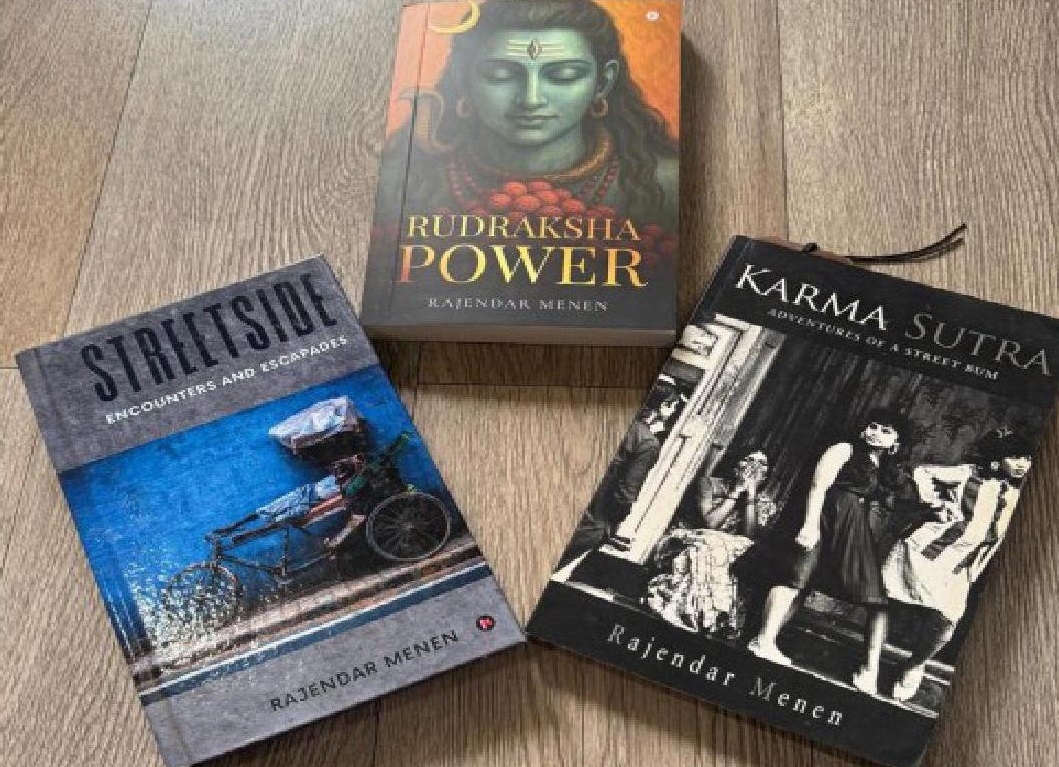
There are scores of instances. Innumerable. Some of them are mentioned in my books Karma Sutra — Adventures of a Street Bum and in Streetside -- Encounters and Escapades.
But there is one incident that is difficult to forget.
A dreaded underworld Don was courting me for favourable media coverage. He stalked me and offered me many inducements. He had also accessed my salary slip and knew the economics of my existence. He found out that I had rented a place to stay and offered me ownership of an apartment of my choice anywhere in the city if I gave him the coverage he wanted. I refused. I said I am fine where I am. He offered to wine and dine me. I didn't relent. I paid for what I ate and drank. Finally, one evening after dinner, he pulled out a notebook from his pocket and said that 77 journalists were on his payroll. But my name wasn't in the book. I said arrogantly forget it, it will never be there.
He then lunged towards me. I thought he would bash me up. He had bodyguards too. But he hugged me tight and said that if I ever needed a job, his organisation would lap me up. He said they needed people like me. I walked away after the meeting thinking I would be run over by a speeding vehicle or shot in the back. But nothing of that sort happened. I bumped into him many times after this but he hugged me every time and treated me with great respect. He was also extremely polite. He told me that his organisation was expanding to other countries and the job offer was still open!
Do you prefer to be a journalist or a writer?
Both are different and yet connected. A reporter works with daily deadlines. A feature writer has more space and time. The editor chisels the work of both and steers the journal in the direction it needs to take depending on market and political conditions. It is important for a writer to work in a newspaper or magazine for a few years at least. He will get a taste of generating crisp copy, and regular deadlines instil discipline. He will also meet all kinds of people and broaden his horizons. It is a great learning process. Books are eternal. A news report dies the moment the event reported loses life. Newspaper reportage is exciting but short lived. Books live for ever.
When and why did you decide to become an independent writer?
Publishers asked me if I would be interested in writing books. I said sure, why not? That's how it started. Then I realised that it suited my temperament. I loved doing research and enjoyed writing on a variety of topics. I am also reasonably introverted and love being by myself. I enjoy my company a lot. I don't miss hanging around with people. I enjoy the outdoors and the wilderness in my spare time; partying doesn't excite me at all. Plus I didn't have to commute and go to an office and have a boss. All I had to do was sit in a room and write. Suited me perfectly. I also realised that celebrity ghost writing was materially profitable. I ghost wrote over 100 books and pocket books. Along with writing books, I continued with journalistic work. It all happened slowly, seamlessly.
How do you select the themes for writing? Is it based on any research or data collection?
I was in the HIV/AIDS programme of the government of India when HIV was at its peak and the entire world media had descended on India. The prophecy was that Mumbai would be a funeral pyre by the year 2000. So, I had a lot of work. I knew English and the local languages and I knew the sex workers and their pimps, and the foreign media needed someone like me in four shifts. I was also the Executive Editor of three journals on HIV/AIDS.
After many years of the HIV/AIDS campaign I had a lot of information. That's when I did the blockbuster — Karma Sutra Adventures of a Street Bum. Streetside was, in a way, a continuation with the material I already possessed. Several books, booklets, anthologies, documenatries and films were spawned during that period and the focus was on HIV, prostitution, homosexuality, Hijras, urban sexual mores, TB, alcoholism, truckers, migrant workers, Devadasis, desolation, abandonment, death, and so on. Quite morbid.
The books on healing were born of my own interest in the subject. I spend my spare time researching various topics. Knowledge is power. I also wanted to avoid any form of medical intervention as much as I could and so had to bolster my knowledge about health and alternate healing.
A book is easy to write once the research is complete.
The ghost writing was profitable in several ways. I enjoyed writing on different topics. In ghost writing I didn't have to get involved in the production and marketing of the books. It was easy.
The book on nature cure happened accidentally. Adil Jussawalla, the poet and Sahitya Akademi Award winner, wanted a book written on his father. Dr. Jussawalla was Mahatma Gandhi's doctor and, arguably, the pioneer of nature cure in India. There were fragments of nature cure sprinkled here and there but Dr. Jussawalla gave it a sophisticated voice. I met Adil several times, got access to old books, documents and research papers and wrote the book.
I was the Indian Editor of Wisdom of Our Mothers, a global collection of essays on motherhood. That was easy. The editors in America emailed me about the project and it happened.
The assignment in Tralee, Ireland, began with research on the gypsies in India. The EU had funded work on the 'travellers' in Europe as they were called then. One of their members contacted me, we did the fieldwork in India and the rest of it in Europe. That was a marvellous period of exploration and new discoveries.
Fallen Angels was the ultimate dream of every journalist covering sex work. Lavishly produced and bankrolled by Anita Roddick's The Body Shop, it had photographs and articles on the sex industry in South-Asia. A team of highly skilled and daredevil writers and photographers combed the streets and brothels of South-Asia, braving all odds, to produce a hardbound expensive, exclusive masterpiece in art paper. I was one of the writers. But American feminists objected to the global release of the book for reasons best known to them. That was, indeed, tragic. This was a once-in-a-lifetime project. I was privileged to work with the world's best writers and photographers.
I am working on another book right now. I choose a topic and then research it. If necessary, I do the field work too. Sometimes, extended travel is involved. The writing is easy. The research and field work take time. If I have all the information needed, I write about three thousand words a day and complete the book in a few months.
I prefer non-fiction because it is like a time capsule. It documents a period in time and lives for ever. I also learn a lot when I study different topics. I haven't attempted fiction so far. Maybe, I will. But, I feel, non-fiction has more value for the reader.
What are the difficulties you face while writing about unconventional subjects like sex workers?
It is exciting covering the street. I loved the prostitution beat. I would have covered the wars if they had happened during my time. The danger is exciting and adrenaline pounding. Anything can happen any time. It is like walking through a minefield. I simply cannot attend press conferences. I get bored. Eating and drinking, accepting some gift and rewriting a press release is just not my kind of beat.
Yes, there were many incidents. I was assaulted, beaten up and stripped a few times and had to run for my life. I had several chilling escapades. When I mentioned this to my mother she suggested that I write about food. Much safer and tastier was her reasoning! But, interestingly, there were many female journalists who joined me on the street beat. They would enter the brothels with me without a care and would be treated well by the girls. No pimp would dare beat them up either. So, without intending to, my female colleagues protected me!
But, in all seriousness, the street beat takes a heavy emotional and spiritual toll. Interviewing thousands of people scarred by life results in a lot of soul searching. I had to frequently detox through intense workouts till I lay senseless and purged. Extreme discipline, yoga and meditation were mandatory to see me through.
I was into sports and have trained all my life. So, I was confident that I could handle minor skirmishes. It was the emotional pain that was difficult to contend with.
Is there any specific interview techniques or precautions needed on dangerous beats?
It is vital not to get into a scrap. In violence, there are no winners. Plus, you are in 'enemy' territory and will be outnumbered and outgunned. So, the first step is to steer clear of any altercation. Never get into arguments; they are fuelled by ego. So, allow the person to have his say, however ridiculous, and nod in agreement. If one is using provocation as an interview instrument, keep it within boundaries. Exit at the first sign of trouble. Study the terrain you are entering carefully and when you exit, even if it is peaceful, look for tails. Change streets and direction to check if anyone is following you. Be innocuous, act ignorant and stupid. Never proclaim that you are a person of any importance. Be compatible with even the most outlandish opinion. You are there for information gathering, and not to prove a point. But, despite all these safeguards, I have got into scraps. Also, a newspaper once published an interview with me along with my photograph. My cover was blown. I avoided that area for six months!
As a writer, you are really versatile. How do you manage to get intensely interested in subjects like music therapy, mudras, magnet therapy, Vastu and Feng Shui, natural healing etc?
As I said earlier, I like to read and study all kinds of subjects. I spend ten hours a day seven days a week reading and writing. My field research continues when I travel. I don't smoke, drink or party and I believe that it is a crime to waste time. So, I optimise every moment. I have several topics in my head and, hopefully, several books. The topics mentioned by you were suggested by the publishers after surveying the market. They asked me to write the books. That's all.
But my great fascination is the human mind. I like hanging out at odd places at odd hours and meeting strangers. They know nothing about me, and people like to talk. I get a lot of information this way. I also deliberately keep a low profile as it is vital not to be recognised, particularly in hot spots. I have met so many weirdos. Truly, the human being is fascinating. I am not surprised by all the wars springing up all the time. If the mind is not tamed, it will war.
Karma Sutra and Streetside include interactions with rank strangers. I would like to do more books like that.
You are a yoga practitioner too. Could you throw some light as to how yoga is important to keep you physically healthy and mentally strong?
I have been keen on fitness since childhood. I was a wild kid and a wild young man. The fitness bit continued but there were too many distractions. There was also a lot of travel and different time zones and extraordinary stress when I started working. So, I had to up my fitness game intelligently. I had to cut out the distractions and streamline the fitness regimen.
Earlier, I was a fanatic. I would do over 100 knuckle and one arm push-ups, train with Nunchaku, do kickboxing, run endlessly and stuff. I stopped all that and started the Tibetan Rites which open and optimise the chakras. They take just 15 minutes and can be done anywhere any time. When I got more settled and developed a routine, I added stretches, asanas, resistance bands and breathwork to my fitness regimen. I have been doing this for over three decades. I also walk several km a day and watch what I eat.
Focus and concentration are needed for writing. My fitness regimen, which is an amalgam of many things, helps.
How did you get involved with Rudraksha? How did your book Rudraksha Power happen?
I am not religious or ritualistic. I don't go to temples and pray. Work is worship. I am a karma yogi. But then, suddenly, about 20 years ago, Mahadev caught me by the scruff of the neck and introduced me to Rudraksha. It just happened out of the blue. I got myself a 5 Mukhi and saw the magic happening in my life. I have been hooked to Rudraksha ever since. I have hundreds of beads now in all the Mukhis. They have given quality, meaning, strength, purpose, divinity and direction to my life. It cannot be explained. It has to be experienced.
After I started wearing the Rudraksha I kept meeting people who were either wearing it or wanted to know about it. There was a lot of erroneous information floating around. So, I wrote a book on it for the layman who wanted to know more about the Rudraksha. I also learnt a lot in the process.
Any tips for young journalists?
Yes, read as much as you can. Read everything. I have read over 50,00 books. Travel, observe life. Get out of comfort zones. Take risks. Keep abreast of the latest news. Expose yourself to the vagaries of life. Whatever you write or say, remember the nation comes first always and every time. Honour it and work to preserve it. If the nation doesn't exist, you don't exist. You have a great responsibility.
Who are your heroes?
I am fascinated by underworld Dons. I have great respect for the men and women in uniform who guard our borders. I am extremely proud of our athletes who win international accolades. I am also amazed by long distance truck drivers. I think Gabriel Garcia Marquez is one of the greatest writers ever, and Sri Aurobindo, the Mother, Osho and Sadhguru give more depth to our existence.
Your future plans, aspirations or any regrets whatsoever?
Considering the way my life has shaped, I don't make plans. I just optimise every day. I enjoy writing and to do that happily I need to keep fit. Keeping that in mind, I go with the flow.
No regrets at all. Everything has been a bonus. A surprise. A gift. I live in gratitude to the great powers that have cradled me in their arms.
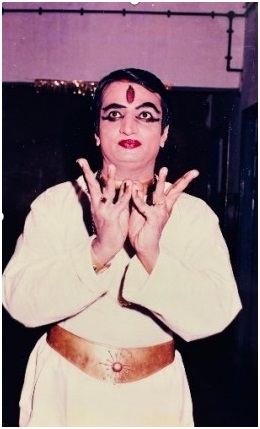
Vijay Shanker, Dancer
Guru Vijay Shanker is a multi-faceted cultural personality,
professional Kuchipudi and Kathakali exponent, dance teacher,
choreographer, singer, actor and arts critic. His articles have been published in national and international publications. He is particularly credited for his lecture-demonstrations on Indian classical dancing which is a fine combination of education and entertainment. He is the recipient of national honours and awards.
Rajendar Menen, the writer.