Bhilwara Counters Impact Of Middle East Crisis By Exporting Yarn And Thread to Bangladesh
Total Views |


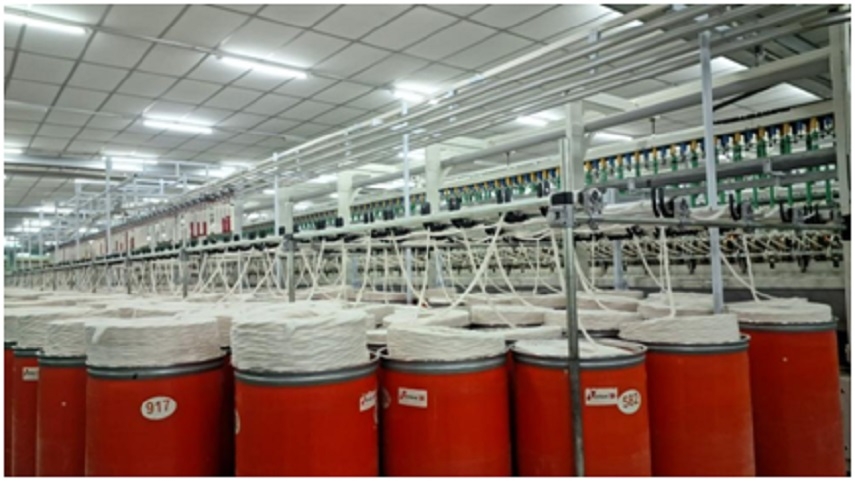
Bhilwara : Amidst the challenges that have emerged because of the crisis in the Middle East, Bhilwara’s textile entrepreneurs have discovered new export avenues. This Textile City’s move to increase exports to Bangladesh has given a boost to its textile industry.
The city has witnessed its ground level investment go up by over Rs 3000 crore due to export of yarn and thread to Bangladesh. This is expected to create more jobs in the coming days. Observers say that the move of the Indian government to do away with the 11% import duty on cotton coming from abroad will allow textile entrepreneurs to access cotton at a cheaper rate.
Despite the global crisis resulting from the war in the Middle East and strict US tariff restrictions, cotton yarn and denim from Bhilwara continue to be exported to the global market. Even during this recession, Bhilwara's textile units have performed well with new investments of around Rs 3,000 crore being made. This is contrary to the scenario in the other textile hubs of Pali, Balotra and Jodhpur.
Amidst the challenges that have emerged because of the crisis in the Middle East, Bhilwara’s textile entrepreneurs have discovered new export avenues. This Textile City’s move to increase exports to Bangladesh has given a boost to its textile industry.
Sources said that Bhilwara’s cotton yarn production is growing at a steady rate of 15% to 17% while denim fabric production is growing at 10% to 12% annually. The entrepreneurs here have embraced modern innovations, technology and automation making the quality of cotton yarn produced here so reliable that no other country in the world can match it. This is why Bangladesh's readymade garment industry relies heavily on Bhilwara's cotton yarn.
Besides Bangladesh, Bhilwara’s yarn is also in demand in Egypt, China, Portugal, Sri Lanka and Morocco. Meanwhile, Bhilwara's denim is being sold in the markets of Mexico, Colombia, Guatemala, Venezuela, Ecuador, Peru, Chile, Argentina and Brazil. The doing away of import duty on cotton is expected to reduce the rate of yarn and provide support to the textile industries. Sources said that since cotton is not produced in India from June 1 to October 31, the Indian government grants permission to import it from abroad.
Honorary General Secretary of the Mewar Chamber of Commerce, R.K. Jain said that the ongoing war has impacted inflation across India. The rise in petroleum prices has led to higher prices for fabric and yarn. Bhilwara district has more than 500 weaving, 18 spinning, five denim and 21 processing industries that produce 120 crore meters of fabric annually while providing direct employment to 150,000 people.
Amidst the challenges that have emerged because of the crisis in the Middle East, Bhilwara’s textile entrepreneurs have discovered new export avenues. This Textile City’s move to increase exports to Bangladesh has given a boost to its textile industry.