AI Revolution Comes With An Energy Cost: India's Data Centres May Need 13.5 GW of Power
Total Views |


New Delhi : As India races to become a global artificial intelligence (AI) powerhouse, a new challenge is emerging beyond chips, software and computing power: electricity and water.
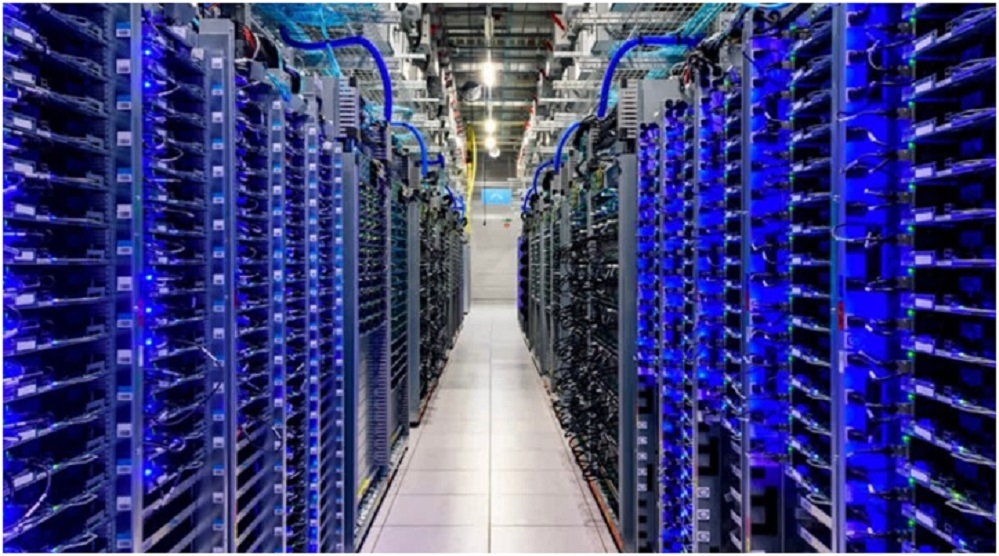
Every AI query, digital payment, online purchase, streaming video and cloud-based application depends on data centres, the massive facilities that store, process and transmit digital information. As AI adoption accelerates, these data centres are expanding rapidly across India, bringing with them unprecedented demands on power grids and water resources.
Experts warn that while India's digital transformation is essential for economic growth, policymakers must now confront the physical infrastructure requirements behind the country's AI ambitions.
"Think of AI data centres as giant factories," said Saakshar Duggal, an expert in Artificial Intelligence Law and 26-time TEDx speaker. "But instead of producing cars or steel, they produce AI answers. Every time we ask AI a question, we rarely think about what happens behind the scenes. Yet every answer depends on vast data centres consuming enormous amounts of electricity and water for cooling."
The Hidden Infrastructure Behind AI:
The rapid rise of AI has dramatically changed the economics of digital infrastructure. Traditional data centres already required substantial electricity to operate servers and networking equipment. However, AI workloads powered by graphics processing units (GPUs) and large language models consume significantly more energy than conventional computing systems.
According to industry estimates, India currently has data centres consuming roughly 1.2 gigawatts (GW) of power. That figure could increase to 13.56 GW over the coming years as AI adoption expands and new hyperscale facilities come online.
The scale of the increase is difficult to comprehend. Traditional server racks typically required around 7-10 kilowatts (kW) of power. AI racks often require anywhere between 30 kW and 100 kW or even more.
Corporate lawyer and technology entrepreneur Ajay Sharma explained the difference using a simple analogy. "To understand the scale, imagine replacing a scooter engine with a jet engine. That is roughly the increase in energy intensity that AI infrastructure is bringing to data centres," he said.
Large language models, machine-learning systems and advanced AI analytics platforms require dense computing environments that generate enormous amounts of heat, creating a parallel demand for sophisticated cooling infrastructure.
India's New Infrastructure Race:
For decades, India's infrastructure ambitions focused on highways, ports, airports, railways and power plants. Today, experts say a new race has begun: the race for computational capacity.
Driven by AI, cloud computing, digital payments, e-commerce, 5G networks, fintech and cybersecurity, India is rapidly emerging as one of the world's most attractive destinations for data-centre investment.
A Deloitte report, 'Attracting AI Data Centre Infrastructure Investment in India (2025)', noted that despite generating nearly 20% of global data, India accounts for only around 3% of the world's data-centre capacity.
As a result, billions of dollars are flowing into hyperscale facilities across Mumbai, Chennai, Hyderabad, Bengaluru, Pune and Noida.
Industry experts argue that this expansion is not merely desirable but strategically necessary.
Digital sovereignty, AI leadership and cyber resilience all require domestic computing infrastructure rather than dependence on overseas facilities.
However, the question is no longer whether India needs more data centres.
The question is whether India is prepared for the electricity and water demands that accompany them.
The Cloud Is Not as Virtual as It Appears:
Mohit Kapoor, Infrastructure, Sustainability and Industrial Policy Commentator, who has been involved in proposing anti-seismic and anti-vibration devices to data centres, believes the term "cloud" often creates a misleading perception.
"The term 'cloud' has perhaps been one of the most successful marketing inventions of the digital era. It creates an impression that data somehow floats weightlessly through cyberspace," he told ETV Bharat. "The reality is far less romantic. This digital cloud lives inside buildings filled with servers. Servers powered by electricity, cooled by complex thermal-management systems and supported by backup power infrastructure, batteries, transformers, substations and cooling networks.".
Kapoor noted that data centres operate 24 hours a day, seven days a week, making their dependence on electricity non-negotiable.
"Its relationship with electricity is not optional. It is existential," he said.
Local Grids Could Face Pressure:
The challenge is particularly acute because most of India's major data-centre investments are concentrated in a handful of locations, including Noida, Mumbai and Navi Mumbai, Hyderabad, Bengaluru and Chennai. These cities already have significant electricity demand from industries, commercial establishments, households and transport infrastructure.
Experts warn that if multiple AI-focused hyperscale data centres are commissioned in the same regions, local power networks could come under significant stress. "The issue is therefore less about national electricity shortages and more about localised infrastructure readiness," Sharma said.States may need new transmission lines, additional substations, battery storage systems, renewable-energy integration and modernised grid infrastructure to accommodate the growing demand.
AI's Water Footprint:
Electricity is only part of the story. Data centres also require large amounts of water for cooling systems that prevent servers from overheating. Lt Gen (Dr) Rajesh Pant, former National Cyber Security Coordinator in the Prime Minister's Office, highlighted the issue succinctly. "In addition to electricity, they need water for cooling. Answering five questions in ChatGPT consumes about 250 ml of water," he told ETV Bharat.
While water consumption varies depending on technology and location, experts increasingly view water availability as a critical factor in future data-centre planning. "Electricity demand can be addressed through new generation capacity, renewable energy and grid upgrades, but water presents a more complex challenge because it is often scarce exactly where many data centres are being planned," Sharma said.
He argued that policymakers should devote as much attention to water governance as they do to digital infrastructure. "Every large data centre should be required to maximise recycled water use, adopt water-efficient cooling technologies and disclose its environmental footprint," he added.
States Begin Rethinking Power Policies:
Recognising the growing energy requirements of the sector, some states have begun adapting their policies. Ravi Seth, Vice President, Business Development at Indian Energy Exchange (IEX), pointed to Andhra Pradesh's recent move to create a dedicated framework for large data centres.
Under a policy introduced in April 2026, qualifying data-centre developers can apply for Deemed Distribution Licensee (DDL) status, allowing them to build and operate their own internal distribution infrastructure and directly procure power from renewable-energy sources, captive plants, power exchanges and bilateral agreements.
"This is important because power typically accounts for 60-70% of a data centre's operating cost. Reliability isn't a preference, it's existential," Seth said.
According to him, India's data-centre market could grow from $8.9 billion in 2025 to nearly $31 billion by 2035, while power demand from the sector alone could rise to 57 terawatt-hours (TWh) by 2030.
For global technology firms investing billions in AI infrastructure, access to reliable and affordable electricity is becoming a decisive factor.
Building a Sustainable AI Future:
Despite concerns over electricity and water consumption, experts emphasise that India's data-centre expansion should not be slowed. Instead, they argue it should be made smarter and more sustainable.
Potential solutions include renewable-energy-linked data-centre parks, Battery Energy Storage Systems (BESS), AI-driven energy management, liquid cooling technologies, rainwater harvesting, wastewater recycling and waste-heat recovery systems.
Kapoor believes the country's data-centre boom could become a catalyst for innovation across India's energy, engineering and sustainability sectors. "The future belongs to infrastructure that is not only intelligent, but also accountable," he said.
Dr. Karnnika A Seth, a cyberlaw, IP & media law expert practising in the Supreme Court of India, who has been empanelled as a member of the Working Group of ICANN, told ETV Bharat, "Yes, electricity production is one of the main concerns when it comes to rising usage of AI. India needs to harness renewable sources of energy for additional demand in AI centres. Balance is the key, whether it is responsible usage of AI or electricity generation for its Dara centres. Ecological balance needs to be kept in mind as global warming is already a concerning issue we are trying to address from a global standpoint."