Voice of Rhythm with Sandip SoparrkarIs World A Dance Stage For Tourists?
Total Views |


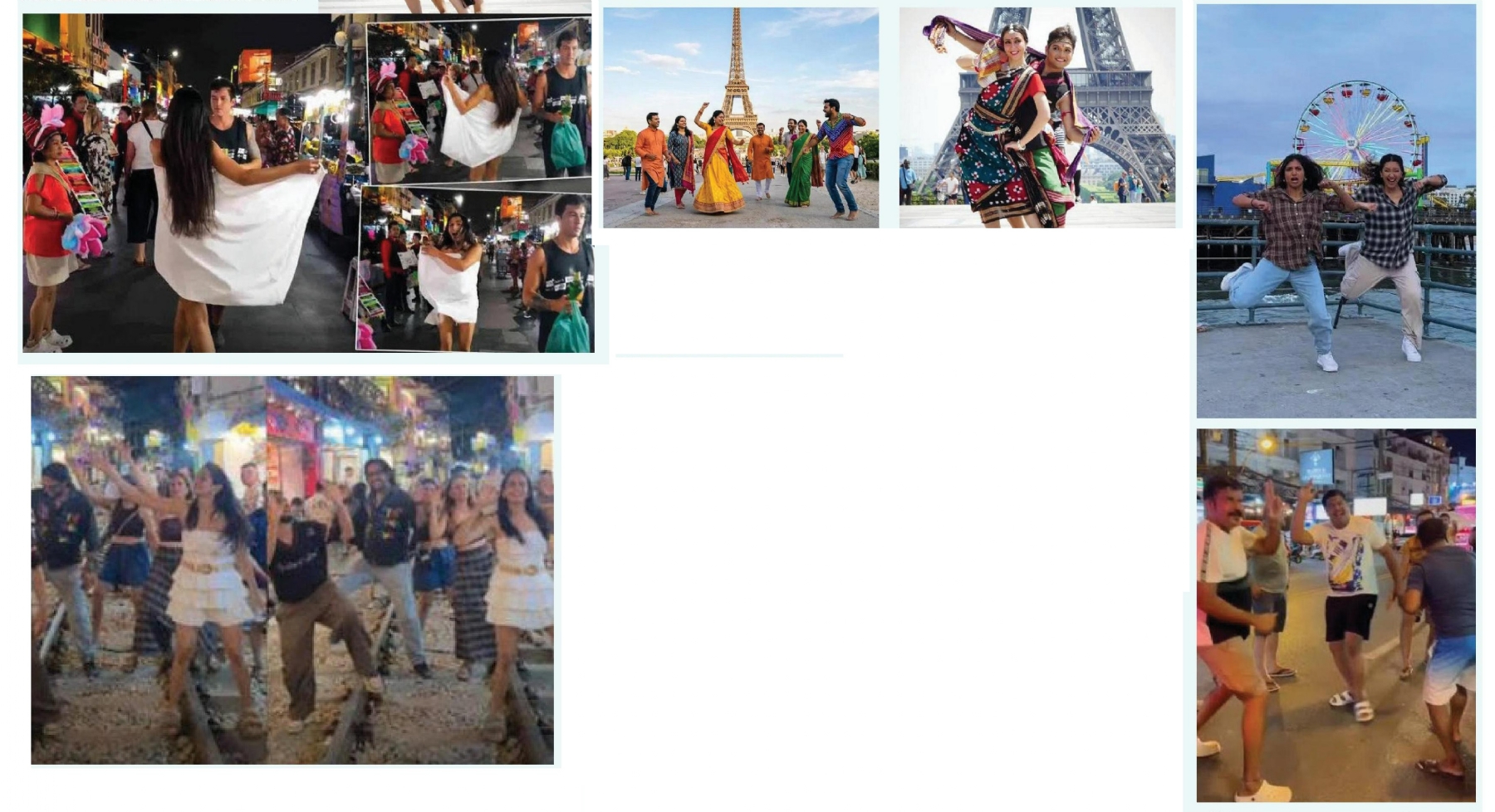
Over the past few years, social media has gifted us countless videos of Indian tourists breaking into spontaneous Garba, Bhangra, Bollywood routines, and flash mobs at some of the world’s most iconic tourist destinations. From the streets of Europe to ancient temples, airport terminals, mountain viewpoints, historic squares, and cultural landmarks, groups of travellers have increasingly turned public spaces into impromptu performance venues. While these videos often attract likes, shares, and comments celebrating “Indian culture going global,” it may be time to ask a difficult but necessary question: Is every place meant to be a dance floor?
Let me be clear. There is nothing wrong with dance. As a dancer, choreographer, and lifelong advocate of movement as a form of expression, I understand better than most the joy that dance can bring. Dance has the power to connect people, celebrate identity, and create unforgettable memories. However, context matters. Respect matters. Awareness matters.
A vacation destination is not automatically a performance venue simply because it offers a picturesque backdrop for a social media reel.
Many of the locations where these videos are filmed are not merely tourist attractions. They are places of historical significance, spiritual importance, cultural sensitivity, or public utility. Visitors from around the world come to experience these spaces in a particular way—sometimes quietly, sometimes reflectively, and often respectfully. When a group suddenly occupies a public area to perform a choreographed dance routine for a camera, it can disrupt the experience of everyone else present.
The issue is not Garba itself. Garba is a beautiful folk dance tradition rooted in devotion, community, and celebration. The issue is the assumption that every location is an appropriate setting for its performance. A centuries-old monument, a memorial site, a sacred place of worship, or a crowded tourist pathway does not become a dance stage simply because a traveller wants engaging content for social media.
What is particularly concerning is the growing culture of performative tourism. Increasingly, travel seems less about experiencing a place and more about creating content that proves one has been there. The destination becomes a backdrop. The culture becomes scenery. The experience becomes secondary to the recording. In this race for visibility, travellers sometimes forget the fundamental principle of good tourism: when you visit a place, you are a guest.
Being a guest requires sensitivity. It requires observing local customs, understanding local expectations, and recognising that public spaces belong to everyone. It means asking not only, “Can I do this?” but also, “Should I do this?”
Imagine visiting a quiet monastery where visitors are expected to maintain silence. Imagine standing at a memorial dedicated to tragedy and loss. Imagine exploring a narrow heritage street crowded with tourists and locals alike. In each of these situations, a loud dance performance might be technically possible, but that does not make it appropriate.
Ironically, India itself often expects such sensitivity from foreign visitors. We become upset when tourists behave disrespectfully at our temples, monuments, or cultural sites. We rightly demand that they understand local traditions and conduct themselves with dignity. The same standard should apply when Indians travel abroad. Respect is not a one-way street.
There is also a larger question about cultural representation. Every time an Indian tourist uploads a public video from another country, they are not merely representing themselves. Fairly or unfairly, they become ambassadors of their nation. Their actions contribute to how others perceive Indian travellers as a whole. When tourists demonstrate courtesy, curiosity, and cultural respect, they enhance India’s image globally. When they behave as though public spaces exist primarily for their entertainment, the opposite can occur.
This is not an argument against celebrating Indian culture internationally. On the contrary, cultural expression should be encouraged. Dance festivals, cultural exchanges, community events, public celebrations with permissions, and collaborative performances are wonderful ways to share India’s rich traditions with the world. The problem arises when expression ignores context.
Perhaps the real challenge is learning the difference between celebration and intrusion. The world is filled with beautiful places that deserve to be experienced on their own terms. Sometimes the most meaningful response to a breathtaking landscape, a historic monument, or a sacred site is not a dance routine, a selfie, or a reel. Sometimes it is simply to stand still, observe, appreciate, and allow the place to speak for itself.
So, dear Indian tourist, carry your culture proudly. Sing your songs. Dance your dances. Share your traditions with the world. But remember that not every destination is your stage, not every moment is content, and not every beautiful location is waiting to become the backdrop of a performance.
The mark of a great traveller is not how much attention they attract, but how much respect they show. I hope my readers will find this story of mine balanced and critical without sounding hostile to dance or Indian culture.