Google Translate Turns 20 With A Billion Users, Translates Over 250 Languages, Live Translation And More
Total Views |


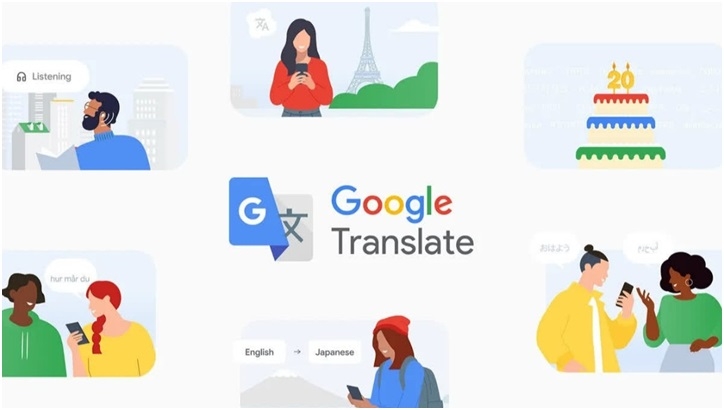
Google is celebrating the 20th anniversary of its multilingual translation service, Translate. It has grown from a modest machine learning experiment in 2006 into one of the world's most widely used communication tools. Translate is now powered by Google's Gemini Artificial Intelligence (AI) models and next-generation Tensor Processing Units (TPUs), supporting nearly 250 languages and more than 60,000 language pairs, covering roughly 95 per cent of the global population in their native tongue.
To mark this occasion, Google has highlighted several milestones and capabilities that define Translate’s evolution, while simultaneously launching a much-anticipated new feature.
Pronunciation Practice arrives on Android
The most immediate announcement is the launch of Pronunciation Practice, a long-requested feature now available on the Android app in India and the United States (US). With the help of AI, users can analyse speech in real time. The tool provides instant feedback to help improve pronunciation ahead of actual conversations. It currently supports English, Spanish, and Hindi.
Integration of AI and machine learning
Google Translate's technical journey reflects the broader arc of AI development. When it launched in 2006, the platform relied on statistical machine learning, training on trillions of words to identify language patterns. A pivotal shift came in 2016, when Google transitioned to Neural Machine Translation — moving away from literal, word-for-word output towards translation that accounts for sentiment and context. Today, Gemini models bring further sophistication, enabling the platform to handle idioms, local slang, and nuanced phrasing with considerably greater accuracy.
More than 1 billion users
Google Translate users are staggering, as more than one billion users turn to the platform for translation assistance every month. Across Translate, Search, Lens, and Circle to Search, approximately one trillion words are translated each month, a volume that, if read aloud continuously, would take an estimated 12,000 years to complete.
Headphones can be your personal translator
The platform's Live Translate feature, which now works with any pair of headphones, has moved beyond single-sentence translation. More than a third of Live Translate sessions exceed five minutes, reflecting use cases that range from job interviews to cross-cultural family conversations. A new Audio-to-Audio Gemini model enables more natural, real-time spoken dialogue, preserving the tone and rhythm of the speaker's voice.
Offline functionality is also well established, with downloadable language packs available for both Android and iOS — a feature that has proven particularly valuable for travellers without reliable connectivity.
Google Translate is being used for learning and understanding American Sign Language
Nearly a third of mobile users actively use Google Translate as a language-learning aid, with close to half of those using the Practice feature engaging in speaking exercises each week.
Users can also get more natural translations of tricky idioms, local slang, and understand the subtle context of local languages.
Google mentioned that in the AI Mode in Search, people are receiving helpful American Sign Language (ASL) translations. According to Google Trends data, Translate has also reached a five-year high to understand the nuances of ASL and its cultural importance.
Moreover, people also use Google Translate in AI Mode in Search to understand Gen Alpha slang like “Clock it”, “maxxing”, “mogging”, and more.
Translate emojis
The AI-powered multilingual tool can turn text into emojis in the AI Mode in Search to make normal conversations “more visual and playful”.
Most commonly translated language pairs and phrases
Google mentions that English to Spanish is the most common translated language pair in Translate. Other pairs include English to Indonesian, Portuguese, Arabic, and Turkish. Three distinct Indian languages, such as Hindi, Bengali, and Malayalam, also fall under the most commonly translated language group.
Moreover, the Mountain View-based tech giant highlighted that “Thank you”, “How are you?”, “I love you”, “Hello”, and “Please” were the most commonly translated phrases on Google Translate rather than any business term or technical query.