Voice of Rhythm with Sandip SoparrkarBharatanatyam Mudras and Robots
Total Views |


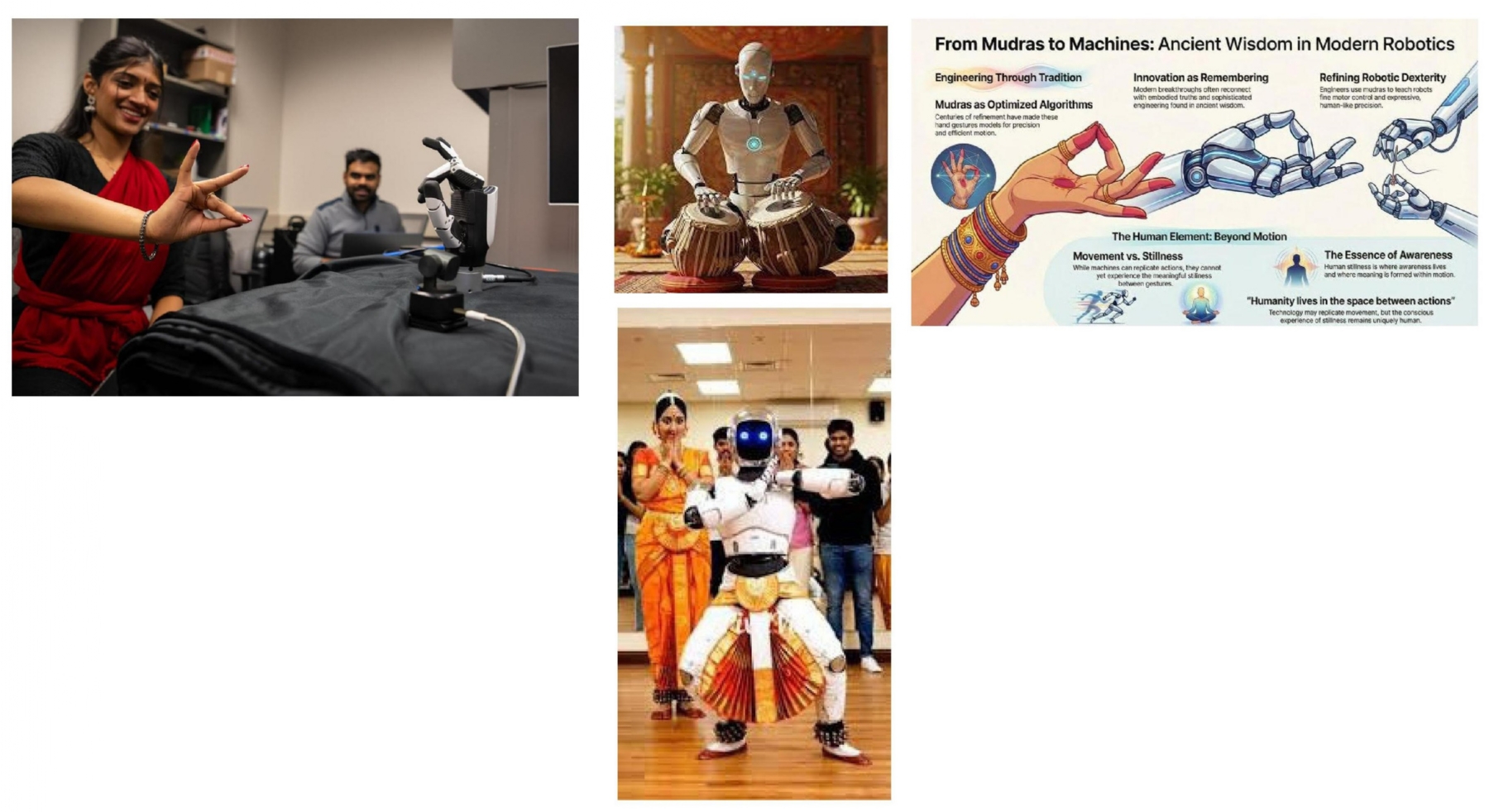
The idea sounds
almost unbelievable at first: Bharatanatyam is helping robots learn how to move
their hands. In an era dominated by artificial intelligence, automation, and
machine learning, one of India’s oldest classical dance traditions has
unexpectedly entered the world of robotics research. While robots are not
learning to perform on stage or master abhinaya, scientists are studying the
highly structured hand gestures of Bharatanatyam to solve one of robotics’ most
difficult challenges, achieving precise, human-like hand movement.
Modern robotics has made extraordinary progress in recent
decades. Machines can now navigate complex environments, recognise faces,
assist in surgeries, and even mimic human conversation.
Yet despite these
advancements, replicating the human hand remains remarkably difficult. The
human hand is one of the most sophisticated mechanical systems in nature,
capable of delicate coordination between fingers, palm, wrist, and forearm.
With more than twenty degrees of freedom, even a simple gesture requires
intricate control and balance.
Teaching robots to grasp objects, communicate through
gestures, or perform fine motor tasks is far more complicated than teaching
them to walk. This is where Bharatanatyam offers an unexpected and fascinating solution.
For centuries, Bharatanatyam dancers have trained
rigorously in mudras, codified hand gestures that form an essential part of the
dance vocabulary.
These gestures are not random or casual. Every finger
placement, extension, bend, and transition follows strict principles of
alignment, proportion, clarity, and precision. What audiences experience as
graceful artistry is, beneath the surface, a highly disciplined system of
biomechanics and structured movement.
Researchers have recognised that this makes Bharatanatyam
an ideal model for studying complex hand coordination. Unlike ordinary hand
movements used in daily life, Bharatanatyam mudras belong to a carefully
organised vocabulary refined through generations of practice. Each gesture is
repeatable, measurable, and deeply controlled. For robotics scientists, this
creates something extremely valuable: a clean and systematic movement dataset.
Human gestures in everyday situations are often inconsistent and unpredictable,
but classical dance provides movements that are intentional and standardised.
Scientists studying robotic hand movement have begun
digitally capturing these mudras using motion sensors, tracking systems, and
AI-driven analysis.
The gestures are broken down into smaller units of coordinated
movement often referred to as “synergies.” Rather than moving each finger
independently, these synergies teach machines how groups of joints can work
together smoothly and efficiently.
This understanding allows robotic hands to move with
greater fluidity, accuracy, and coordination. It is important, however, to
correct a common misconception created by dramatic headlines. Robots are not
being trained in Bharatanatyam as an art form. They are not performing varnams
or expressing emotion through dance. Instead, researchers are borrowing the
principles embedded within Bharatanatyam, its precision, geometry, controlled
transitions, and disciplined hand structures, to improve robotic functionality.
The implications of this research extend far beyond robotics
laboratories. One major area of potential impact is prosthetics. Artificial
hands designed using these movement principles could become more natural and
intuitive for users. People using prosthetic limbs often struggle with rigid or
unnatural movement patterns.
By studying the coordinated gestures found in
Bharatanatyam, engineers may develop prosthetic hands capable of smoother and
more human-like interaction.
Rehabilitation science may also benefit significantly.
Patients recovering from strokes, injuries, or neurological disorders
frequently need to relearn fine motor skills. Structured gesture systems
inspired by classical dance could help therapists create more effective
rehabilitation exercises focused on coordination, rhythm, and controlled movement.
Human–machine communication is another area where these
findings may prove transformative. Gesture-based systems are becoming
increasingly important in fields such as virtual reality, assistive technology,
and sign-language interpretation. Bharatanatyam’s precise and codified gestures
provide a sophisticated framework for improving how machines interpret
non-verbal communication.
Beyond science and technology, this development carries
enormous cultural significance. Bharatanatyam is often described as ancient,
traditional, or rooted in history. While these descriptions are true, they
sometimes unintentionally place the art form only in the past. This emerging
intersection between Bharatanatyam and robotics reveals something deeper, that
classical Indian dance also contains profound scientific intelligence.
The discipline demanded by gurus, the insistence on exact
hasta positions, the countless hours spent refining finger placement and
transitions — all of this is now being recognised not only as artistic training,
but also as advanced knowledge about anatomy, motion, coordination, and
cognitive control.
For dancers and cultural practitioners, this recognition
offers a quiet but powerful validation. The embodied wisdom preserved within
classical arts is proving relevant even in the age of artificial intelligence.
There is also a philosophical beauty to this moment.
Bharatanatyam was originally conceived as a medium of storytelling, devotion,
emotional expression, and spiritual connection. That these same gestures can
now contribute to robotics research highlights the extraordinary depth of
traditional knowledge systems. Ancient practitioners understood the body not
merely as an instrument of performance, but as a sophisticated vehicle of
communication, structure, and intelligence.
Modern technology, despite its speed and innovation, is
still striving to replicate qualities the human body has mastered naturally for
centuries.
At a time when classical arts often struggle for visibility
amid digital entertainment and rapidly changing cultural habits, this
development reminds us of their enduring relevance. Bharatanatyam is no longer
confined to temples, auditoriums, or dance classrooms. Its principles are now
influencing the future of human–machine interaction.
The image of a robot learning from a Bharatanatyam mudra is
more than a scientific curiosity. It is a powerful symbol of dialogue between
tradition and innovation. It demonstrates that progress does not always require
abandoning the past. Sometimes, true progress comes from rediscovering the
intelligence already embedded within ancient practices.
As artificial intelligence continues to reshape the modern
world, this collaboration between Bharatanatyam and robotics offers an
inspiring reminder: some of humanity’s most advanced knowledge has been quietly
preserved in art all along.
In teaching robots how to move their hands, Bharatanatyam
is doing what it has always done best, transforming discipline into expression,
structure into intelligence, and tradition into timeless relevance.