Iran Announces Alternative Routes In Hormuz Strait
Total Views |


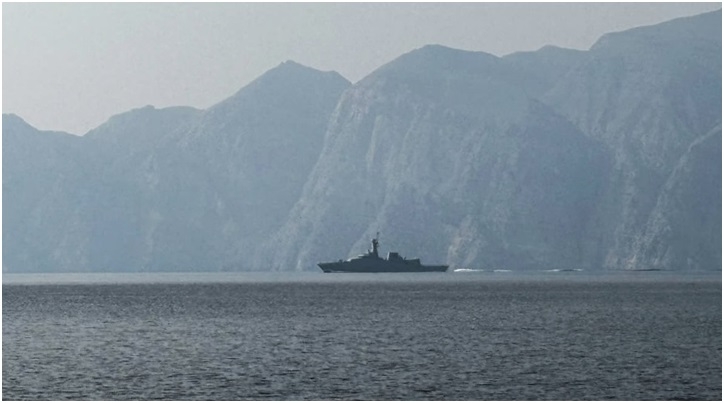
Tehran : Iran announced alternative routes on Thursday for ships travelling through the Strait of Hormuz, citing the risk of sea mines in the main zone of the vital waterway.
Tehran has agreed to temporarily reopen the strait, through which one-fifth of the world's oil usually passes, as part of a two-week truce.
"All ships intending to transit the Strait of Hormuz are hereby notified that in order to comply with the principles of maritime safety and to be protected from possible collisions with sea mines...they should take alternative routes for traffic in the Strait of Hormuz," Iran's Revolutionary Guards said in a statement quoted by local media.
The statement shared instructions for an alternative entry and exit route through the strait. The United States and Iran agreed to a two-week ceasefire overnight from Tuesday to Wednesday, less than an hour before US President Donald Trump's deadline to obliterate the Islamic Republic if it did not bow to his demands for a deal to reopen the Strait of Hormuz.
Tehran had effectively blocked the key shipping route since early March, sending global energy prices spiralling.
Lebanon’s health ministry said that Israeli strikes on Wednesday killed 182 people, the highest single-day death toll in the Israel-Hezbollah war.
Israel launched a barrage of strikes in central Beirut and elsewhere in the country as a shaky ceasefire took effect between the U.S. and Iran. Iranian officials have maintained that the deal was supposed to include Lebanon, while Israel and the U.S. have insisted that it does not.
Another 890 people were wounded in the strikes, the ministry said. Altogether, 1,739 people have been killed and 5,873 wounded in Lebanon in just over five weeks since the outbreak of the war.