Gaganyaan Gears Up: ISRO Charts Path For India's First Human Spaceflight
Total Views |


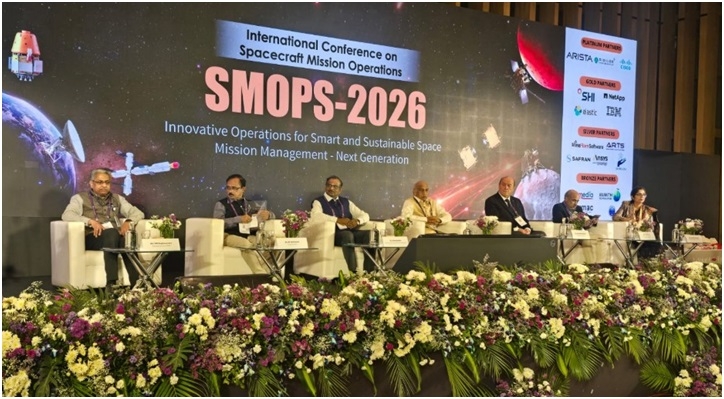
Bengaluru: "ISRO is progressing steadily as per the vision of PM Modi, with three uncrewed missions planned before the first human spaceflight," ISRO Chairman and Department of Space Secretary, V Narayan, told ETV Bharat. Speaking further, he confirmed that currently, work is underway on the first uncrewed mission, and timelines will be announced at an appropriate stage.
Addressing the challenges ahead, he highlighted that human spaceflight missions are highly complex, with mission operations playing a critical role. Key tasks include human-rating the launch vehicle, developing crew escape systems, ensuring robust environmental control and safety systems, and seamlessly integrating humans with machines and software.
Narayanan described Gaganyaan as a national programme involving multiple agencies and laboratories, underscoring its strategic importance. He also noted that work on procurement and the IADT-02 test is underway.
Speaking at ISRO’s three-day international conference on Spacecraft Mission Operations (SMOPS 2026) in Bengaluru, he highlighted the evolution of India’s space programme, which began in 1962, into a highly sophisticated ecosystem driven by advanced mission operations. He noted that emerging technologies such as AI, machine learning, and cloud-based ground systems have become integral to modern space operations, transforming what was once theoretical into essential tools. Referring to missions like Chandrayaan, Aditya-L1, and upcoming space docking experiments, he emphasised the importance of collaboration and innovation, including the growing role of private startups, in strengthening India’s space capabilities ahead of key upcoming missions.
Narayanan underscored that ensuring a spacecraft’s full operational readiness in orbit from initial checkout to continuous monitoring remains a critical domain powered by expert teams and precise system simulations. Emphasising the critical role of meticulous planning and flawless execution of spacecraft mission operations for the success of the space missions, he reiterated the need for the Indian space sector to proactively engage with global counterparts in finding innovative solutions to the evolving challenges in the space sector.
Gaganyaan Progress and Key Human Spaceflight Challenges
Talking to ETV Bharat on the sidelines of the program—jointly organised by ISRO, ASI (Astronautical Society of India), and IAA (International Academy of Astronautics)—Narayanan emphasised that mission operations are a long-term commitment, often spanning 15 years or more, requiring continuous communication, monitoring, and precision.
Citing examples, he noted that the Mars Orbiter Mission required nearly 300 days of sustained operations, while missions like Chandrayaan-3 also demanded prolonged and meticulous oversight. He added that the conference focuses on strengthening mission operations through the adoption of new technologies.
Kiran Kumar, Padma Shri awardee, former Chairman of the Indian Space Research Organisation (ISRO) and Chairman of the APEX Science Board, highlighted the key technological challenges being addressed ahead of full mission readiness for the first human spaceflight. He noted that as space activity expands, managing spacecraft and human missions is becoming increasingly complex. While space technologies have brought significant benefits to society and strengthened prospects for humanity’s future, they also pose emerging risks that must be carefully managed.
He emphasised that venturing beyond Earth is essential not just for exploration, but for ensuring long-term human survival and gaining a deeper understanding of our planet and the universe. "With countries like the United States and India advancing plans for human spaceflight and lunar missions, collaboration and knowledge-sharing are crucial to address operational challenges, enhance safety, and build sustainable capabilities," he said.
"Ultimately, expanding human presence in space is not only about reaching new frontiers, but also about better understanding and safeguarding life on Earth," he added.
Kiran Kumar further said that once human life is involved, safety becomes paramount. This requires all systems to incorporate higher safety margins and redundancies, which in turn increase complexity, adding to constraints in size, weight, and overall mission design.
From Aryabhata to AI-Driven Missions: Evolution of India’s Space Capabilities
In one of the key sessions at SMOPS 2026, Kiran Kumar noted that India’s space journey has evolved significantly from the simple platform of Aryabhata to the highly complex systems being developed for missions like Gaganyaan and future lunar landings. He said that as mission complexity increases, integrating advanced intelligence into operational systems becomes essential, making the transition from design to successful execution more challenging.
He highlighted that Gaganyaan is incorporating smart features such as the SAKHI digital assistant to monitor crew health and provide real-time technical support. He also emphasised that continuous learning, system upgrades, and a deep understanding of operational behaviour are critical, with simulations playing a vital role in preparing for and managing these complexities of space smart mission programs.
Space Situational Awareness and Growing Orbital Risks
In the same session, T S Kelso of CelesTrak (USA), who previously served as a senior research astrodynamicist at the Centre for Space Standards and Innovation and has over 35 years of experience in space operations and research, spoke on the space situational environment. He highlighted that space situational awareness (SSA) is a critical tool for ensuring safe operations in orbit and preserving the space environment for future generations. SSA involves tracking objects in orbit, monitoring their operational status, and understanding the impact of space weather.
T S Kelso of CelesTrak (USA) previously served as a senior research astrodynamicist at the Centre for Space Standards and Innovation and has over 35 years of experience in space operations and research
T S Kelso of CelesTrak (USA) previously served as a senior research astrodynamicist at the Centre for Space Standards and Innovation and has over 35 years of experience in space operations and research (ETV Bharat)
He noted that this information is essential for maintaining flight safety and mission assurance, particularly with the growing number of active satellites, defunct spacecraft, rocket bodies, and orbital debris. He stressed that a satellite’s operational status is crucial, as failures in communication or attitude control can make it uncommandable and alter its orbit unpredictably. Accurate tracking also requires knowledge of an object’s size, mass, and manoeuvrability to assess both collision risk and potential consequences.
He pointed out that tracking is becoming increasingly difficult due to the rapid rise in satellites, with many more expected in the coming years. A key challenge is that tracking systems can lose satellites, especially those that manoeuvre, and errors can persist for extended periods. He also highlighted that the lack of standardised data formats and limited data-sharing continues to affect accuracy and coordination.
Warning of growing risks, he noted that many objects in orbit, including defunct satellites, rocket bodies, and debris, cannot manoeuvre, increasing the likelihood of collisions. He added that future challenges will intensify with the rise of mega-constellations, requiring faster data updates, improved prediction models, and real-time global coordination.