Adani Wins US Court Hearing In Push To Throw Out SEC Fraud Suit
Total Views |


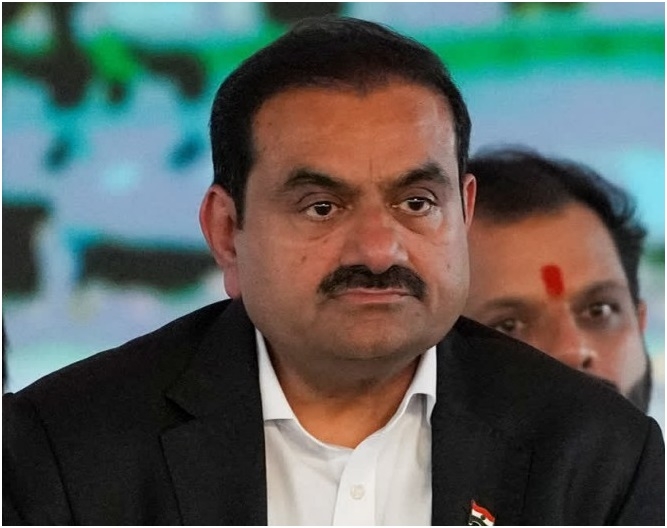
New York : A US judge granted a request from billionaire Gautam Adani to schedule a hearing in his effort to dismiss a US Securities and Exchange Commission fraud case, which he says lacks necessary jurisdiction as well as fails on multiple reasons. This followed lawyers of Adani and his nephew, Sagar filing a plea seeking dismissal of the case.
"The court has received Defendants' letter requesting a pre-motion conference on their anticipated motion to dismiss the Complaint. The court GRANTS that request and DIRECTS the parties" to schedule the pre-motion conference, the Eastern District court of New York said in its order.
In the filing, the Adanis' lawyers said there was no credible evidence supporting the alleged bribery scheme. The SEC, they said, lacked necessary jurisdiction over the two men and that the alleged misstatements underpinning the case weren't actionable.
The case brought by SEC in November 2024 alongside a criminal complaint by the US Department of Justice, alleges that the Adanis sought to pay over USD 250 million in bribes to Indian officials to secure solar energy contracts and concealed the scheme from US investors and banks when they raised funds.The Adani Group has denied all allegations, stating that none of its entities or executives have been charged under the US Foreign Corrupt Practices Act, and that Adani Green Energy - the renewable energy arm that raised the funds - is not a party to the proceedings.
While Gautam Adani chairs the Adani Group, Sagar Adani is executive director at Adani Green Energy. The lawsuits had been stalled for over a year as the defendants, based in India, were not served notices. The group, which spans green energy, ports, realty, mining and news media, has continued to raise funds from global investors, including BlackRock, since the charges were filed.
The Brooklyn, New York court's decision to grant a hearing allows Adani to argue that the regulator's complaint should be thrown out at an early stage, potentially avoiding a protracted discovery process and trial. In filings, Adani's legal team has argued that the case lacks sufficient jurisdictional basis and fails to establish actionable claims under US securities laws.
NO US JURISDICTION
The Adanis argued that the court lacked personal jurisdiction, saying neither of them had sufficient contacts with the US or direct involvement in the bond offering.
The USD 750-million bond sale was conducted outside the United States under Rule 144A and Regulation S exemptions, with securities sold to non-US underwriters and only later resold in part to qualified institutional buyers, they said.
The plea stated that "in September 2021, Adani Green, which is not a US registrant, conducted a USD 750 million bond offering pursuant to SEC Rule 144A and SEC Regulation S, which are registration exemptions for private resales to qualified institutional buyers (QIBs) and for non-US sales, respectively".
"Adani Green sold all of the notes from the Offering outside the United States, via a Subscription Agreement, to non-US underwriters, who later resold the Notes to QIBs. A fraction of those resales -- in transactions to which Adani Green was not a party -- are alleged to have been made to 'investors in the United States'," it said.
The plea through the lawyers added that the complaint does not allege that Gautam Adani approved the issuance, attended key meetings, or directed any activity at US investors.
Stating that the SEC could not charge the two under the US Foreign Corrupt Practices Act, it instead recast its charges as a securities fraud case. The filing states that the Adanis dispute that there is any credible evidence supporting the purported bribery scheme.
"Notably, the SEC does not allege that there were any investor losses, and there were none. The bonds have matured, and Adani Green repaid all principal and interest in full to investors in 2024," it added.
EXTRATERRITORIAL REACH CHALLENGED
The filing also contends the SEC's case is impermissibly extraterritorial, noting the securities were not listed in the United States, the issuer is Indian, and the alleged misconduct occurred entirely in India. Citing US Supreme Court precedent, Adanis said the SEC failed to show any "domestic transaction", a requirement for applying US securities laws.
Under the sections invoked, the SEC must plausibly allege a "domestic transaction" and it must plead that "irrevocable liability was incurred or title was transferred within the United States".