Iran's Parliamentary Speaker Qalibaf Is Floated As A Possible US Contact In Talks As War Rages
Total Views |


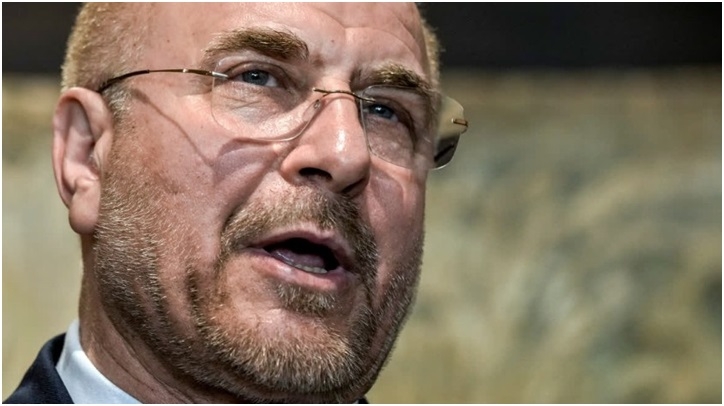
Dubai : Long before he became Iran's parliamentary speaker, Mohammad Bagher Qalibaf went on a charm offensive for almost two decades, portraying himself as a hard-liner the West could do business with in the Islamic Republic.
“I would like the West to change its attitude to Iran and trust Iran, and rest assured that there’s an attitude in Iran to advance issues through dialogue,” he told London-based newspaper The Times in 2008.
With the war in its fourth week after the joint U.S-Israeli strikes on Iran started last month, the 64-year-old pilot and former Revolutionary Guard commander has denied that there have been discussions with the United States amid reports that he was floated as Washington's negotiating partner in talks.
Questions also remain as to what power Qalibaf has within Iran's theocracy, shattered after the Feb. 28 Israeli airstrike that killed 86-year-old Supreme Leader Ayatollah Ali Khamenei. Khamenei's son, Mojtaba, now Iran's new supreme leader, has backed Qalibaf through his repeated and failed presidential campaigns.
Still, multiple centers of power within Iran's theocracy now likely vie for control of the Islamic Republic — and uncertainties remain over Mojtaba Khamenei's status as he has yet to be seen after reportedly being wounded.
Meanwhile, Qalibaf has been tied to the crackdown against protesters calling for change within Iran's government and has seen corruption allegations swirl around him during his time in office.
U.S. President Donald Trump may just be looking for an Iranian version of Venezuela’s acting President Delcy Rodríguez, who took over as the U.S. military seized then-Venezuelan leader Nicolás Maduro in January.
“Many Iranians despise Ghalibaf; diplomats see him as pragmatic,” wrote analyst Michael Rubin, using a different transliteration for the politician's last name.
“Those diplomats confuse pragmatism with opportunism. Ghalibaf is a survivor. He sees in Trump someone who can help him achieve what late Supreme Leader Ali Khamenei denied him: the presidency or some equivalent interim leadership role.”
Iran's semiofficial Tasnim news agency, believed close to the Guard, on Tuesday described reports in Western media as a “political bomb” meant to put the country's leaders in disarray.
"Qalibaf was introduced as a negotiating party in order to present a contradictory and non-unified image of Iran," Tasnim said. “The mention of Qalibaf’s name was clearly intended to create internal divisions within Iran and to provoke conflict among political forces.”
Qalibaf was born on Aug. 23, 1961 in the city of Torqabeh in Iran's northeastern Razavi Khorasan province to a father who was a shopkeeper — not a member of the Shiite clergy that seized power in the 1979 Islamic Revolution.
Like many young men of his generation, he joined the paramilitary Guard during the country’s 1980s war with Iraq, quickly rising through the ranks. After the conflict, he served as the head of the Guard’s construction arm, Khatam al-Anbia, for several years, leading efforts to rebuild.
Trained as a pilot, he then served as the head of the Guard’s air force. In 1999, he co-signed a letter to reformist President Mohammad Khatami amid student protests in Tehran over the government's closure of a reformist newspaper and a subsequent security force crackdown.
The letter warned Khatami that the Guard would take action unilaterally unless he agreed to put down the demonstrations.
Violence around the protests, the first in a string of widening demonstrations over the last decades, saw several people killed, hundreds wounded and thousands arrested.