Voice of Rhythm with Sandip Soparrkar Tradition as a Foundation not a Prison - Vanashree Rao
Total Views |


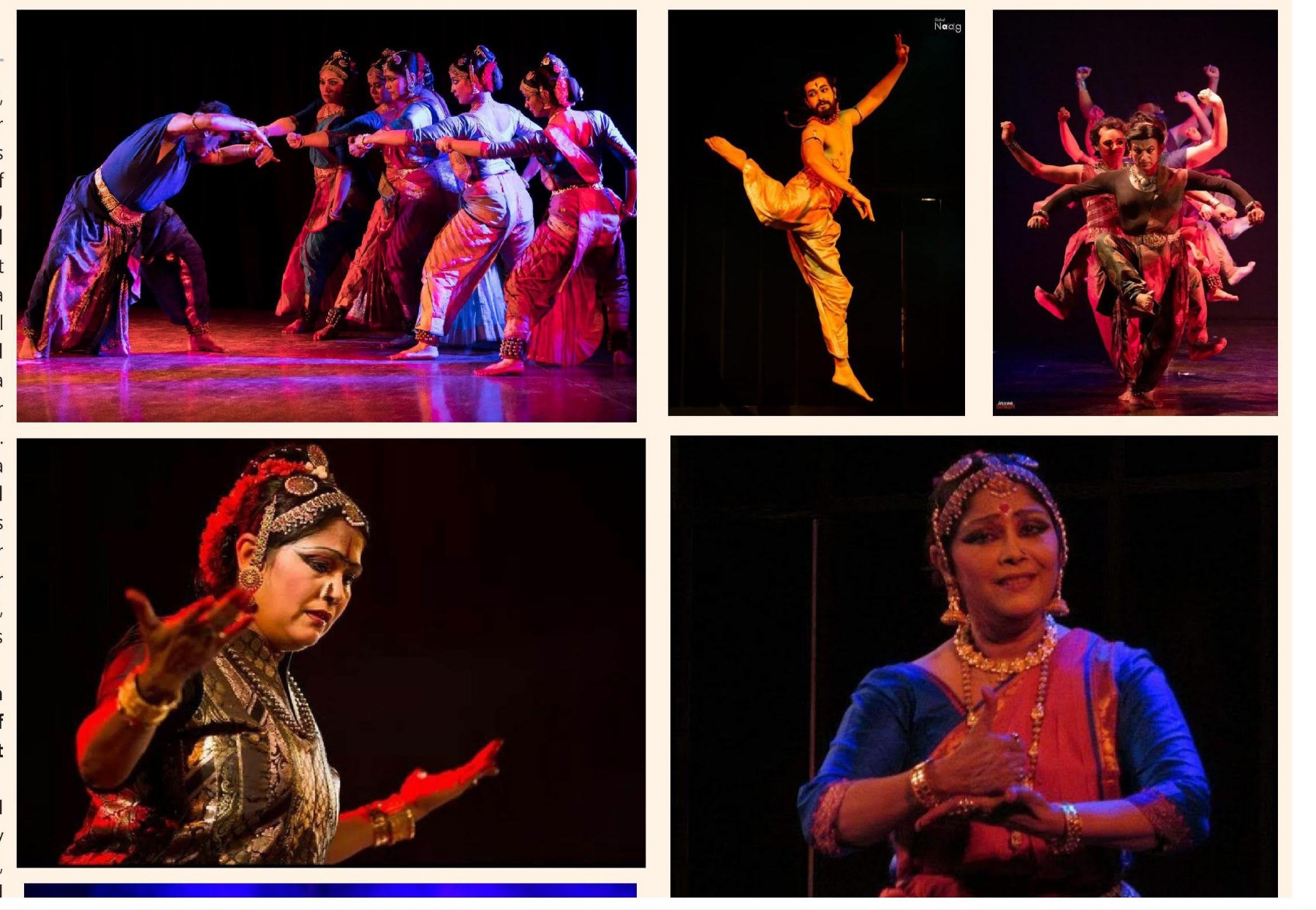
Renowned Kuchipudi dancer, choreographer and teacher Vanashree Rao has spent decades exploring the possibilities of classical dance while remaining deeply rooted in its grammar and tradition. A recipient of the Sangeet Natak Akademi Award, the Sahitya Kala Parishad Samman and several other honours, she has created powerful productions through Rasa United, bringing Kuchipudi together with Bharatanatyam and Chhau. Beyond dance, she has also built a successful enterprise around Kalamkari garments. In this conversation, she reflects on her unconventional journey, her marriage to her guru, creativity, tradition and the many dimensions of an artist’s life.
Your journey into dance began rather differently from that of most classical dancers. How did it all begin?
My journey began quite late. I started learning dance seriously only after completing my education, and I was around 20 when I entered the world of Kuchipudi. My first guru was Krishna Kumar, who eventually directed me towards Guru Jayarama Rao.
When I met Jayarama Rao, I was fascinated by his knowledge and, at the same time, wondered why such a wonderful dancer was not performing more. I was quite outspoken and mischievous, so I told him that if I was going to learn from him, I would also help him find opportunities to perform!
We began doing small duet performances, and gradually, dance became a very important part of our lives. I also learnt Odissi for several years under Guru Mayadhar Raut and studied abhinaya with Nataraja Ramakrishna. Later, I learnt from Vempati Chinna Satyam. Each of these experiences contributed something different to my understanding of movement, expression and storytelling.
How does it feel to marry your own guru?
It is certainly an unusual relationship! When you marry your guru, you cannot simply leave the guru at the dance studio and come home to your husband. The two worlds inevitably overlap.
When we got married in 1981, there was very little work. We struggled and built our careers together. In fact, dance was one of the reasons we came together in the first place. We wanted to perform and propagate Kuchipudi.
Over the years, the relationship has evolved. On stage, he is my guru, colleague and dance partner; at home, he is my husband. We have disagreements, of course, but there is also enormous respect. I think our shared commitment to dance has been one of the strongest bonds in our marriage.
Kuchipudi has evolved considerably. How do you see the development of the form?
Kuchipudi is fundamentally a dramatic tradition, and that storytelling quality is one of its greatest strengths. However, sometimes we become so attached to established formats that we stop exploring what else the form can communicate.
I strongly believe that tradition should provide a foundation, not a prison. The grammar must remain intact, but the way we use that grammar can evolve.
This is what I have tried to do through productions such as Abhimanyu Vadh, Dushasana Vadh, Tryambakam and Dramatic Tales. With Rasa United, we have brought Kuchipudi together with Bharatanatyam and Chhau, using the strengths of each form while allowing Kuchipudi’s dramatic character to remain alive.
You are also known for your Kalamkari work under the name Banashree. How do you balance two such different worlds?
For me, they are not really two different worlds. Both require imagination, discipline and an understanding of aesthetics.
Kalamkari became an important part of my life and business. There was even a period when I thought I might stop dancing because my Kalamkari business was doing very well. But eventually, I realised that dance was something I could never completely walk away from.
The two actually feed each other. Colour, costume, design and visual composition influence the way I think about a production. Dance gives me movement and imagination; Kalamkari gives me another way of expressing beauty.
You have created performances that break away from stereotypical Kuchipudi while still retaining its essence. Where does this creative thinking come from?
I think curiosity is very important. I don’t want to repeat something simply because it has always been done that way.
When I choreograph, the first thing I think about is the story. What is the most powerful way of telling it? What should the audience feel? Once I know that, I think about movement, music, rhythm, costume and staging.
I don’t want innovation for the sake of being different. Innovation must serve the story.
For example, in Abhimanyu Vadh, I wanted the audience to experience the drama and intensity of the Mahabharata. In Tryambakam, bringing Kuchipudi, Bharatanatyam and Chhau together allowed us to explore different physical and dramatic qualities.
I believe classical dance can be contemporary in its thinking without becoming contemporary dance. The vocabulary may be ancient, but the artist’s imagination has to remain alive.
You have received several prestigious honours. What does an award mean to you?
Awards are wonderful because they acknowledge your work, but they cannot be the reason you create. An award gives you encouragement. It tells you that somebody has noticed the years of work, struggle and dedication behind what you do. But the next morning, you still have to get up and work.
For me, the greatest award is when an audience connects with what I have created, when a student surpasses me, or when somebody watches a performance and suddenly sees Kuchipudi in a completely new way. Ultimately, an artist should not be working towards a trophy. We should be working towards leaving something meaningful behind.