As Latin America Looks To The Right, Brazil Is On Tenterhooks over the Lula-Bolsonaro Presidential Battle
Total Views |


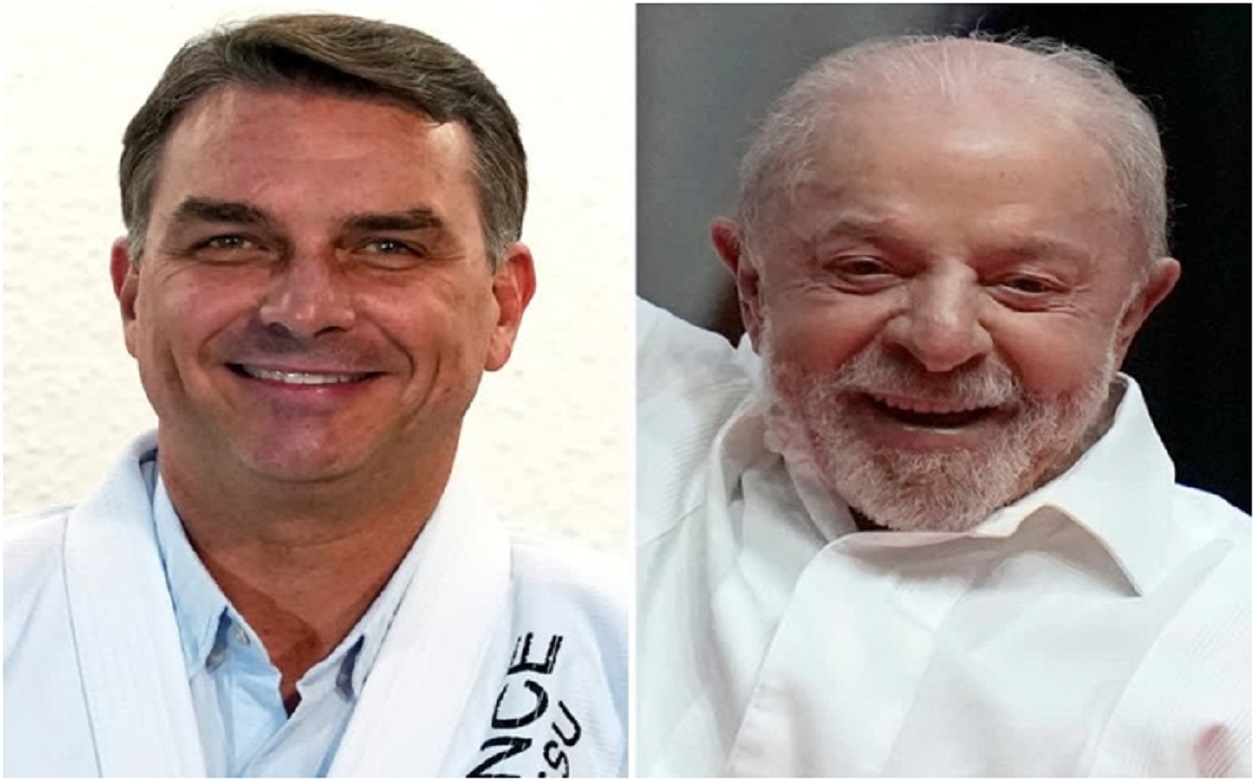
New Delhi : The first round of Brazil's presidential election on Sunday turned out to be a surprisingly heated contest between 80-year-old President Luiz Inacio Lula da Silva and 45-year-old Flavio Bolsonaro.
Pollsters gave a lead to Lula, but the younger Bolsonaro leapt into the lead with 47.03 per cent of the vote with Lula close behind at 45.16 per cent. As neither contender reached the 50 per cent mark to be declared the winner, the runoff between the two is now set for October 25. The other candidates who were trailing far behind do not advance.
Flavio Bolsonaro is a senator and the son of former president Jair Bolsonaro who is serving a 27-year jail term for trying to stage a coup after the losing the presidential election in October 2022 in a manner that resembled what President Donald Trump did after he lost the election to Joe Biden when he egged on his supporters in 2021 to attack the Senate on Capitol Hill. Jair Bolsonaro has long been an admirer of Trump. One of Bolsonaro's vows is to overturn the verdict against his imprisoned father.
Lula, has been at the centre of Brazilian politics. He is serving his third term in power and was president between 2003 and 2011. He is known for his landmark social programmes to lift Brazilians out of poverty. Lula was also imprisoned on corruption and money laundering charges in 2018, but the Supreme Court annulled the charges in 2021 after finding that the lower court in Curitiba lacked the proper jurisdiction to try him.
Dilma Rousseff of Lula’s Workers Party, who succeeded Lula as President in 2011, was impeached and removed from office in August 2016 for illegally manipulating government accounts and delaying payments to public banks.
All this is a sign of how stormy Brazil’s democracy has been in the last decade or so, and also how despite the left-right polarisation, Brazil continues to be a vibrant democracy.
Even as Lula and Flavio Bolsonaro are set for the political duel in the run-up to the October 25 runoff, the familiar political agendas of the right and the left are the mainstay of the presidential election.
Bolsonaro like any right-wing politician is focused on crime, encouraging the private sector, and reducing the economic burden of welfare programmes to boost growth. Lula like the good left populist he is believes that lifting people out of poverty is compatible with economic growth.
The move to the right in Latin America
Observers see the Lula-Bolsonaro battle as part of the emerging political trend in Latin America, a swing away from the left to the right since 2025 in several major Latin American countries.
The most pronounced example of the move towards the right is victory President Javier Milei in Argentina, who went so far as to favour the US dollar replacing Argentinian peso. Argentina did not replace the peso with the dollar due to economic conditions but dollarisation remains an ultimate policy goal.
Other examples include victories in Chile, where far-right José Antonio Kast supports August Pinochet's 17-year military rule and the suppression of democracy and human rights. Kast left the centrist Independent Democratic Union and formed his own far-right Republican Party of Chile.
In Peru, Keiko Fujimori, daughter of Alberto Fujimori, the man who ended the Maoist Shining Path movement ruthlessly and later ended up in prison on charges of corruption, managed to win the presidential election on her fourth attempt in June this year. She follows a right-wing political platform emphasising law and order and private enterprise.
In Colombia, it is businessman and political outsider Abelardo de la Espriella, who has won the presidential contest, and in the typical fashion of a right-wing politician restored the right of ordinary citizens to bear arms, arguing that if gangsters carry arms, citizens must have the right to defend themselves.
Bolivia, which has seen the dominance of the Movement for Socialism led by the charismatic Evo Morales, the first person of indigenous origin, has lost out to Rodrigo Paz Pereira of the centrist Christian Democratic Party. Morales and MAS had been dominating Bolivian politics for 20 years.
US efforts to reshape Latin America
Lula asserts that he would not let the right-wingers take over Brazil. Whether he succeeds or not on October 25, it does matter to the world. Lula has been a pinprick for Trump in Washington. Trump's tariff war reduced US soybean exports to China and benefited Brazil. Secondly, Lula has been positioning Brazil as a leader of BRICS challenging American dominance of global markets.
If Lula were to lose, Trump would heave a sigh of relief as it could turn Brazil, Latin America’s largest country by population with over 213 million, into a camp-follower in a manner of speaking. Trump would find it difficult to do with Lula what he did with former Venezuelan president Nicolas Maduro, kidnapping him and handing over Venezuelan oil wells to American companies.
Trump is not the first American president who wants to shape Latin American politics in the national interests of Washington. His predecessors through the Central Intelligence Agency (CIA) had been attempting to dictate policy in its southern neighbourhood, and success was not always guaranteed. Lula then stands not only between right-wing domination and Brazil but he also stands between Brazil and the US domination of Brazil.
Brazil’s presidential election is not just a matter of importance for Brazilians but also for strategists beyond Brazil. At the end of the day, it is Brazilians who decide whether Lula wins or loses.
What is on the top of mind for the Brazilian voters is the rising cost of living and jobs. Bolsonaro hopes to prevail on economic issues. It will be an interesting ideological, national and international tussle.
Who wins on October 25 matters in international capitals, from Beijing to Washington, as well as for Brasília.